
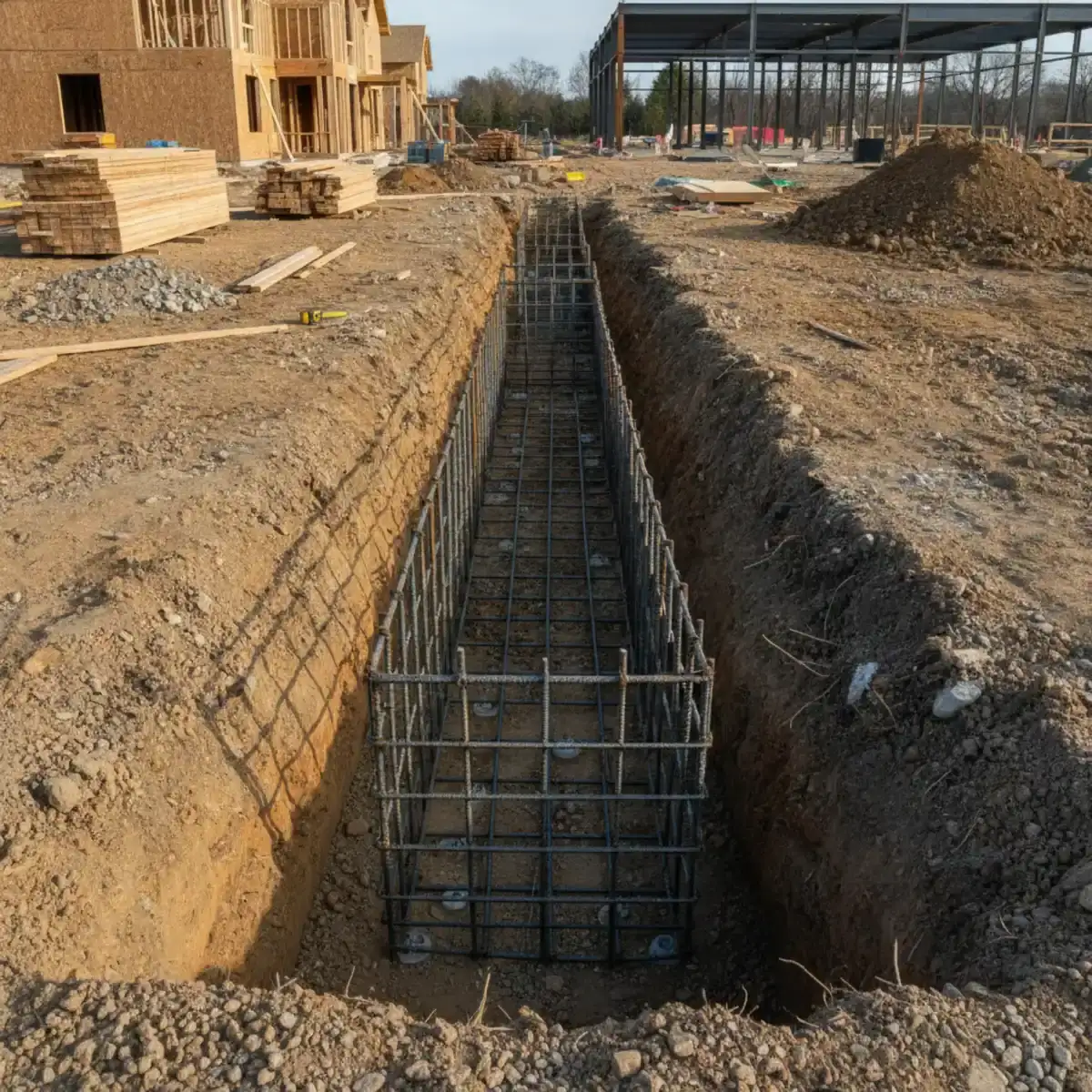
Every footing we pour has to reach below the frost line. In Camden County that line sits 30 inches down. Here is what the state code asks for, and what it leaves alone.
Concrete that sits too shallow moves. Water in the soil freezes, the ground swells, and anything resting above that depth gets pushed up. In spring the soil settles again and the concrete does not go back where it started.
New Jersey handles this with one depth per region. The state splits in two, and Papaneri & Sons pours on the southern side of that line.
This page covers how deep a footing goes here, what counts as a footing, and which pours are left alone.
The state rules for one and two family homes fill in a frost line depth for New Jersey. The table reads 2 feet 6 inches for the southern zone and 3 feet for the northern zone.
The southern zone is Monmouth and Burlington Counties plus every county below them. Camden County sits on that side, so Cherry Hill and Haddonfield both dig to 30 inches.
Marlton, Moorestown, Mount Laurel and Cinnaminson are all in Burlington County. They are in the same 30 inch zone.
Cold holds longer up there. Mercer and Middlesex Counties and everything above them dig to 36 inches instead.
One number covers the whole area we work. Papaneri & Sons pours only on the 30 inch side of that line.
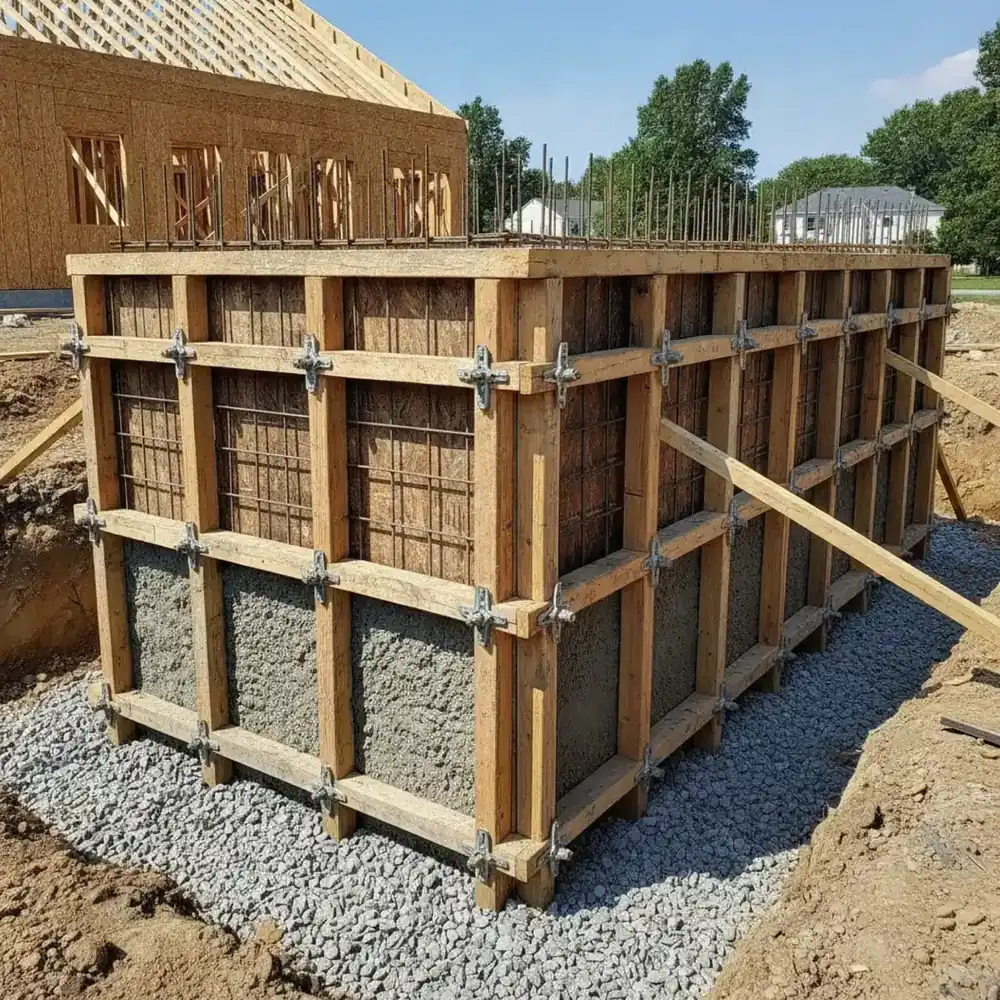
Homeowners often hear that a footing has to go a foot deeper than the frost line. That is not what the code says, and it is the most common mix up on this topic.
The state's own code office wrote an article clearing it up. Their note on frost depth says no extra depth is required past the frost line measurement. The bottom of the footing simply has to get below it.
There is a separate rule in the same chapter. Any exterior footing starts at least 12 inches below undisturbed ground, frost or no frost.
Once the frost line is 30 inches, that 12 inch minimum is met several times over. The two rules are not added together.
A footing cannot bear on frozen soil. A Papaneri & Sons crew digs the frost out of the trench bottom before any concrete is placed.
The damage shows up in the second or third winter. A crack opens where the steps meet the brick. A stoop sits proud of the door sill by spring. A pillar leans a little further each year.
Digging deeper is the normal route. The code also allows an insulated shallow foundation built to a national standard. A footing set straight on solid rock counts too.
All of that digging happens after the lines are marked. We cover that on calling 811 before a concrete project in Cherry Hill.
The rule covers foundation walls, piers and any other permanent support of a building or structure. That is wider than most people expect.
A set of concrete steps that ties into the house carries load. The footing under those steps goes to 30 inches like any other.
A concrete pillar holding up a porch roof or a carport is a permanent support. Same depth, every time.
A poured foundation for an addition or a detached garage carries the whole structure down to its footing.
Skip the depth on any of these and the first hard winter shows it. Steps pull away from the brick. A pillar goes out of plumb and the porch roof follows it.
A deeper footing also means a longer dig day. The Cherry Hill concrete project timeline walks through how those days line up.
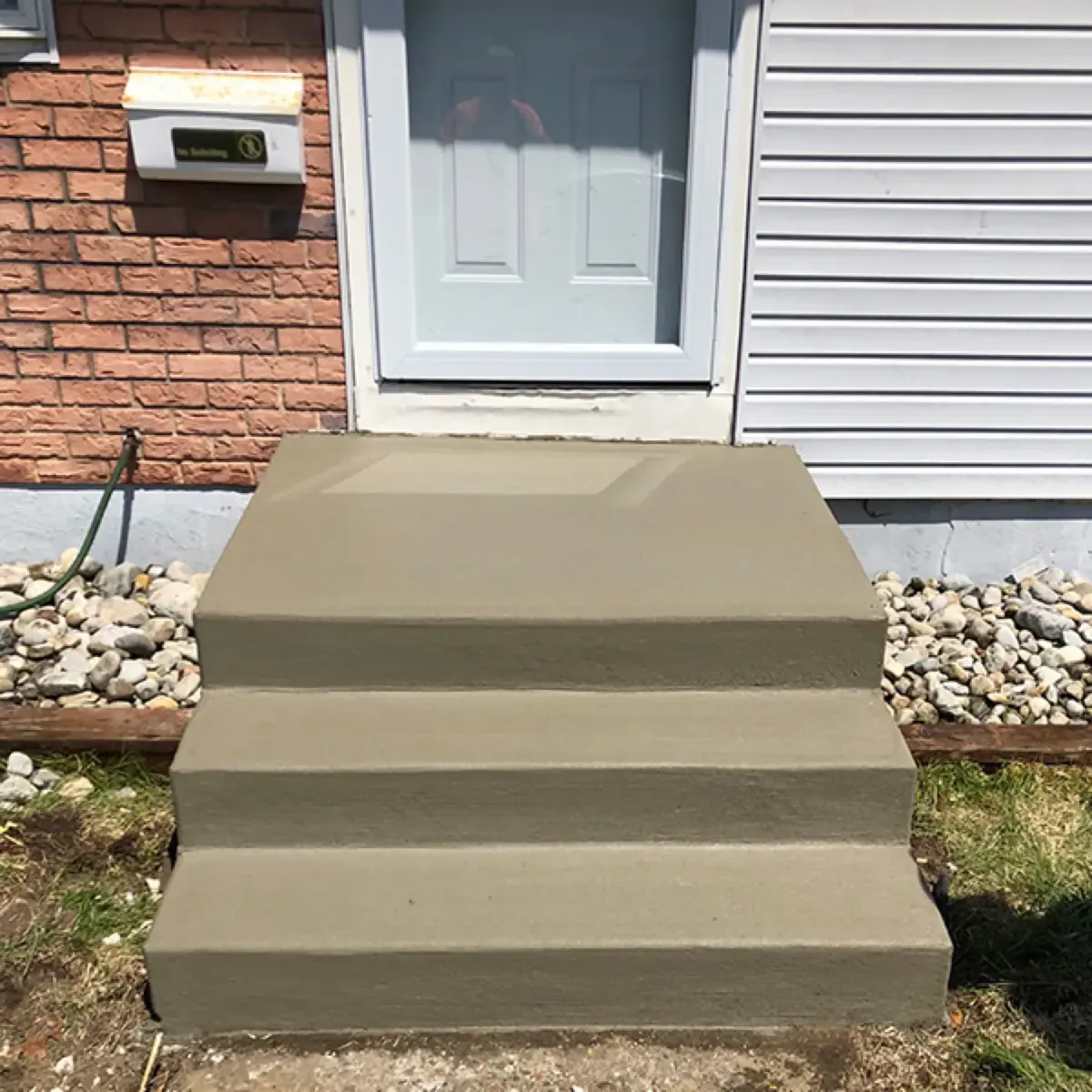
Not every pour needs a 30 inch hole. A slab on grade carries only itself and sits on a compacted stone base.
A patio slab or a driveway rides on its base. We build that base to drain, so water is not sitting under the slab when it freezes.
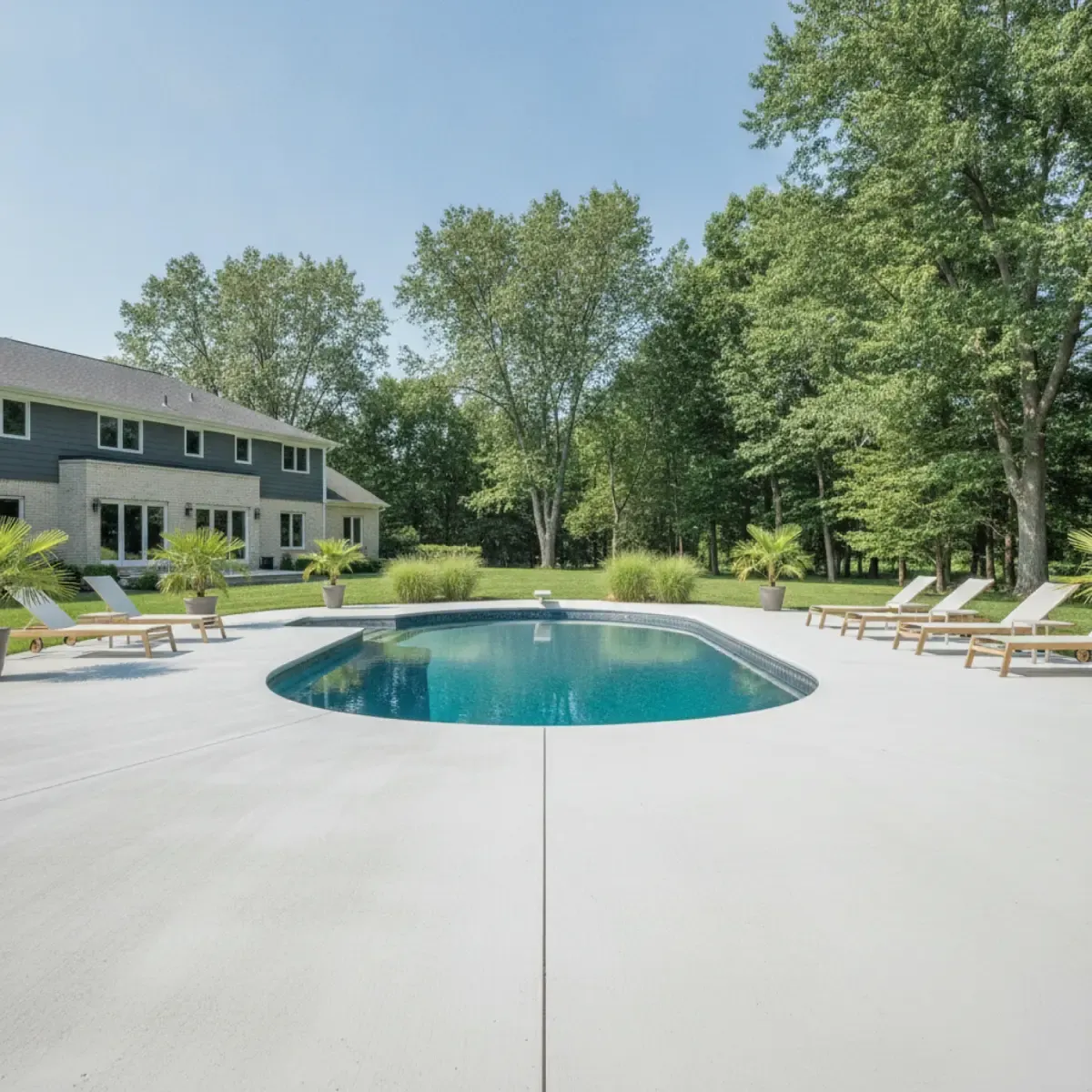
A pool deck is the same idea. It is a slab on a prepared base, not a footing.
A wood deck bolted to the house is a different animal. Where it hangs off a frost protected house, its footings go below the same line.
A garden type shed of 100 square feet or less is let off the depth rule. It has to be 10 feet or shorter with no water or gas hookup. It also has to be heavy enough to stay put, or anchored down.
A low risk freestanding building can skip frost protection as well. The limit is 600 square feet in light frame construction, with eaves no higher than 10 feet. The 12 inch minimum still applies.
Frost still matters on a slab, it just works differently. A base that traps water lifts in patches and the slab cracks over the high spots. Clean stone and a path for the water do that job.
Whichever pour you are getting, the day itself runs smoother with a little prep. See getting your property ready for pour day.
What goes inside the concrete matters as much as how deep it sits. See whether a slab needs rebar and pouring concrete in the cold for the rest of it.
Thirty inches. Cherry Hill is in Camden County, which the state code puts in the southern frost zone. Every footing we dig in town reaches that depth or goes past it.
No. A patio is a slab on grade, so it sits on a compacted base rather than a footing. What matters there is the base and the slope. Water has to run off instead of pooling under the slab.
No, and this one trips up a lot of people. The state's code office says no added depth is required past the frost line. The 12 inch rule is a separate minimum for any exterior footing, and 30 inches already clears it.
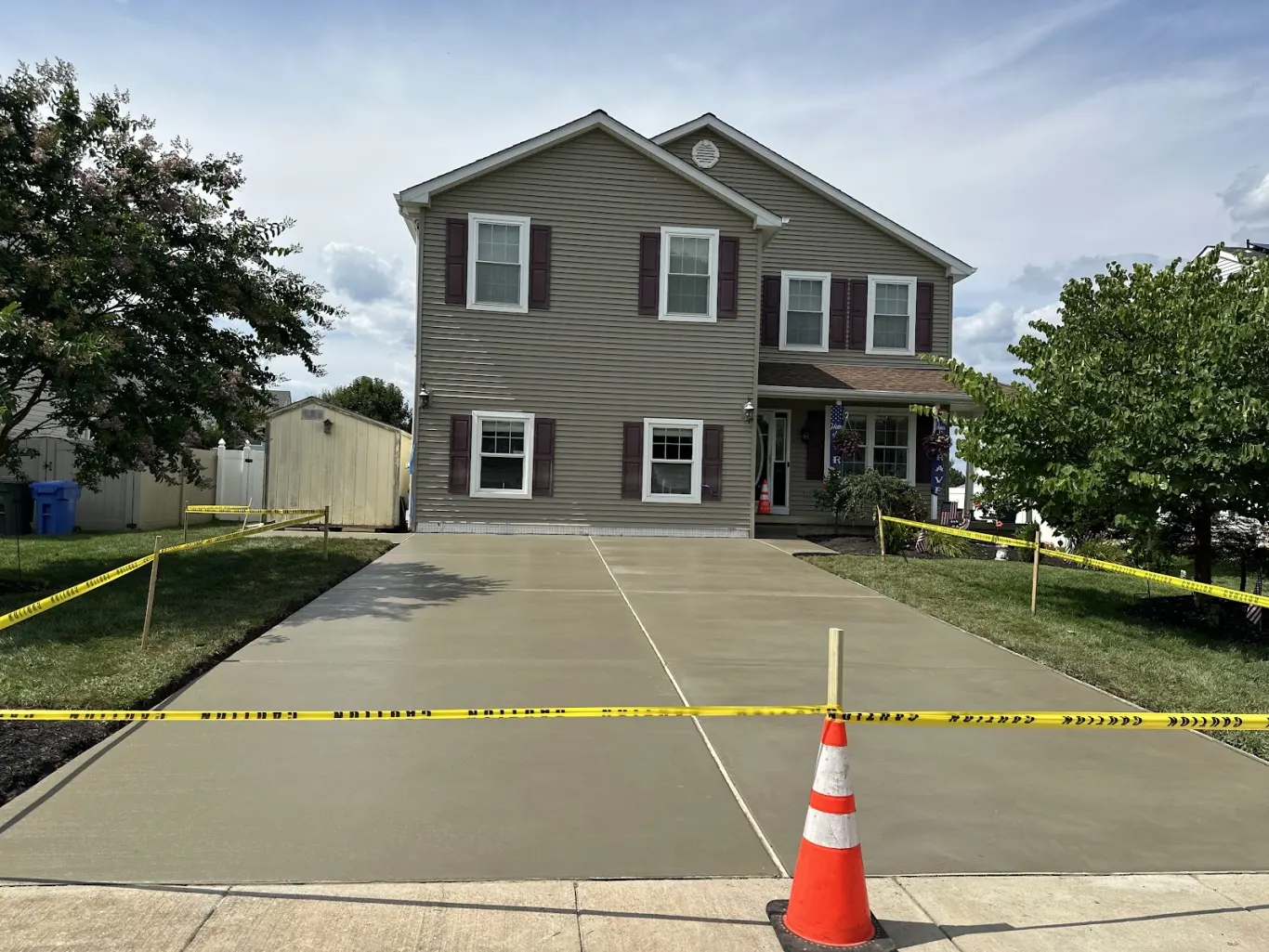
Papaneri & Sons is a family crew working across Cherry Hill, Marlton, Mount Laurel and the rest of South Jersey. We have poured footings, steps, pillars, patios and driveways here since 1987. Every footing gets dug to depth before the concrete comes.