
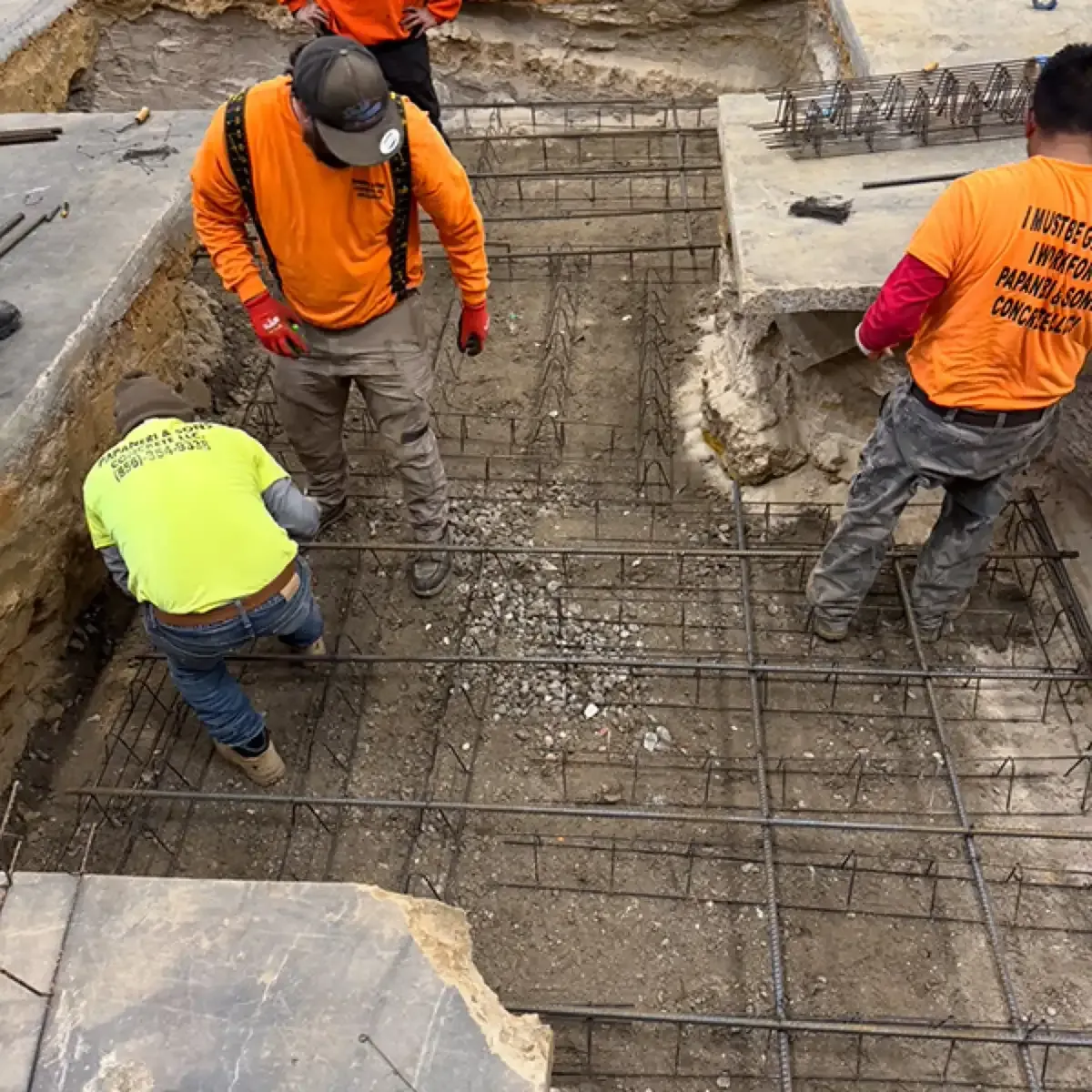
Not always. The load on top, the thickness of the slab and the ground underneath decide it, and the answer for a patio is not the answer for a garage floor.
A 4 inch residential slab sitting on a well compacted stone base usually does not need rebar. Slabs 5 inches and thicker, slabs that carry vehicles or equipment, and slabs poured over fill or soft ground do.
Steel does not keep a slab from cracking. Nothing does. It holds the two sides of a crack together so the slab keeps working as one piece.
Below: what rebar does inside the concrete, how it compares to wire mesh and fiber, and the three things that settle the question on your own pour. For how a slab gets built from the ground up, see our concrete slab installation page.
Concrete is strong in compression and weak in tension. Press down on it and it holds almost anything. Bend it, or let one corner lose its support, and it breaks.
Deformed bar is ribbed so it locks into the concrete instead of sliding through it. When part of the slab tries to bend, the steel on the stretched side carries that load and the concrete around it stays together.
This is the part most quotes get wrong. NRMCA puts it plainly: all concrete has a tendency to crack and it is not possible to produce completely crack-free concrete. Steel decides what a crack does next, not whether one shows up.
A hairline crack in a reinforced slab stays a hairline. With no steel across it, the two sides can open and settle at different heights. That is the lip you trip on.
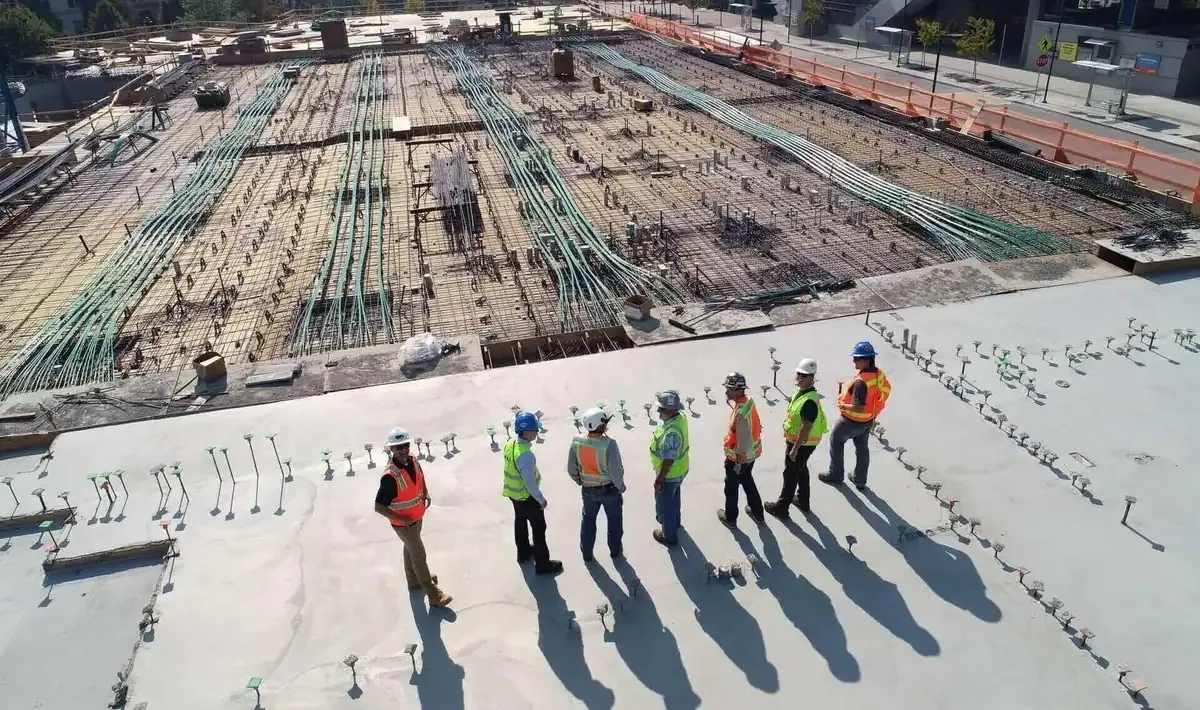
Steel only works where it is placed. Concrete Network's rule is that the steel must be properly positioned at or just above the mid-depth of the slab. The residential code says the same thing in its own words, requiring reinforcement to be held from the center to upper one-third of the slab for the whole pour.
Bar lying on the stone is bar doing nothing. It has to sit on chairs or dobies and stay there while the concrete goes in, which is why hooking it up by hand mid pour never works.
Cover is the concrete between the bar and the weather. Set a bar too close to the surface and road salt reaches it. Rust is the problem, because it has two to four times the volume of the original steel, and that swelling pops the top off the slab from the inside.
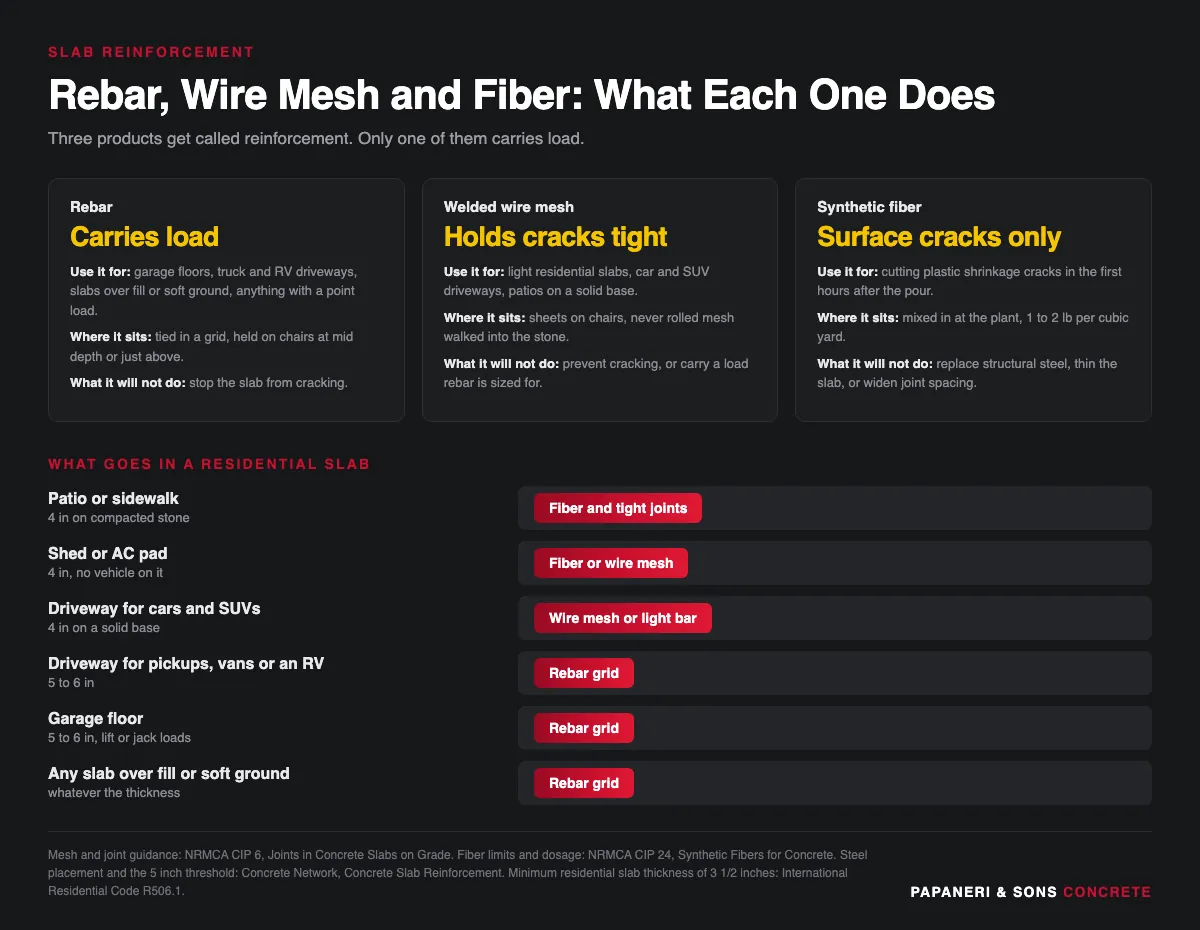
Three products get called reinforcement on a quote. They do three different jobs, and swapping one for another is where slabs go wrong.
Deformed steel bar, usually #3 or #4 on a residential slab, tied into a grid. It is the only one of the three that carries real load. Garage floors, truck and RV driveways, and any slab with a post or jack on it get bar.
Mesh is lighter steel in a welded grid. It holds shrinkage cracks tight rather than carrying weight. NRMCA is blunt about the limit: wire mesh will not prevent cracking. It keeps cracks and joints from opening up, which is a real job, just a smaller one.
Rolled mesh is the problem child. It curls back toward the shape it came off the roll in, and it gets walked into the stone during the pour. Sheet mesh on chairs stays put.
Fibers are polypropylene or nylon strands blended into the concrete at the plant, usually at 1 to 2 lbs per cubic yard. They cut the fine cracking that shows up in the first hours, before the slab has any strength at all.
The same NRMCA sheet lists what fiber is not for: replacement of any moment-resisting or structural steel reinforcement, decreasing the thickness of slabs on grade, or increasing control joint spacing. A contractor who drops the bar because the mix has fiber in it is trading steel for something that was never meant to replace it.
Short version: fiber handles surface cracks, mesh handles crack width, and rebar handles load. A slab can use all three at once, and plenty of ours do.
Papaneri & Sons Concrete has poured slabs across Cherry Hill and the rest of South Jersey since 1987. Three things settle the reinforcement question on every one of them.
A patio holds furniture and people. A driveway holds cars daily and a delivery truck now and then. A garage floor holds a vehicle on four small contact patches, and a floor jack on one. We put rebar in anything carrying a vehicle load, and on garage floors it is always our recommendation.
Thickness and steel move together. The residential code sets the floor at a minimum 3 1/2 inches for a slab on ground, and Concrete Network draws the line higher up, saying that if you are pouring more than 5 inches in depth, you should install rebar or welded wire fabric.
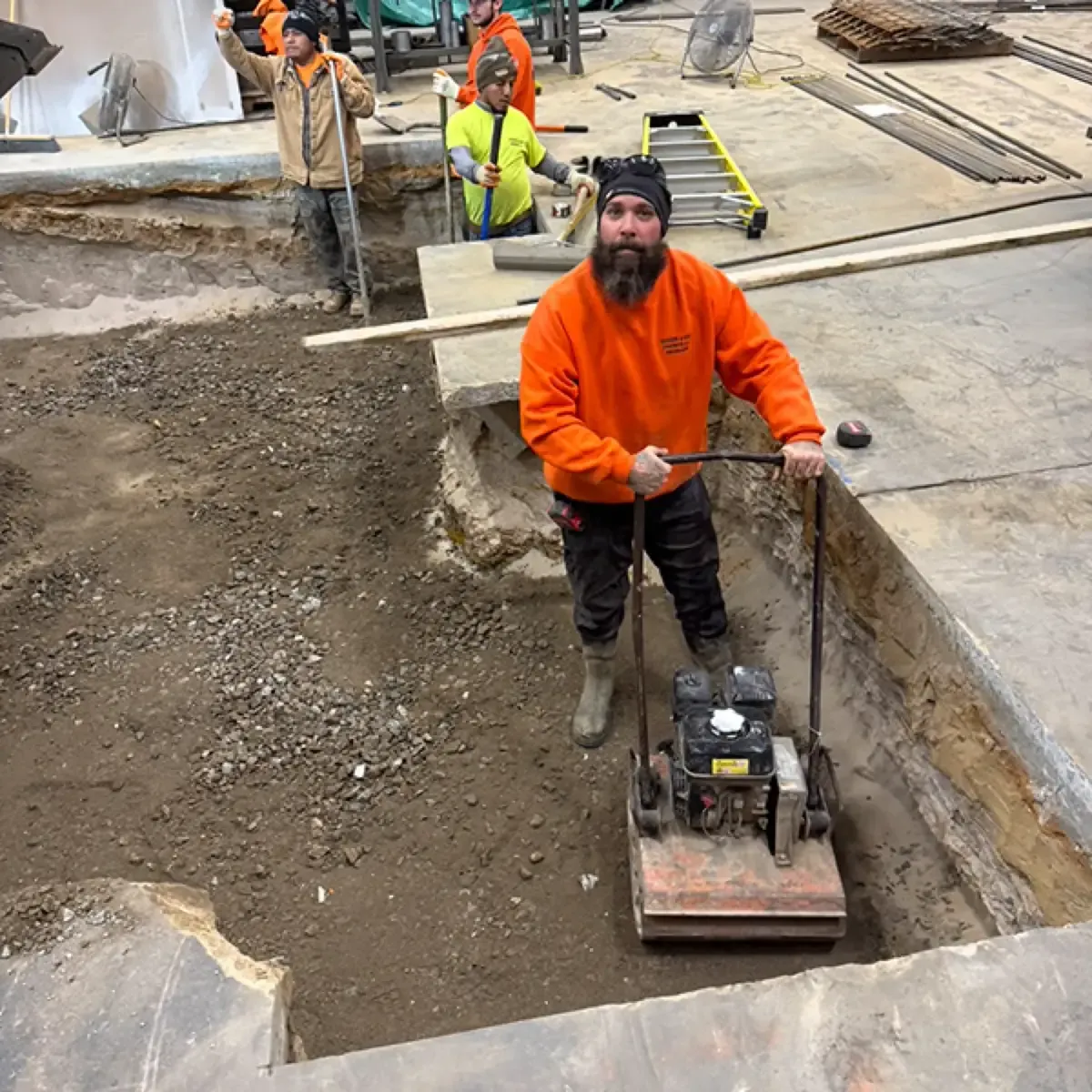
This is the one nobody asks about, and it matters more than the steel. NRMCA's guidance on cracking starts with the ground: all topsoil and soft spots should be removed, and the soil beneath the slab should be compacted soil or granular fill, well compacted by rolling, vibrating or tamping.
So we cut out the soft spots, replace them with stone, and compact the whole base before a bar gets tied. Steel cannot fix ground that keeps moving.
South Jersey adds two wrinkles. Plenty of our towns sit on sandy fill and old backfill near additions, which settles. And every slab here takes a winter of freeze and thaw plus road salt, which is hard on steel sitting too close to the surface.
That is part of why we pour a 4500 PSI mix on every job when most crews pour 3000. A denser slab absorbs less water, and less water reaching the bar means less rust and more cover doing its job.
Two slabs the same size can get different answers. A 4 inch patio on good compacted stone gets fiber and tight joints. The same 4 inches over backfill behind a new addition gets a bar grid. The ground changed, not the slab.
Answer these four and the reinforcement line on your quote writes itself.
Not today, ever. The boat trailer, the camper, the dumpster during a roof job, the lift you keep talking about. Steel is cheap on pour day and impossible to add later.
Thickness is the other half of the same decision, and going thicker is often a better buy than going thinner with more steel in it. Our guide to how thick a concrete driveway should be breaks it down by what parks on it.
Joints are planned cracks, and they do more for appearance than steel ever will. NRMCA recommends joint spacing of 24 to 36 times the thickness of the slab, capped at about 15 feet. Our post on control joint spacing has the layout rules.
One detail gets missed constantly. Where mesh crosses a contraction joint, NRMCA says to cut alternate wires or stop the mesh at the joint. Run it straight through and the joint cannot open, so the slab cracks where you did not choose.
Ask what the bar sits on and when the inspector sees it. Chairs and dobies before the truck arrives is the right answer. Pulling it up during the pour is not.
If a crack does open on a slab you already own, the cause is almost never the steel on its own. Our post on why concrete cracks and how to prevent it walks through the rest of it. For slabs, footings and walls built to an engineer's drawings, see our reinforced concrete structures page.
Usually not. A 4 inch patio, sidewalk or shed pad on a well compacted stone base does fine with fiber in the mix and joints cut on time. Add bar if the slab will see a vehicle, if it sits over fill or disturbed soil, or if it is going thicker than 4 inches.
On a light slab with a solid base and correct joints, usually nothing. The risk shows up when a crack opens. With no steel across it, the two halves can move apart and settle at different heights, which turns a hairline into a lip and a drainage problem.
For a driveway that only sees cars and SUVs, properly supported mesh is enough. For pickups, vans, an RV or a 5 to 6 inch slab, use rebar. In Cherry Hill and across South Jersey we lean toward bar on driveways, because our freeze and thaw winters and the soft backfill near older homes both work against a thin slab.
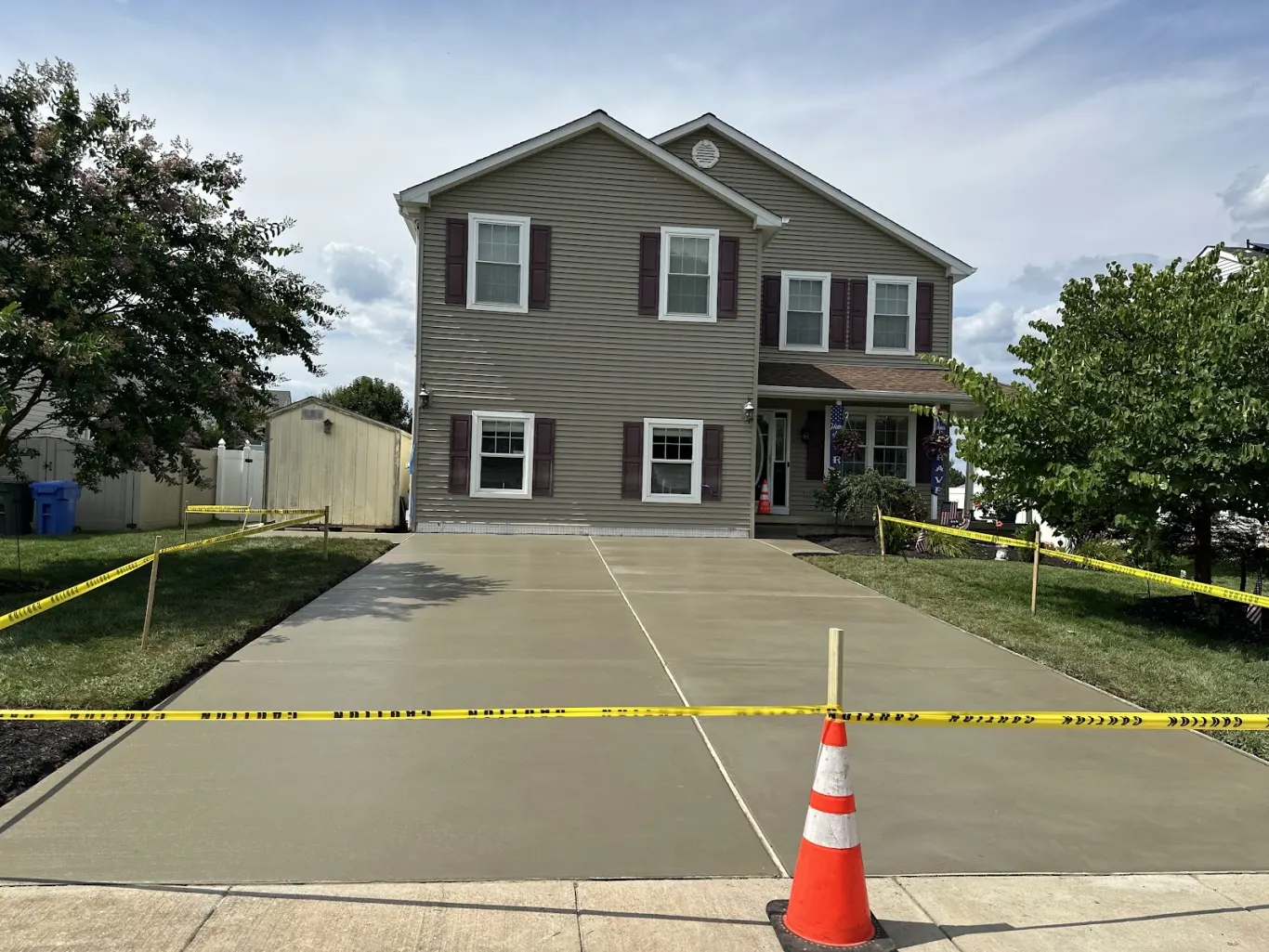
Papaneri & Sons Concrete pours driveways, patios, garage floors, shed pads and slabs across Cherry Hill, Marlton, Mount Laurel, Moorestown and Haddonfield. Tell us what the slab is for and what will sit on it, and we will tell you what goes in it.