
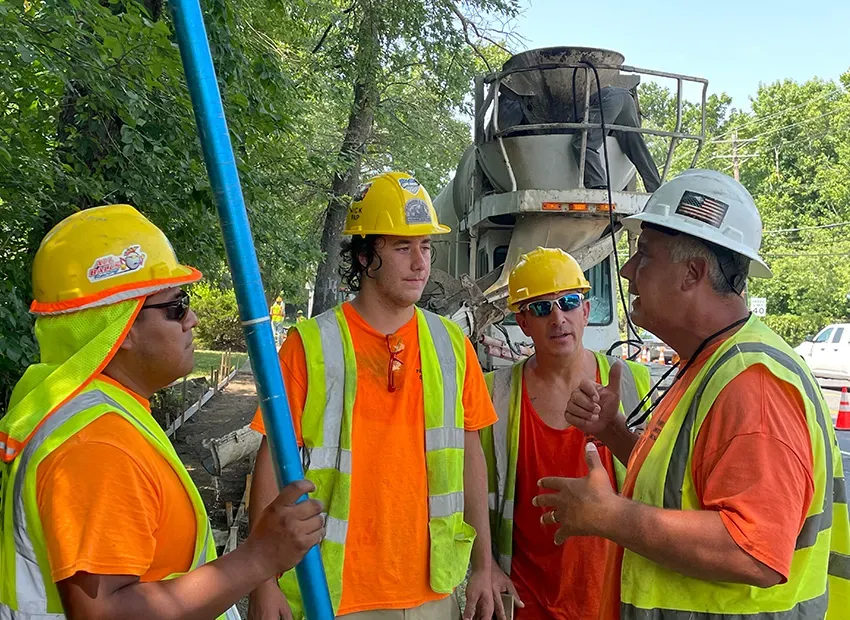
Pour day moves fast once the trucks roll up. Here is the short list we give every homeowner the week before, so nothing holds the crew up.
Most of a concrete job can shift a day or two without hurting anything. Pour day cannot. The mix is batched for your address and it starts setting the minute it leaves the plant.
So the crew needs a clear run at the work the moment they arrive. That is why our crew walks every Cherry Hill homeowner through the same short list before the trucks are booked.
None of it is hard. It is moving cars, opening gates, and pointing at the things we cannot see from the street. Do it the night before and the job runs the way it is laid out in our process.
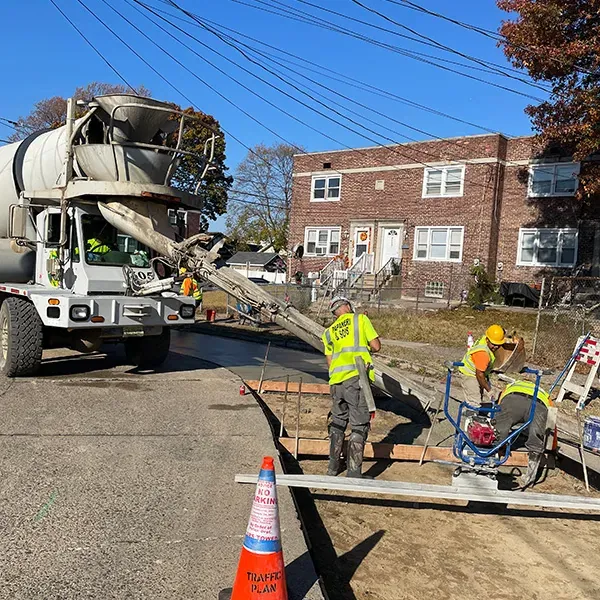
A loaded mixer truck is the heaviest thing that will ever come down your street. It needs room to get close to the work, and solid ground to sit on while it unloads.
We need the curb space in front of the house, and usually a little either side of it. Park your own cars up the block the night before, not in the spot you want the truck to use.
A knock on two doors saves an hour. Cherry Hill streets fill up in the evening. A car left at the curb overnight is the most common reason a pour starts late.
Low branches over the driveway are worth cutting back the week before. A mixer chute sits high. So does the boom on a pump truck reaching a back yard.
If the truck has to cross lawn to reach the pour, we need to know. After a rainy week, a short drive across grass leaves ruts that take a season to grow back.
Back yard patios and tight side yards get pumped from the street. That is a normal day for a Papaneri & Sons crew, and the pump is written into the estimate before you sign. If you are weighing bids, how to compare concrete quotes in Cherry Hill covers the access line and who pays for it.
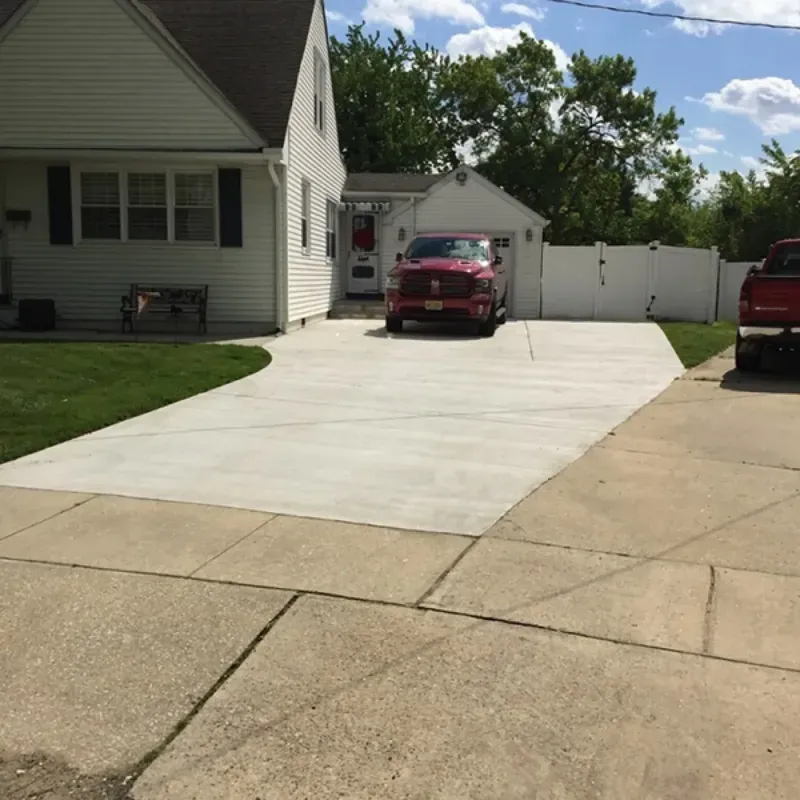
This is the part people underestimate. On a concrete driveway job your cars are off the property from the morning of the tear out until well after the pour.
If the new slab runs up to the garage door, anything inside the garage is parked in until the concrete takes weight. Pull the second car, the trailer and the mower out first.
The crew gives you the day you can walk on it and the day you can drive on it before they leave. Those are two different dates, and the driving one is the later of the two.
Street parking, a neighbor's drive, or the far side of the block all work. What does not work is planning to move the car when the truck shows up, because the truck shows up early.
Hold the furniture delivery and the fuel drop until after the pour. If pour day lands on trash day, put the cans at a neighbor's curb. The truck should not be working around them.
A car that cannot move, a tenant upstairs, a second vehicle nobody mentioned. Papaneri & Sons would rather hear it the week before than work around it on the morning.
The utility companies mark their own lines once the notice is filed, and New Jersey's Board of Public Utilities tells homeowners to call 811 regardless of the depth or your familiarity with the property [1]. How that works on a Papaneri & Sons job is on the 811 call before a concrete project. What nobody comes out to paint is the work you had done yourself.
Irrigation is private, so it does not get painted on the ground. Walk the job with a can of marking paint and flag every head, valve box and line you know about. A sketch helps even more.
Same rule. Pet fence wire, landscape lighting and the line out to a shed all run shallow. A shovel catches them if nobody says where they go.
Back yard work needs the side gate open and the path to it clear. Take the gate off its hinges if it is narrow. We would rather carry a gate than carry concrete twice as far.
Planters, hoses, the grill, patio furniture and anything leaning on the house go well clear of the work area. Cars, siding and fences within splash range get covered by us.
Where your roof water lands sets how the new slab gets pitched. Show the crew the spots that puddle now, and read how we handle it on drainage and slope for Cherry Hill driveways and patios.
Every truck rinses its chute before it leaves. Pick a corner of the yard you do not care about and tell us, or we will pick one. The same goes for a patio pour in the back.
Fresh concrete is open for hours before it is hard enough to leave alone. Paw prints and hand prints are permanent. It is also caustic while it is wet: a federal case study on concrete burns warns that alkaline compounds found in wet concrete are extremely corrosive and if not removed promptly from skin can severely burn [2]. Rinse any skin that touches it with cool clean water.
Gates are open, strangers are in the yard, and there is wet concrete on the ground. Day care or a crate inside is the safe answer, not the back room with the door cracked.
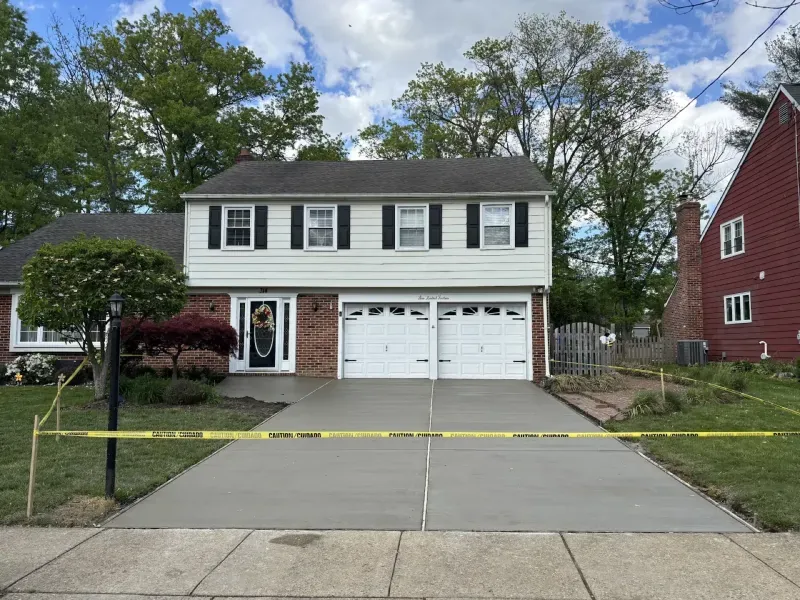
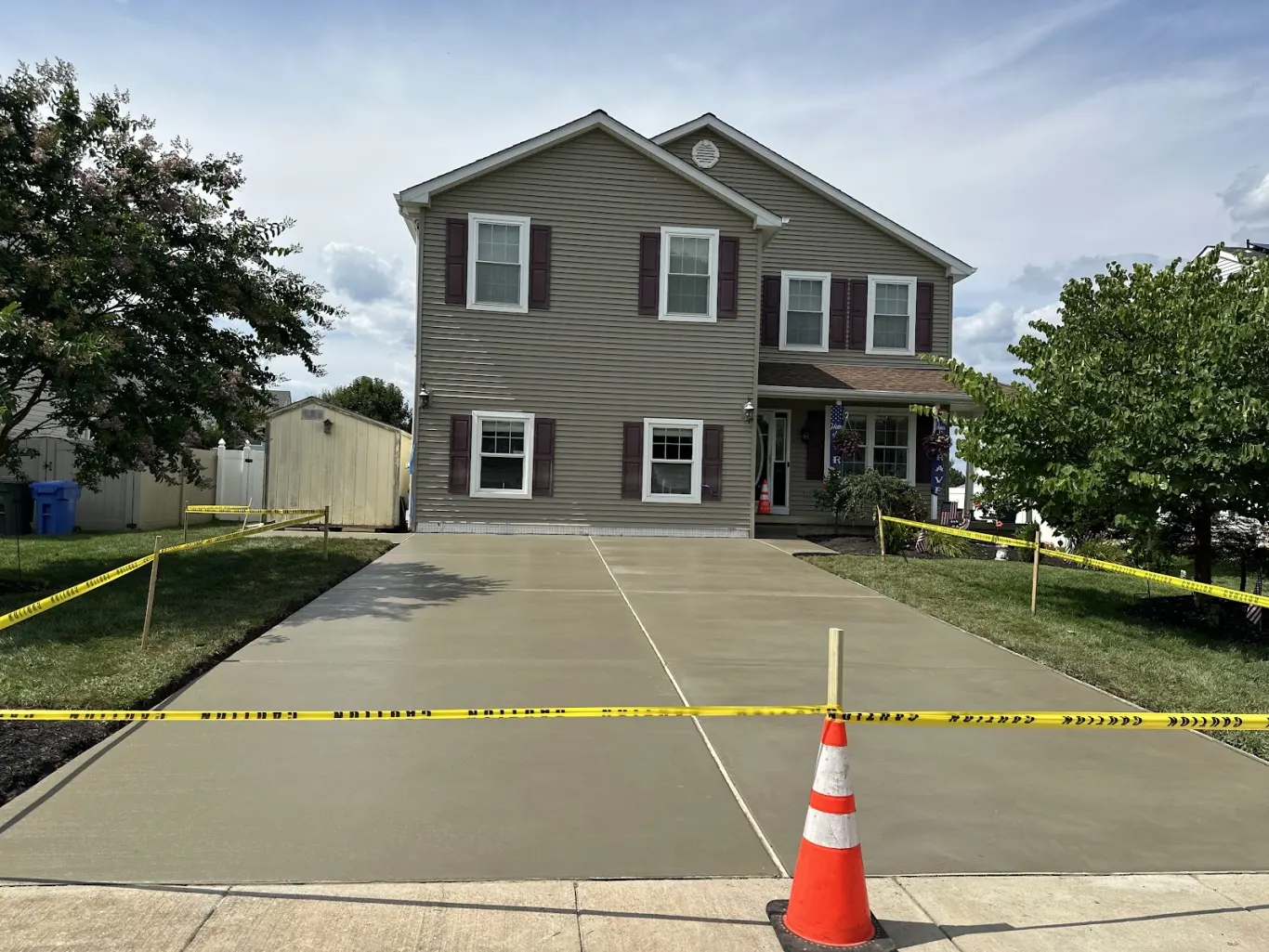
We tape and cone the fresh work before we leave, but tape only works if everybody at home knows what it means. Tell the kids the night before, and park the bikes somewhere else.
The crew needs water on site to finish and clean up. Leave the hose bib on and tell us which outside outlet is live. If either one is shut off for winter, say so when we book the date.
You do not have to stand there all day. You do need to answer the phone, because questions come up about a height, an edge or where a joint lands.
Walk the finished job with the crew while they are still on site. That is the moment to ask about the broom direction or the edge detail, not three days later.
None of this is unusual. Papaneri & Sons has run the same short list on Cherry Hill driveways since 1987. Homeowners who follow it get a cleaner day and a better slab.
Two timing questions come up on most jobs. Pouring in cold weather covers the winter rules, and when you can park on it again covers the wait after the pour.
No, but you need to be reachable by phone. Most of the day runs without you. The calls that matter are small ones about a height or an edge. They come up while the concrete is still workable.
We move the pour. A crew calls you early rather than pour into bad weather, and the whole prep list holds for the new date. Nothing you have done the night before goes to waste.
Not on pour day. We need that curb space for the truck, and a car parked there is the most common thing that delays a start. Move it the night before and leave it moved until the crew finishes.
Papaneri & Sons is a family crew pouring concrete across Cherry Hill, Marlton and Mount Laurel since 1987. We measure the job in person, handle the township paperwork, and tell you exactly what to move and when. Pour day should be the easy part.