
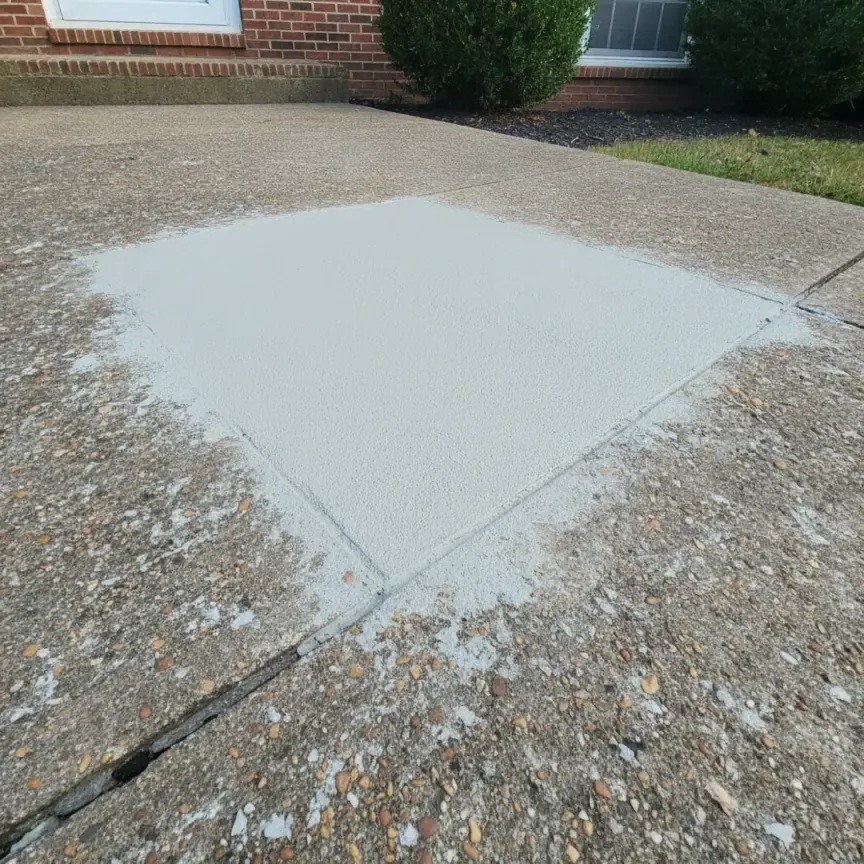
Water, salt, rusting steel and rushed finishing cause it. Shallow spalls can be repaired. Deep or widespread damage usually means replacing the slab.
Spalling is concrete breaking away in chips, flakes or craters, and it can be fixed when the damage is shallow and the slab underneath is sound. It comes from trapped water that freezes, deicing salt, rusting steel or a weak finish. Our concrete repair work starts by finding out which one you have.
Each cause leaves a different mark and calls for a different fix. This guide covers the four causes, how to choose between a patch, a resurface and a replacement, and what keeps it from coming back.
Spalling is a symptom. Fix the surface and ignore the cause, and the damage returns beside the repair.
Concrete soaks up water. When that water freezes it expands and pushes the surface apart. NRMCA explains that slabs saturated with water and exposed to freezing and thawing are the ones at risk, and each extra cycle raises the odds of damage.
Salt keeps the surface wet and sends it through more freeze-thaw cycles. NRMCA warns that too much salt is especially hard on new concrete, which is still wet and weaker than it will be later. Fertilizer spilled on a slab can attack it too.
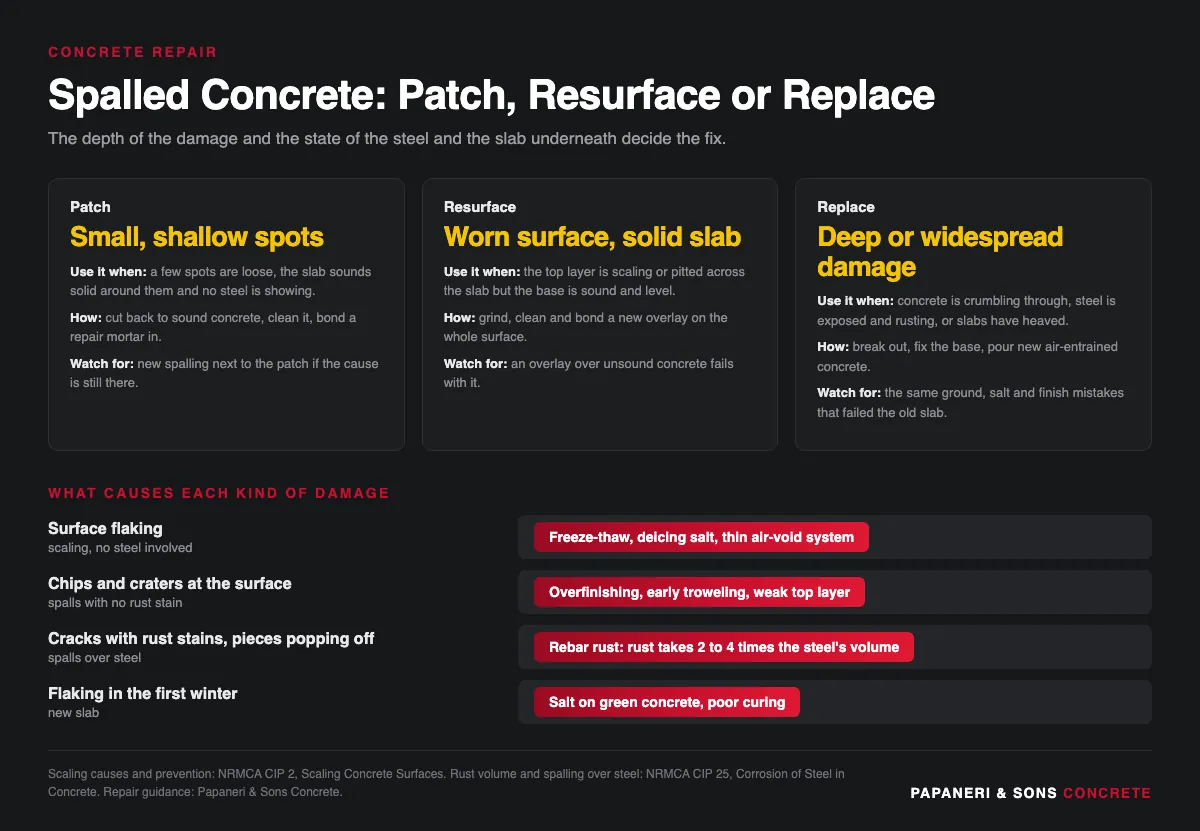
Steel inside concrete is protected until chlorides from deicing salt reach it. Then it rusts, and rust takes up two to four times the volume of the original steel. That pressure cracks off the concrete above it. A crack with a rust stain, or exposed bar, points here.
A slab can be doomed on pour day. Finishing while bleed water is on the surface, troweling too much, adding water to the truck, or skipping proper curing all leave a weak, thin skin. Concrete without enough entrained air, the tiny bubbles that give freezing water room to expand, flakes early.
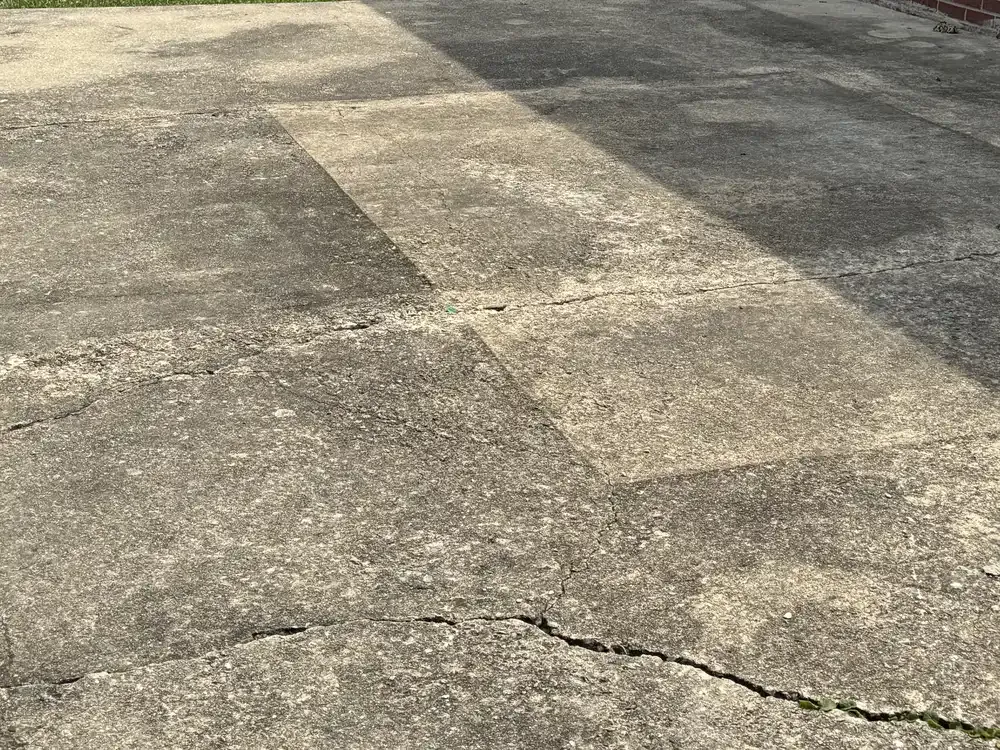
Three repairs cover almost every spalled slab. The depth of the damage, how much of the slab is affected and whether steel is involved decide which one fits.
If a few spots are loose and the concrete around them sounds solid, the crew cuts back to sound concrete, cleans it and bonds in a repair mortar. A patch only works when the cause is gone. Patch over a rusting bar and the rust keeps pushing.
When the whole top layer is scaling or pitted but the slab underneath is level and sound, a bonded overlay gives it a new face. The surface has to be ground and cleaned first. An overlay on loose concrete peels off with it.
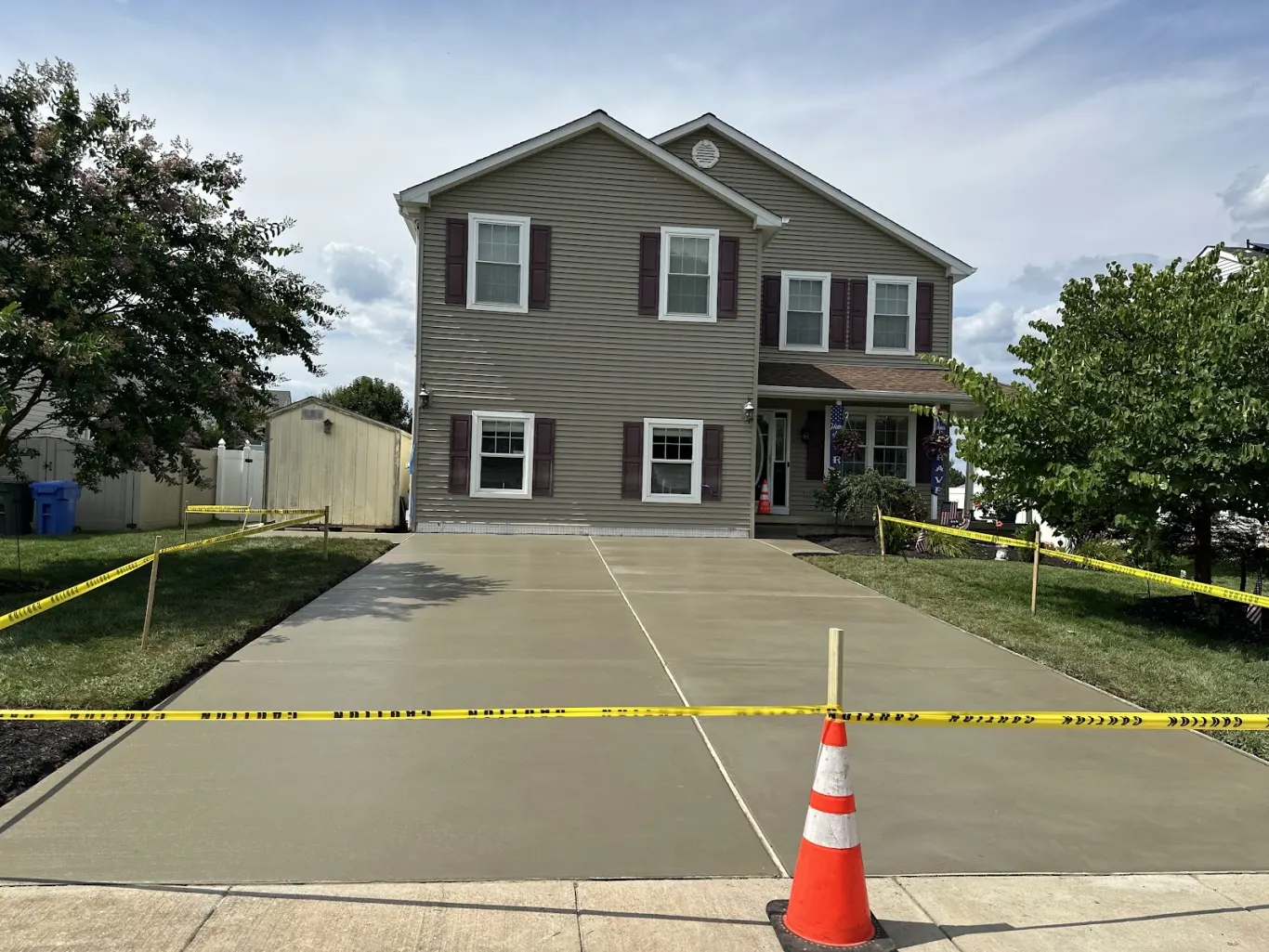
If the concrete crumbles through, steel is exposed, or sections have heaved, repair is only a delay. Breaking it out and pouring new concrete over a fixed base is the lasting answer. New concrete can still spall if it repeats the old mistakes, so the mix, finish and curing matter.
The chart below lines up each repair with the damage and the usual cause.
South Jersey slabs go through many freeze-thaw swings each winter, and road and driveway salt is everywhere. That is the combination that spalls concrete.
Papaneri & Sons has poured and repaired concrete in Cherry Hill since 1987, and the family crew has seen the same pattern many times. A slab that looks fine in fall shows pits and flakes by spring.
Finish matters as much as the mix. NRMCA says excessive finishing reduces the entrained air in the surface layer, and that a broom finish is adequate for most exterior slabs. A slab that was troweled hard to look glossy is often the first to flake.
For shallow spalling we grind the area clean, remove all loose material and bond in a high-strength mortar. We never skim coat over damage. A skim coat fails within a season or two in New Jersey winters.
When the top layer is spalling but the base is sound, we resurface it instead of tearing it out. When it is not, we break it out and pour a 4500 PSI mix, which is stronger than the typical 3000 PSI many crews pour. Here is what 4500 PSI concrete means for a slab.
Sealing helps new and repaired slabs. NRMCA recommends a breathable silane or siloxane sealer on slabs facing winter, applied when the concrete is dry. It also advises sand instead of deicers on new concrete.
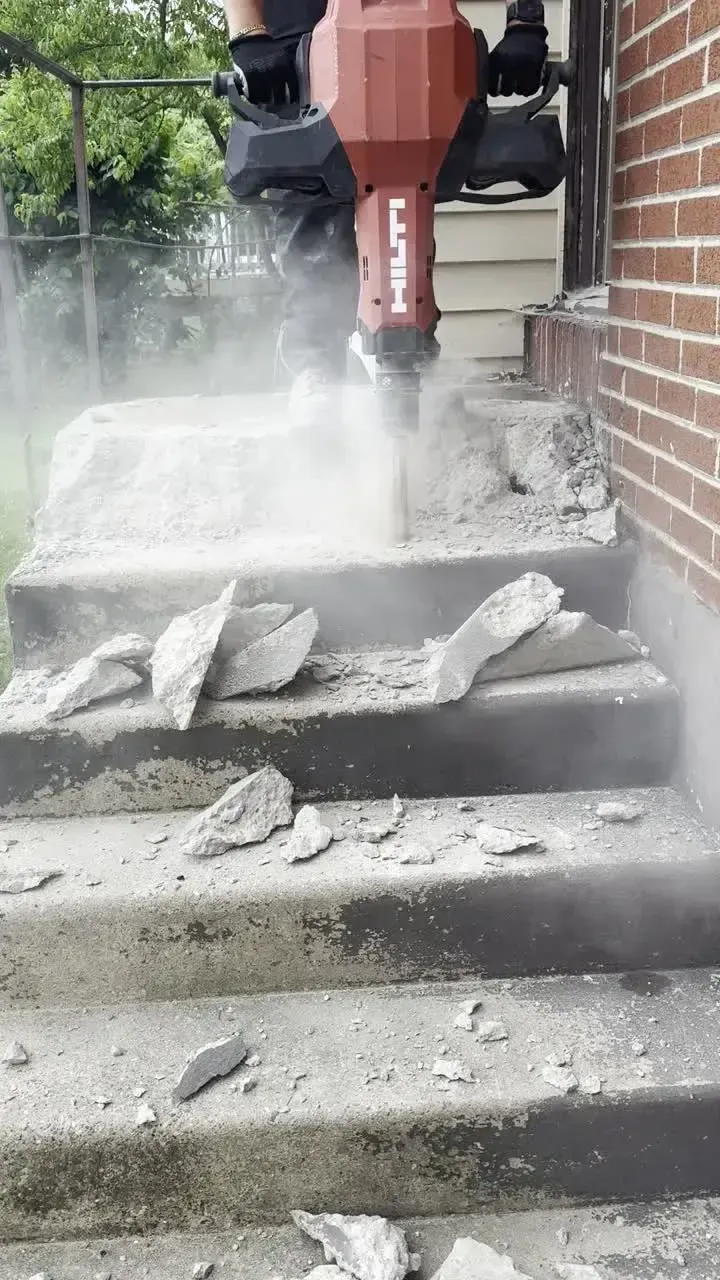
Start by looking at the damage. These checks tell you which repair to ask about.
Tap the area with a hammer. A hollow sound means the concrete has separated below the surface. Rust stains or visible bar mean the steel is involved, which rules out a simple patch.
A few spots point to a patch. A whole worn surface points to a resurface. Crumbling or heaved sections point to replacement. Our guide to driveway repair versus replacement walks through it, and concrete overlay versus a new slab compares the two options.
Cracks are a different problem from spalling and have their own causes. Read why concrete cracks and how to prevent it if that is what you have.
Patches and sealers bond best on dry concrete. Late summer, after a few dry days, is the best window in New Jersey. Waiting until after a hard winter lets the damage spread, and one more freeze can turn a small spall into a large one.
Exposed or rusting rebar is not a do-it-yourself patch. The repair has to deal with the steel or the spalling returns.
For what a sound driveway should give you before any of this starts, see how long a concrete driveway lasts.
Yes, if the damage is shallow and the slab underneath is sound. Loose concrete is cut back and a bonded repair mortar goes in, or the whole surface is resurfaced. Deep spalling, exposed steel or heaved sections usually mean replacing the slab.
Scaling is the surface peeling or flaking in thin layers, mostly from freezing, thawing and deicing salt. Spalling is larger chips or craters, often caused by rusting steel underneath. The causes and the repairs differ.
It can. Salt keeps the surface wet and adds freeze-thaw cycles, and it carries chlorides down to the steel. Use sand for traction, keep salt off new concrete in its first winter and seal the slab.
Papaneri & Sons Concrete repairs and replaces driveways, patios, walkways and steps across Cherry Hill, Marlton, Mount Laurel, Moorestown and Haddonfield. Send us a photo or call, and we will tell you if it needs a patch, a resurface or a new pour.