
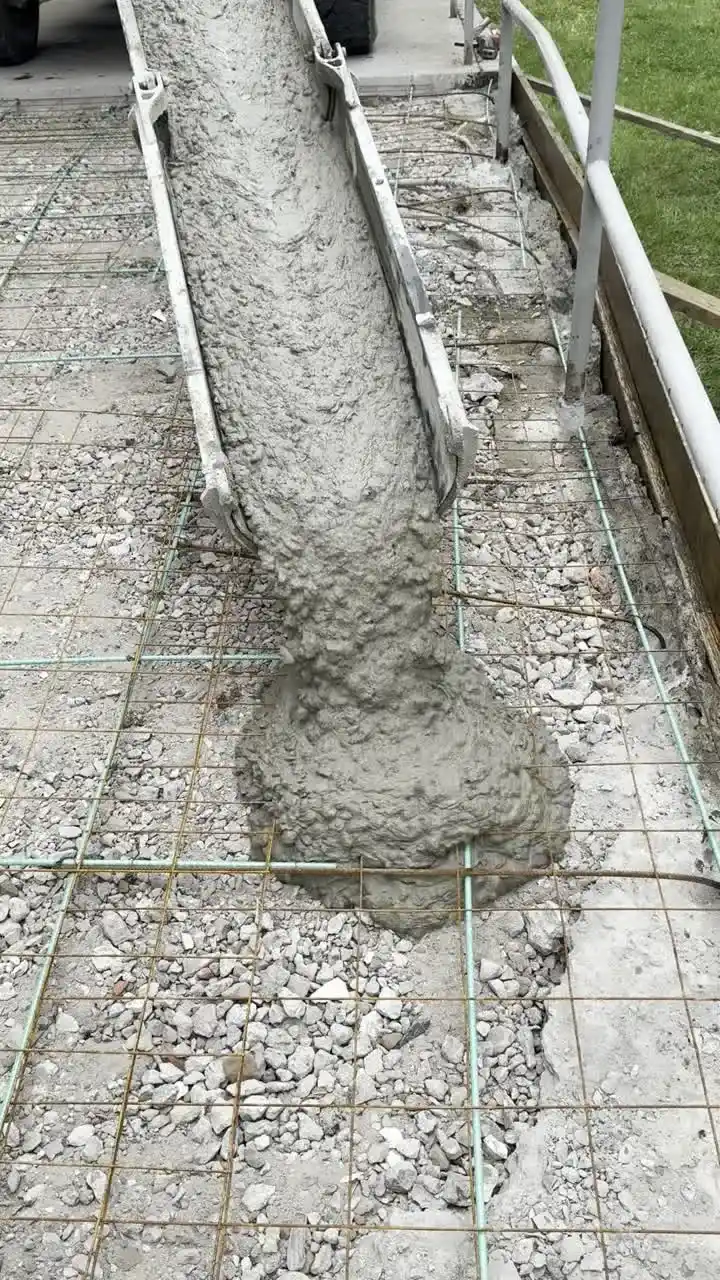
PSI is the strength your concrete is designed to reach in 28 days. Most residential mixes stop well below 4,500. Here is what the extra strength buys.
PSI stands for pounds per square inch. It is the compressive strength the mix is specified to reach, measured by breaking test cylinders in a press. The National Ready Mixed Concrete Association notes that residential concrete can run as low as 2,500 psi, while commercial work sits at 4,000 psi and up.
Papaneri & Sons pours a 4,500 psi mix on residential work as a standard, not as an upgrade. It is the single spec we get asked about most, and it is the one homeowners are least likely to find on a competing quote.
This post explains what the number is, how it gets verified, and where it shows up in real life. For the full list of work we pour at that strength, see our concrete services page.
The number on a delivery ticket is not a guess or a marketing claim. It is a specification that comes with a testing procedure and a pass or fail line.
Concrete keeps gaining strength for years, but the industry measures it at 28 days, per NRMCA guidance on compressive strength testing. Cylinders are cast from the same load that goes into your driveway, cured under controlled conditions, and broken in a compression machine on that schedule.
A strength test result is the average of at least two cylinders from one sample. Testing labs report the failure load divided by the area of the cylinder, which is where the pounds-per-square-inch figure comes from.
For a mix to pass, the average of three consecutive tests must meet or beat the specified strength, and no single test may fall more than 500 psi below it. That is what makes the number a real spec and not a target.
Because concrete varies load to load, a ready-mix plant proportions the mixture to average higher than the specified strength. That margin is what keeps a job from failing acceptance on a bad day.
Adding water at the jobsite to make concrete easier to place lowers the strength of what you actually receive. A ticket that says 4,500 psi means nothing if the mix gets watered down in the driveway before it is placed.
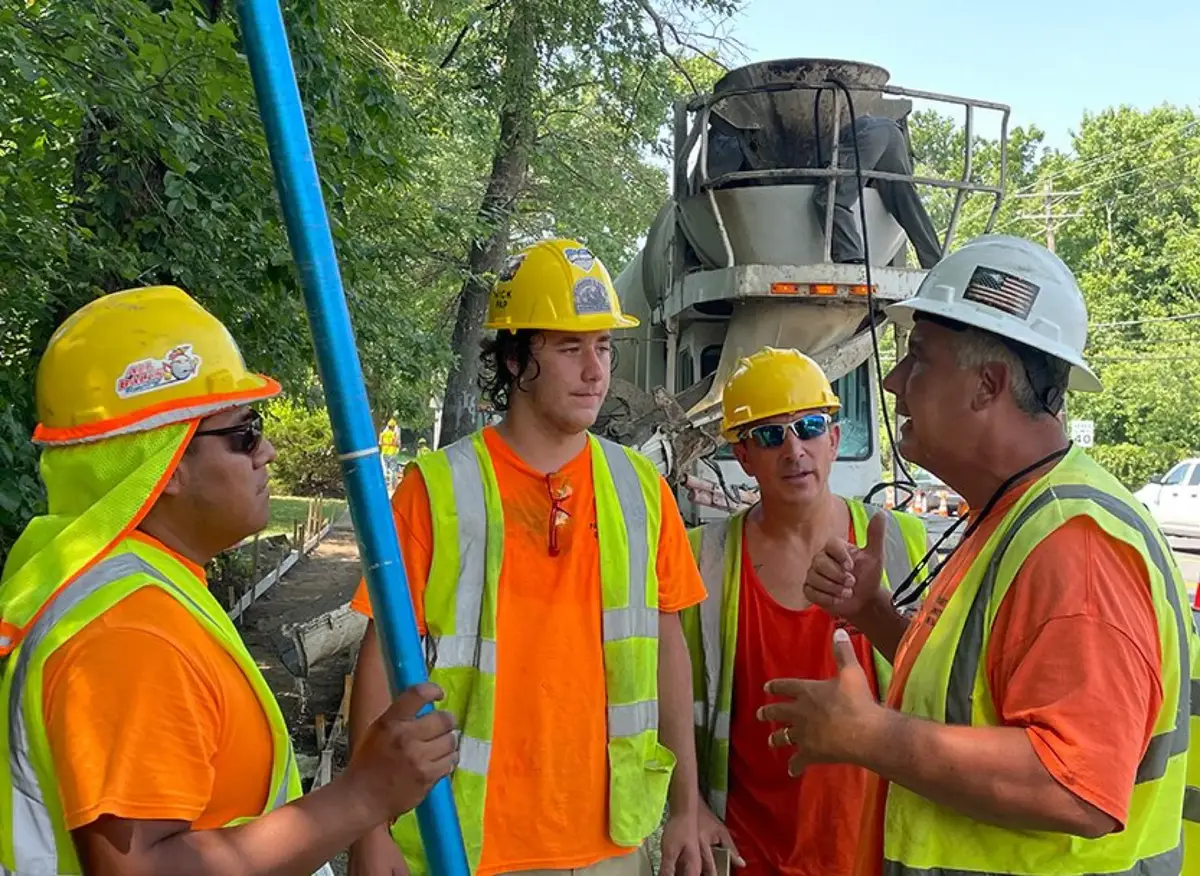
Strength is specified by exposure, not by how nice the job is. The National Ready Mixed Concrete Association calls for 4,000 psi on exterior slabs exposed to deicing chemicals and 3,500 psi where deicers are not used, consistent with ACI 332.
Basic residential fill and non-structural work sits around 2,500 psi. Dry interior slabs run near 3,500. Exterior slabs that see salt call for 4,000. A 4,500 psi mix sits above all of them.
Exterior concrete in a freeze-thaw climate needs entrained air, with about 6 percent recommended for mixes using three-quarter inch stone. Those microscopic bubbles give freezing water room to expand instead of pushing the surface apart.
Higher strength usually means a denser paste and lower permeability. Less water gets into the concrete, which means less to freeze, less to carry salt, and a surface that resists scaling and abrasion longer.
A mix design also sets the slump, the aggregate size, the air content, and any admixtures. Two loads can both say 4,500 psi and behave very differently on the ground. The strength number is the headline, not the whole story.
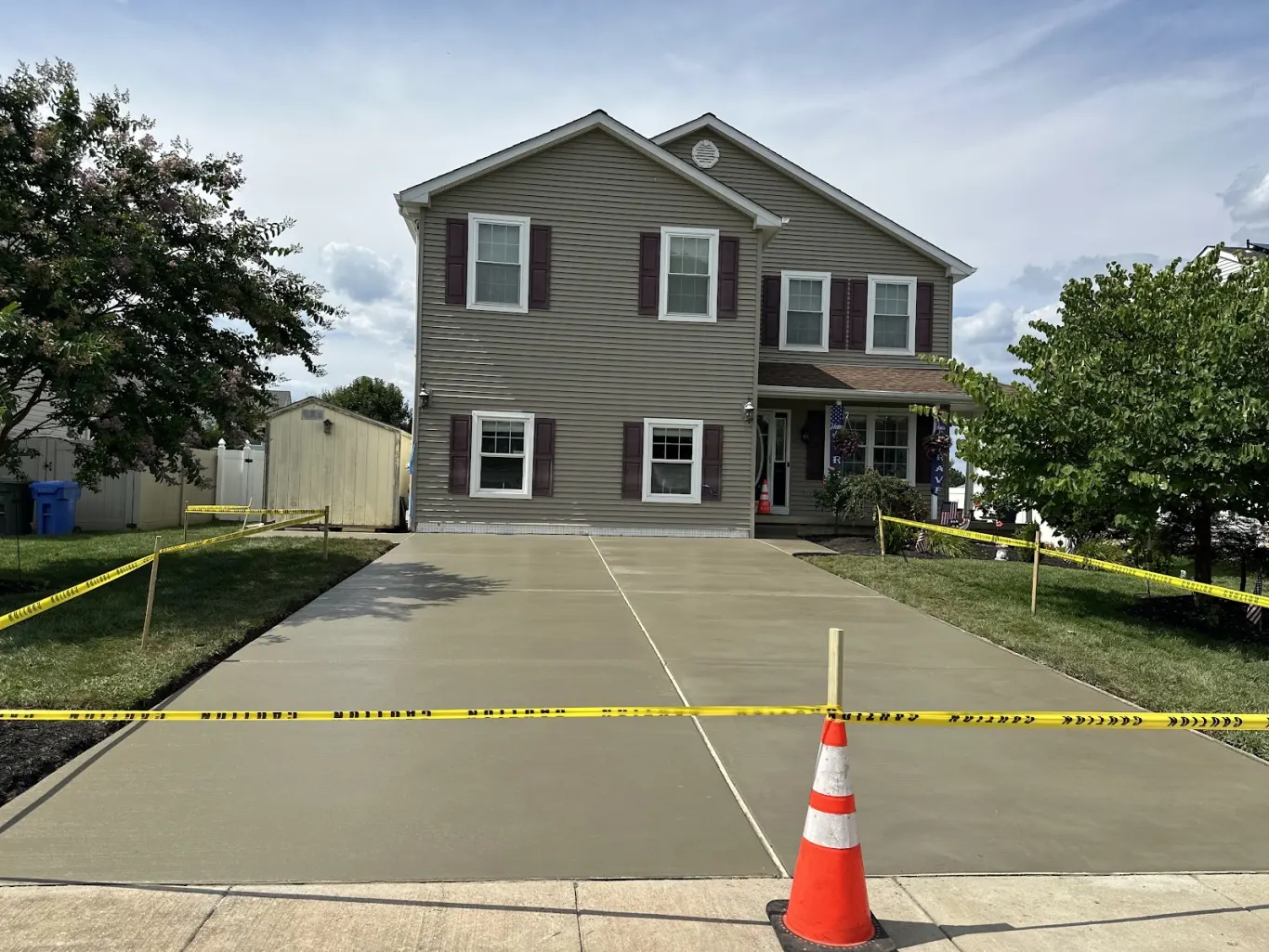
A stronger mix gains usable strength sooner, which shortens the wait before foot traffic and vehicles. That is a practical benefit on a driveway you need back, not just a durability number on paper.
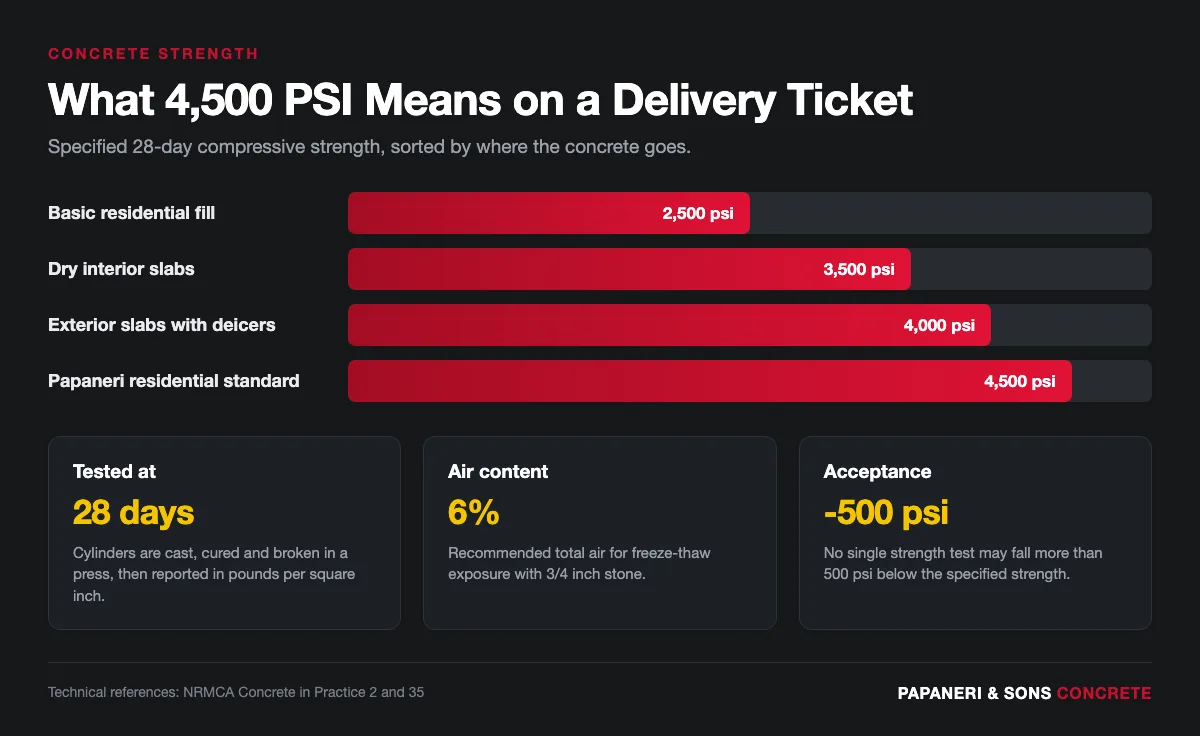
Papaneri & Sons has been pouring in South Jersey since 1987 and has placed more than 5.7 million square feet of concrete. The 4,500 psi standard came out of tearing out other people's work, not out of a brochure.
The slabs we remove early are rarely cracked through. They are pitted, flaking, and rough on top, with the stone showing through where the surface used to be. That is a surface durability problem, and surface durability follows strength.
South Jersey gives concrete the worst of both worlds. Freeze and thaw cycles all winter, then road salt and driveway deicer on top of them. A mix that would be fine in a mild climate has no margin here.
Running one high mix on every residential pour also keeps our crews honest. There is no cheap load and no premium load, so nobody has to decide which customer gets the good concrete.
Strength does not replace good practice, though. Curing is what lets the mix reach the number it was designed for, and our post on concrete curing methods covers how that step is done properly.
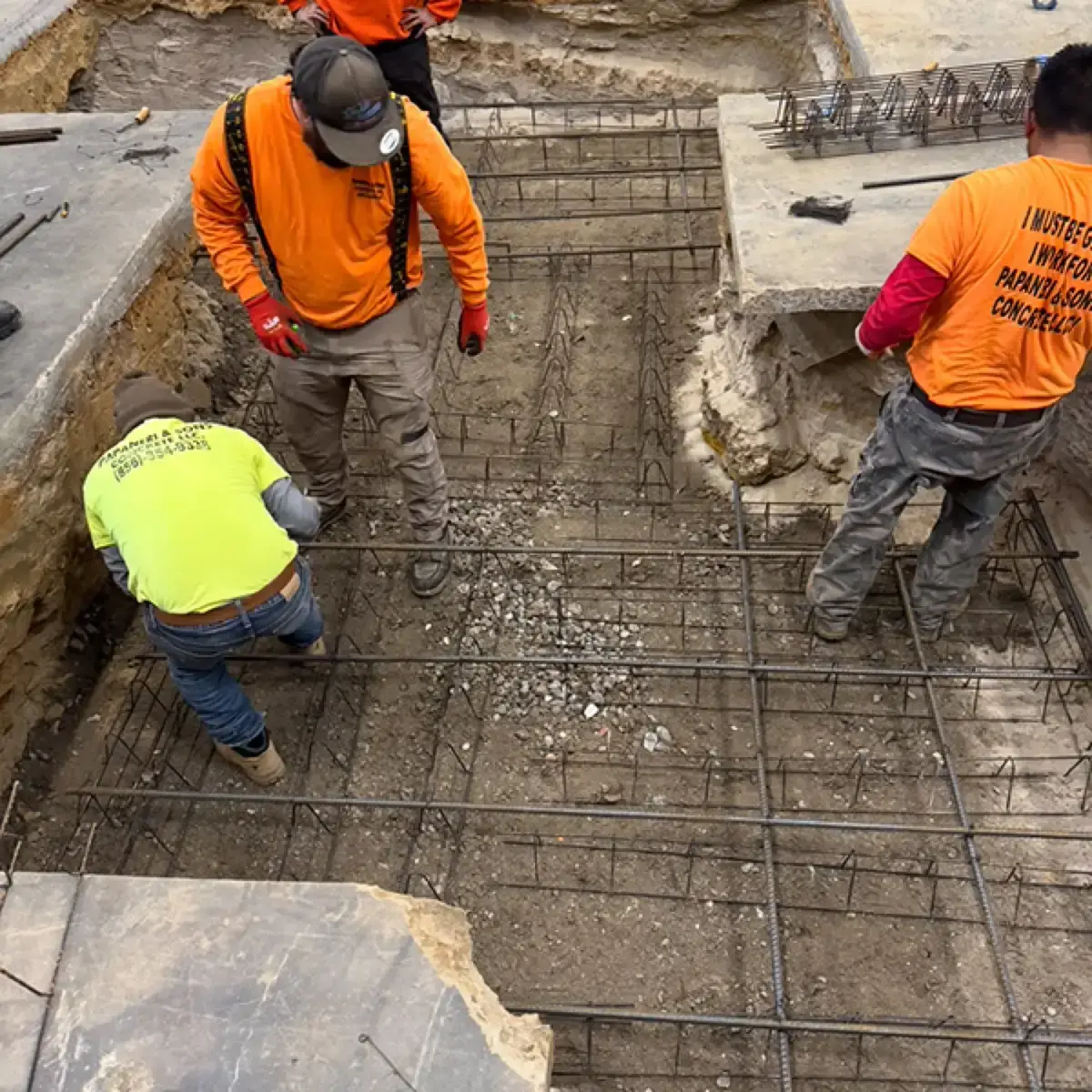
Ask for the mix strength in writing before the pour, on the estimate rather than in conversation. Any contractor ordering ready-mix can tell you the number, because the plant will not send a truck without it.
On pour day, ask to see a delivery ticket. It lists the mix design, the strength, the volume, and the time the load was batched. It takes ten seconds to read and it is the only proof you will ever get.
Watch what happens at the truck as well. If someone runs a hose into the drum to loosen the load, the concrete you paid for is not the concrete going down. A crew that plans the pour properly rarely needs to add water at all.
Strength alone will not stop every crack, and it was never meant to. Our post on why concrete cracks and how to prevent it explains the joint and base issues that cause most of them.
For flatwork, pair the mix with the right slab depth. Our guide to concrete driveway thickness shows how load and thickness work together with mix strength.
On structural work the number carries even more weight. Our reinforced concrete structures page covers how mix strength and steel are specified together on load-bearing pours.
For a closer look at the price, see precast or poured concrete cost comparison.
Not always. Very high strength mixes can set faster and shrink more, which makes finishing harder and can add cracking risk on flatwork. For residential exterior work, 4,500 psi is a practical ceiling that improves durability without creating placement problems. Past that point you are paying for strength the slab will never use.
The mix itself is a modest step up from a 3,500 or 4,000 psi load, and it is a small share of the total job. Labor, base work, and forming make up most of a concrete quote. That is why we run the higher strength on everything instead of selling it as an add-on.
Concrete is measured at 28 days and keeps gaining strength slowly for years after that. It usually reaches around 70 percent of its design strength in the first week, which is why you wait before driving on a new slab. Papaneri & Sons gives every customer a written schedule before the pour, so call (856) 354-9338 with any timing questions.
It is a fair question and it takes one sentence to answer. If a quote will not put the strength in writing, that tells you what you need to hear. Papaneri & Sons pours concrete across Cherry Hill, Voorhees, Marlton, Mount Laurel, and Haddonfield. Family crew since 1987, ACI certified, free on-site estimates, 4,500 psi mix on every residential pour.