
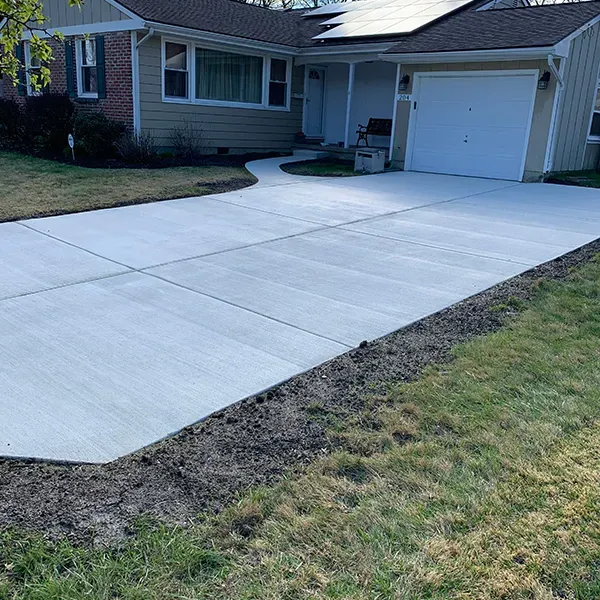
Some cracked driveways have fifteen good years left. Others are already done. Here is the test contractors use before quoting either one.
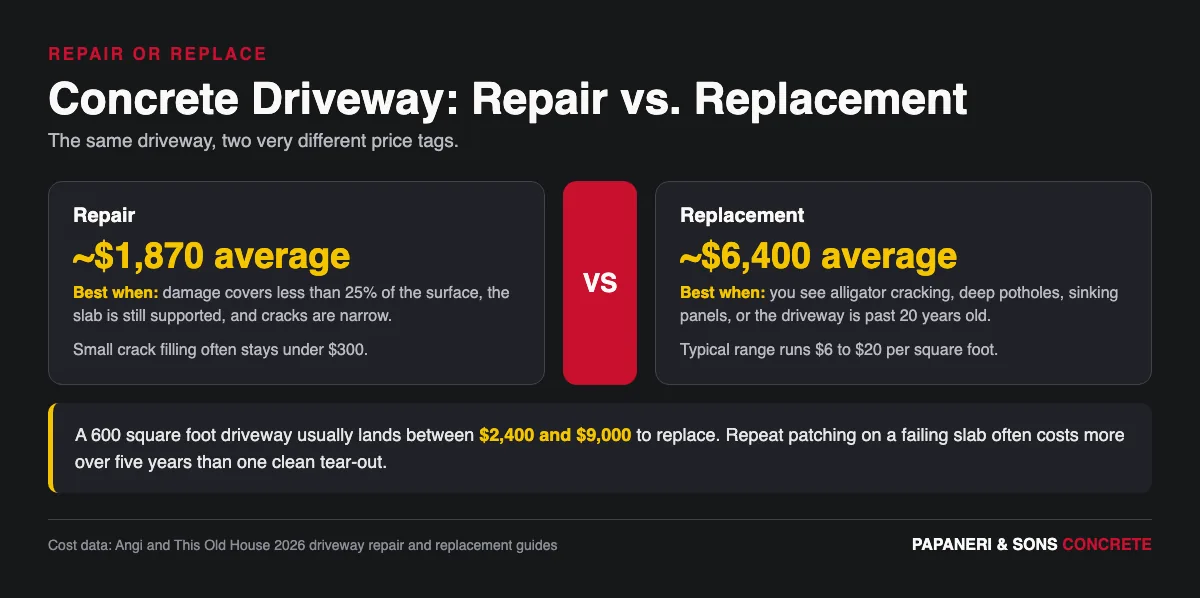
If the damage covers less than a quarter of the surface and the slab has not moved, repair is the right call. Once cracking spreads across the driveway or panels start to sink, you are replacing it. Angi's 2026 repair data puts the average repair at $1,870 and the average replacement at $6,400.
Papaneri & Sons has been replacing and repairing driveways since 1987, and the honest answer is that many homeowners pay twice. They patch a slab that was finished, then replace it two years later anyway.
This post gives you the same checks our estimator runs in the driveway. For the service page and what a repair visit covers, see concrete driveway repair.
Repair works when the concrete is still doing its job and the surface is the only problem. Five signs point that way.
Cracks you can cover with a nickel, with both sides sitting level, are usually shrinkage cracks. Sealing them keeps water out and stops the slow damage that turns a small crack into a broken panel.
A cracked apron, one broken corner, or a section by the garage can be cut out and replaced on its own. You keep the good concrete and pay for the bad part.
Put a straightedge across the crack. If both sides are flush, the base is holding. If one side sits lower, the ground under it has washed out and a patch will not hold.
Light scaling and pitting from winter salt can often be corrected with resurfacing. The slab underneath still has years left, and you are only replacing the top layer.
The apron at the street takes the most weight and the most plow damage. Replacing that section on its own is common, and it saves the good concrete closer to the house.
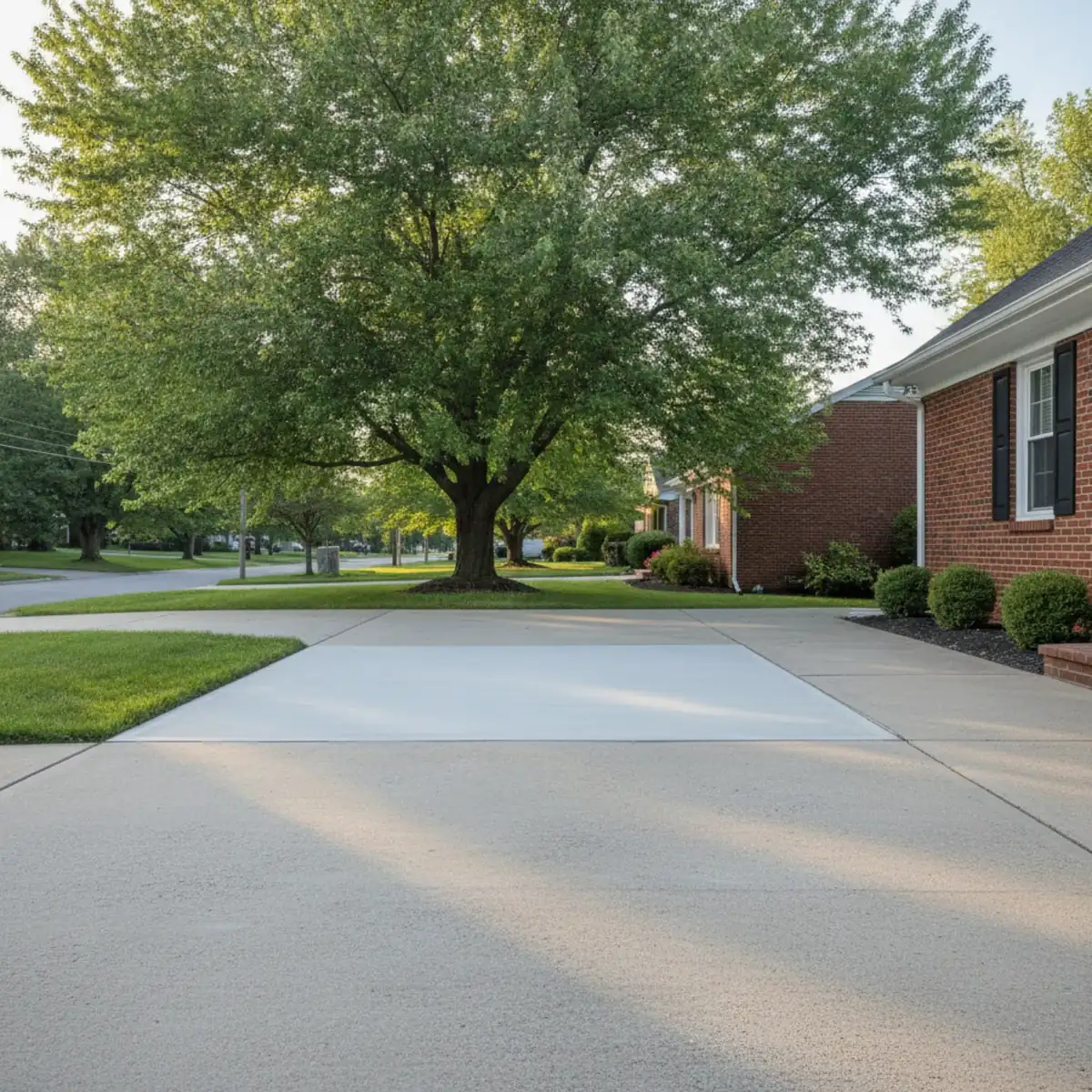
Small crack filling rarely passes $300, while full replacement runs $6 to $20 per square foot. A standard 600 square foot driveway lands between $2,400 and $9,000 to replace, according to This Old House's driveway cost guide.
The math that matters is cost per year, not cost today. A $1,500 patch that buys two years is more expensive than a $7,000 driveway that lasts thirty, and Angi's repair versus replace breakdown notes that a driveway past 20 years old with visible wear is usually a replacement candidate.
Alligator cracking, where cracks connect into a web across the slab, means the driveway has failed structurally. Deep potholes, sunken panels, and drainage that now runs toward the house belong in the same group.
A patched driveway reads as deferred maintenance to a buyer. If you are listing within a year or two, a new pour usually shows better than a repaired one.
Papaneri & Sons has poured more than 5.7 million square feet of concrete, and most of the failed driveways we tear out were not built badly. They were built thin, on a poor base, and then salted every winter. Here is how thick a driveway should have been poured in the first place.
Deicing salt is the quiet driveway killer. The National Ready Mixed Concrete Association reports that concrete exposed to freeze-thaw cycles needs air entrainment, with 6% to 7% air in severe exposures, and at least 4000 psi concrete where deicers are used.
That is why our residential pours use a 4500 PSI mix. It is above the salt-exposure minimum, and it is the difference between a driveway that scales in five winters and one that still looks right in twenty.
The other lesson we give every homeowner is simple. Do not put any deicer on a new driveway for the first winter, and use sand for traction instead. That single habit protects the surface while the concrete finishes hardening.
Sealing helps too, but only on concrete that is already sound. A sealer over a slab that is cracking from below just traps water, so we seal driveways that need protection and replace the ones that are past it.
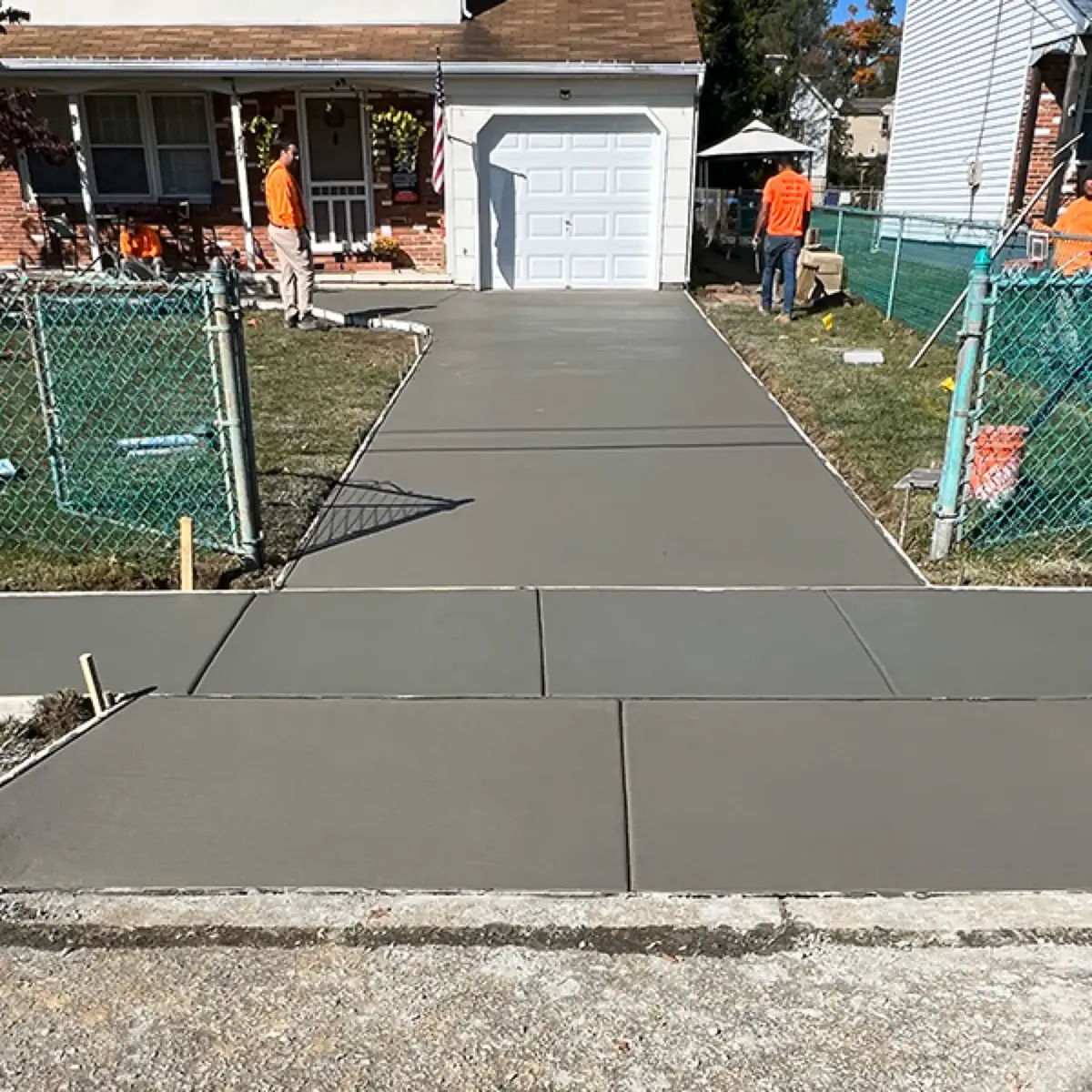
Walk the driveway after a heavy rain. Puddles that sit for more than an hour mark low spots where the base has settled, and those areas will keep failing no matter what you put on top.
Then measure the damage. Add up the cracked and broken sections, compare that to the total area, and use the 25% line as your cutoff. Our post on concrete crack repair versus replacement covers how to read individual cracks the same way.
Check the rest of the property while you are out there. Steps and walkways take the same salt and freeze damage as the driveway, and our guide to cracked concrete step repair costs will tell you whether those need attention too.
Think about timing as well. Concrete pours best in mild weather, and crews book out fastest in late spring and early fall. Getting on a schedule early usually means better weather for the pour and a better price than an emergency call.
If the answer is replacement, get the base priced with the pour. A new slab on the old failed base is the most common way homeowners waste money, which is why our concrete driveway installation quotes always list the stone and grading work as its own line. The same math applies to bigger pours; see what paving a concrete parking lot costs. Weighing materials too? Here is whether to rebuild in concrete or asphalt.
Planning a budget? Read our guide on how an overlay compares to a new slab on price.
A properly built concrete driveway lasts 25 to 30 years, and many last longer with sealing and light salt use. Thin slabs, weak mixes, and a poor stone base cut that in half. Age alone does not mean replacement, but a worn driveway past 20 years old is usually near the end.
Yes, when the slab is level and structurally sound. Resurfacing puts a new wearing layer over the old concrete and fixes flaking, pitting, and light surface cracks. It will not fix sunken panels or wide moving cracks, because the problem there is under the slab.
Stay off it with vehicles for at least seven days, and wait closer to ten days for heavier trucks. You can usually walk on it after 24 hours. Papaneri & Sons gives every Cherry Hill and South Jersey customer a written schedule before the pour, so call (856) 354-9338 if you need yours planned around a delivery.
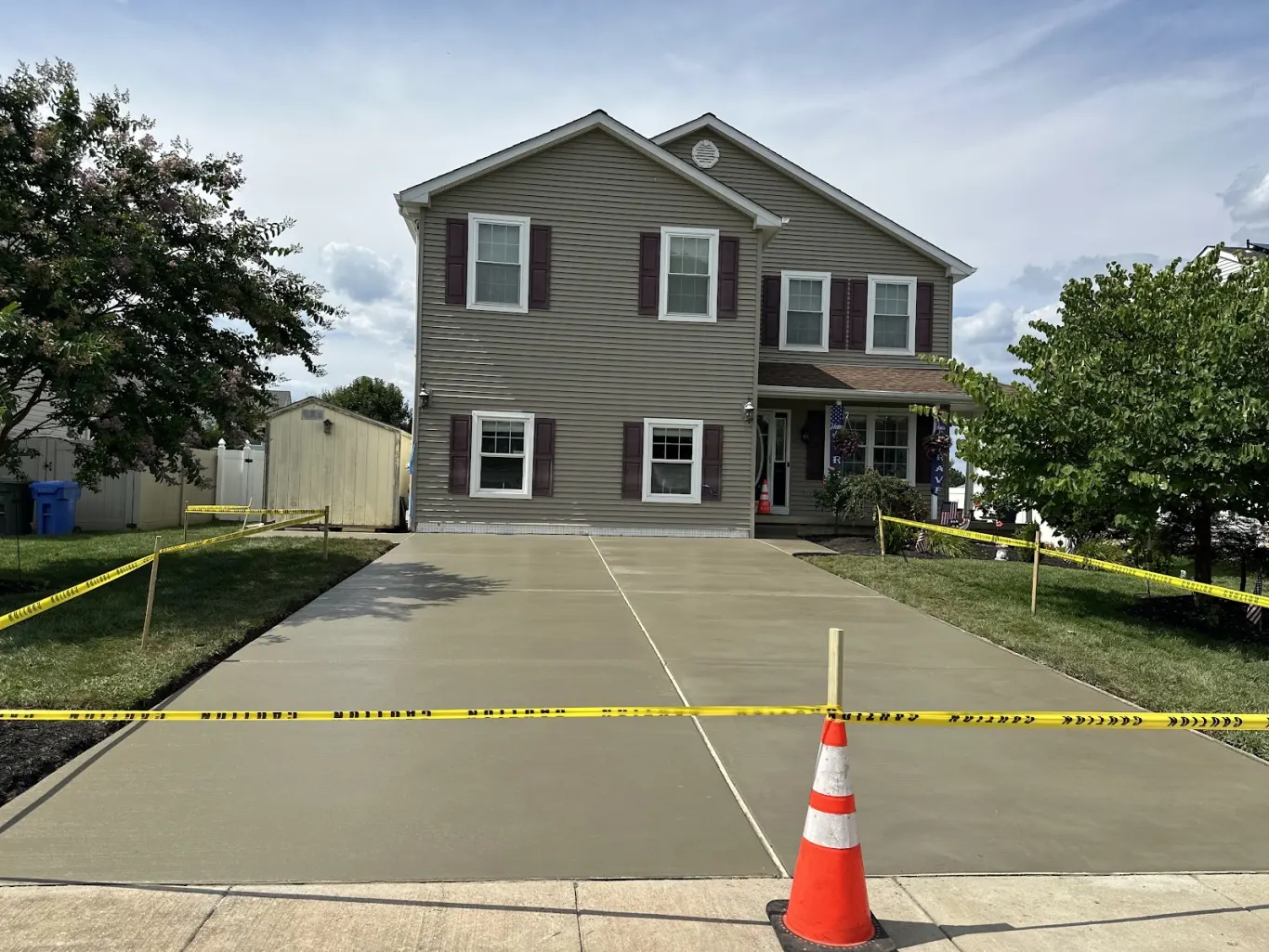
A ten-minute walkthrough settles the repair or replace question for good. We will tell you when a driveway still has life in it, even when that means a smaller job for us. Papaneri & Sons repairs and replaces driveways across Cherry Hill, Voorhees, Marlton, Mount Laurel, and Haddonfield. Family crew since 1987, free on-site estimates, 4500 PSI mix on every residential pour.