
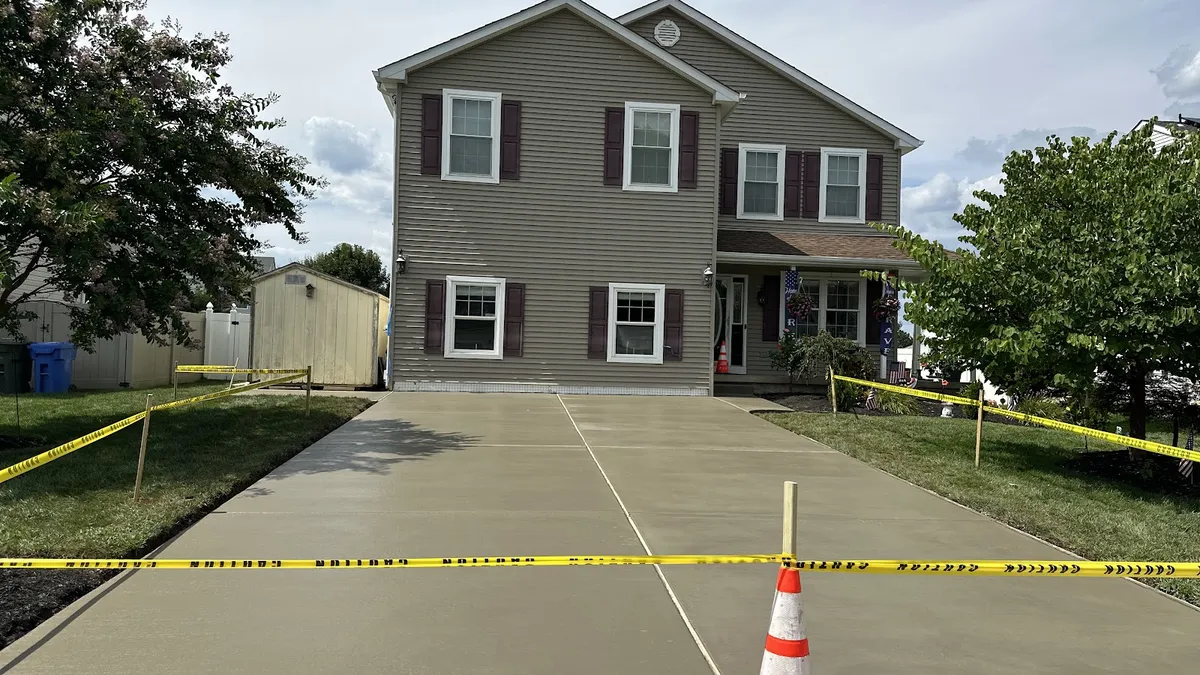
Most driveways land between $6 and $16 per square foot installed. Size sets the ballpark. What goes under the slab sets the rest.
A plain concrete driveway costs $6 to $16 per square foot installed. That puts a standard two-car driveway somewhere near $2,400 to $6,400. LawnStarter's 2026 driveway cost data puts the national average for a whole driveway at about $3,500.
Papaneri & Sons has been pouring driveways since 1987. The part of a quote that surprises people is almost never the concrete. It is the tear out, the grading, and the stone base that nobody sees once the job is finished.
This post splits the price into the pieces an estimator actually prices out. For how a full driveway gets built, from tear out to the last broom pass, see our concrete driveway installation page.
Two driveways of the same square footage can sit $4,000 apart on paper. Five things explain almost all of that gap, and only one of them is the concrete.
An old driveway has to be broken up, loaded, and hauled off before a new one goes in. Bob Vila's driveway cost guide puts removal at $1 to $4 per square foot. On a two-car driveway that is a line of its own, and our concrete removal page covers what the step involves.
A driveway needs compacted stone under it. Digging out soft soil, hauling it away, and bringing in clean stone is real money. Skipping it gives you the cheapest quote you will get and the slab that cracks first.
Four inches handles cars. Work trucks and RVs need five or six, and LawnStarter puts a two-inch jump at roughly 25 percent more. Steel is priced on top of that. Inch Calculator puts wire mesh at $1 to $1.50 per square foot and rebar on a thicker pour at $2 to $3.
Broom finish is the baseline. Stamped patterns, color, and exposed aggregate each add labor, materials, and a sealer step. A finish upgrade is the fastest way to move a driveway from the low end of the range to the top of it.
Where the driveway meets the street is often its own line, and so is fixing a grade that sends water at the garage. ACI Committee 330 calls for a slope of at least 1 percent, an eighth of an inch per foot, so the surface drains.
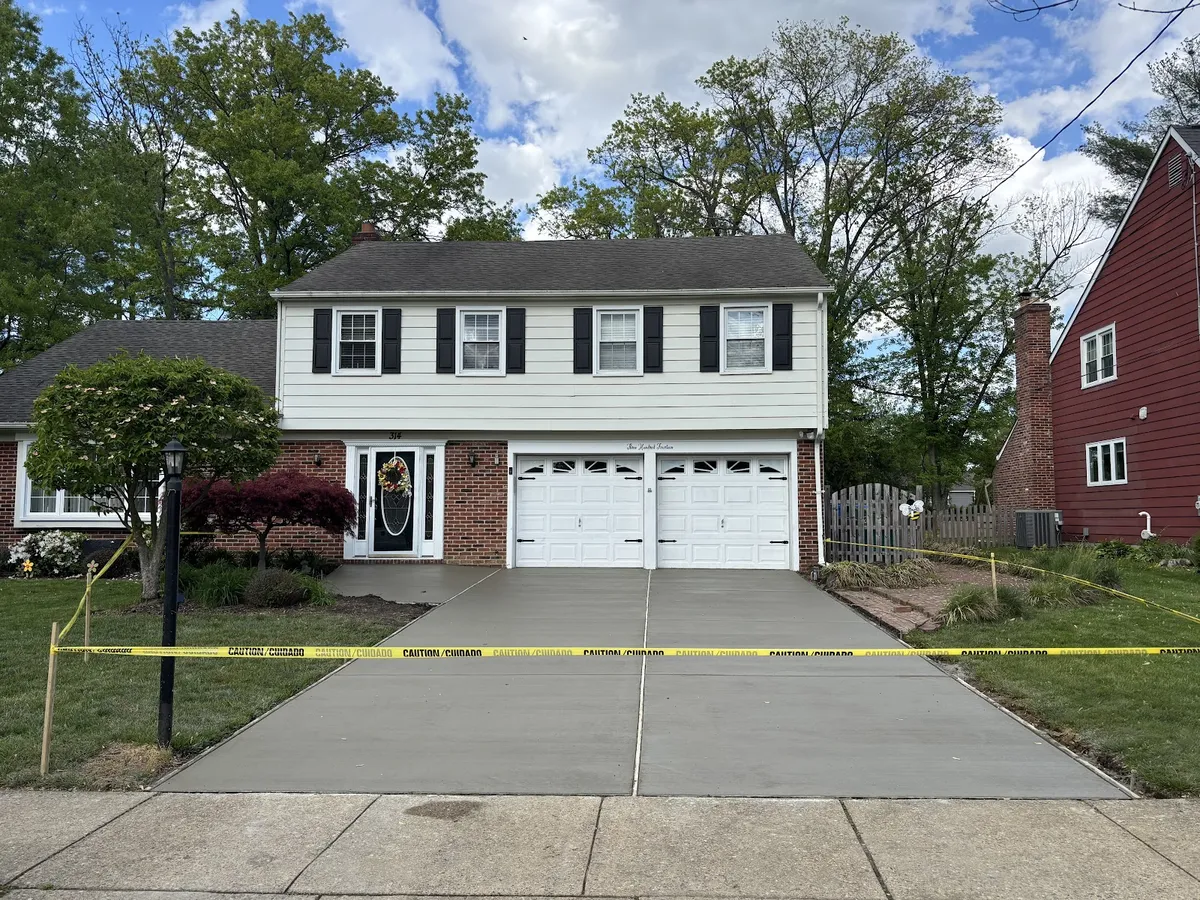
Square footage times a per-foot rate gets you a usable range. Length times width gives you the square footage. The rest is arithmetic you can do before anyone shows up.
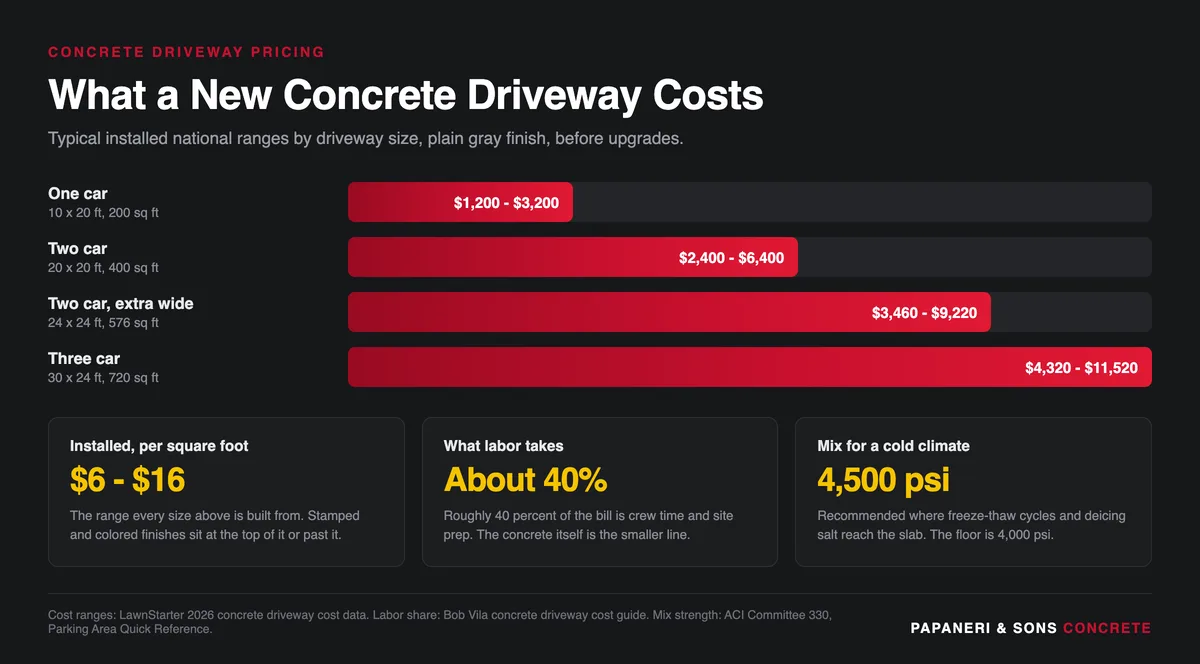
A one-car driveway at 10 by 20 feet is 200 square feet, so about $1,200 to $3,200. A two-car at 20 by 20 feet is 400 square feet, or $2,400 to $6,400. An extra wide 24 by 24 is 576 square feet, or $3,460 to $9,220. A three-car at 30 by 24 is 720 square feet, or $4,320 to $11,520.
Plain gray is the baseline every one of those numbers is built on. LawnStarter puts stained concrete at $6 to $12 per square foot and stamped at $8 to $15. Inch Calculator puts decorative work at $8 to $18.
Labor is roughly 40 percent of a driveway bill, according to Bob Vila. Excavation, base stone, and forming take more of the budget than the ready mix does.
Those rates cover the slab. Hauling away the old driveway, a new apron at the street, a drain for water that already pools, and the township permit are separate lines. Ask which of them apply to your property before you line bids up next to each other.
A 200 square foot pad still needs a truck, a crew, forms, and a minimum concrete order. Those fixed costs spread across fewer feet. Pouring a driveway and a walkway in the same visit usually lowers the per-foot price on both.
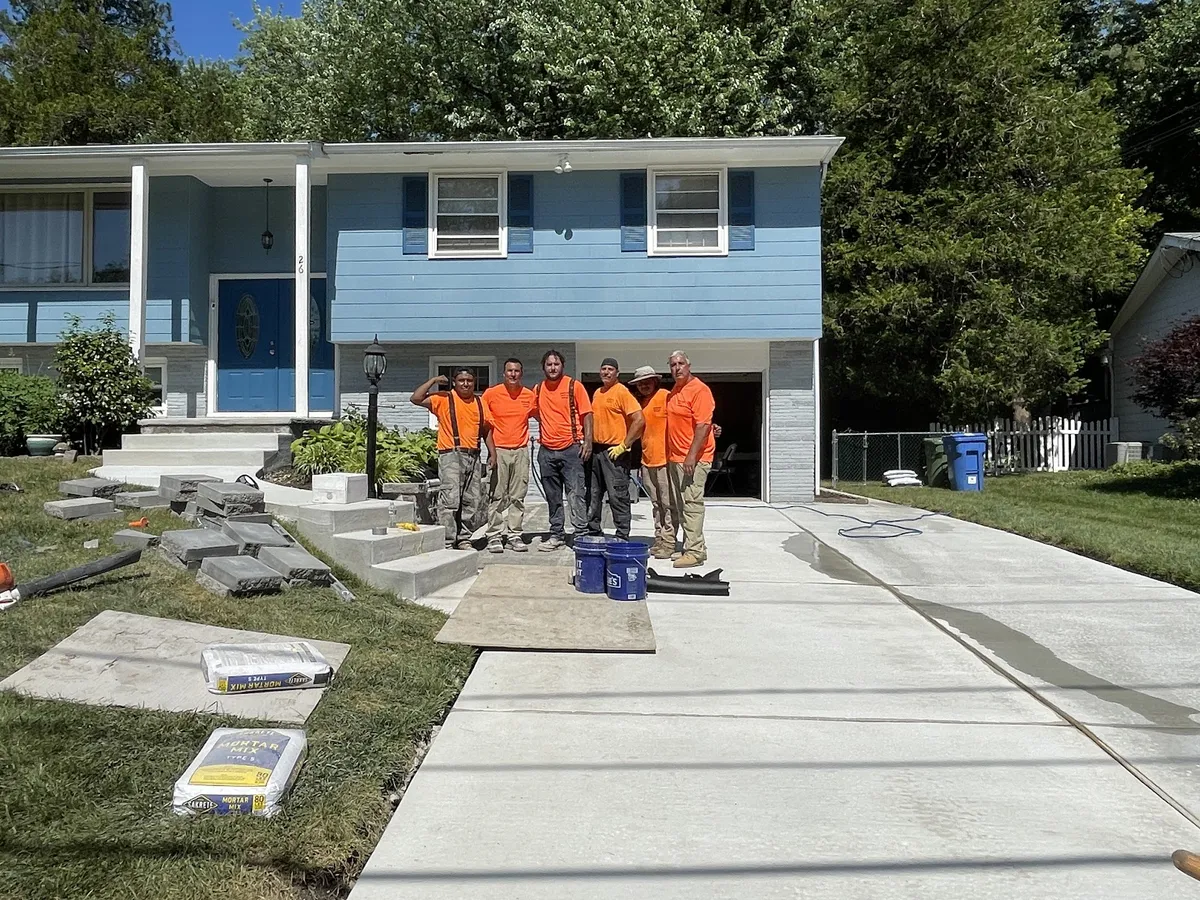
Papaneri & Sons has placed more than 5.7 million square feet of concrete across South Jersey since 1987. The driveways we get called back to look at are rarely the ones that cost too much. They are the ones that were priced without a base.
Mix strength is where a cheap quote hides. ACI Committee 330 says concrete exposed to freeze-thaw cycling and deicers should be no less than 4,000 psi, and it recommends 4,500.
Our residential pours use a 4,500 psi mix. Most crews pour 3,500 to 4,000. On a New Jersey driveway that extra strength is what holds up to road salt and a winter of freezing and thawing.
Material prices are part of why quotes have climbed. Ready-mix concrete costs about 31 percent more than it did five years ago, per the federal producer price index. It is up about 2 percent in the past year alone.
Thickness is the other place a bid goes thin. We pour most residential driveways 4 inches thick. When a work truck or an RV parks on one, we step up to 5 or 6 inches and add reinforcement.
When a bid lands far under everyone else, ask what thickness and what base it includes. A 4 inch driveway on compacted stone and a 4 inch driveway on graded dirt look identical on day one.
Measure the space yourself first. Length times width gives you the square footage, and square footage times $6 to $16 gives you a range you can hold every bid against. A quote far outside that range is doing something different, and the bidder should be able to say what.
Get the slab thickness in writing. Our breakdown of how thick a concrete driveway should be shows what each depth is built to carry and what the extra inch is really buying.
Decide whether you are replacing or repairing before you collect prices, because the two jobs are not close in cost. Our guide to driveway repair versus replacement walks through which one a slab actually needs.
If you are still weighing materials, look at the long run and not just day one. Our side by side on concrete versus asphalt driveway cost covers what each surface costs to keep.
Ask whether sealing is included or extra. A sealed driveway stands up better to salt and staining, and our concrete sealing page explains when it is worth doing and when it can wait.
Check who pulls the permit. Most South Jersey townships require one to replace or widen a driveway, and a bid that leaves that out is not the bid it looks like.
Ask where the water goes. A driveway that slopes back toward the garage sends rain at the foundation. Fixing that after the pour means breaking out concrete you just paid for.
Book ahead if you can. Crews fill up from late spring through early fall, and a driveway scheduled in advance usually prices better than one squeezed into a full calendar.
Two more reads help here. The price of a cubic yard shows what the material alone costs, and how long a concrete driveway lasts shows what you get for the money.
A 20 by 20 driveway is 400 square feet, so at $6 to $16 per square foot it runs roughly $2,400 to $6,400 installed. A plain broom finish sits near the low end of that. Stamped or colored concrete, a thicker slab, or hauling off an old driveway pushes it toward the top.
Almost always because they are not pricing the same job. One bid may include tear out, a compacted stone base, and steel, while another prices a slab poured on whatever is there now. Ask every bidder for the slab thickness, the base depth, and the mix strength in writing. Once those three match, the prices usually do too.
ACI Committee 330 says to keep cars off a new slab for three days and trucks off it for seven, unless testing shows the concrete has reached enough strength. Weather moves those dates, so the crew on your job sets them at the walkthrough. Papaneri & Sons gives Cherry Hill homeowners the dates in writing before the pour, so call (856) 354-9338 if the driveway has to be back in use by a certain day.
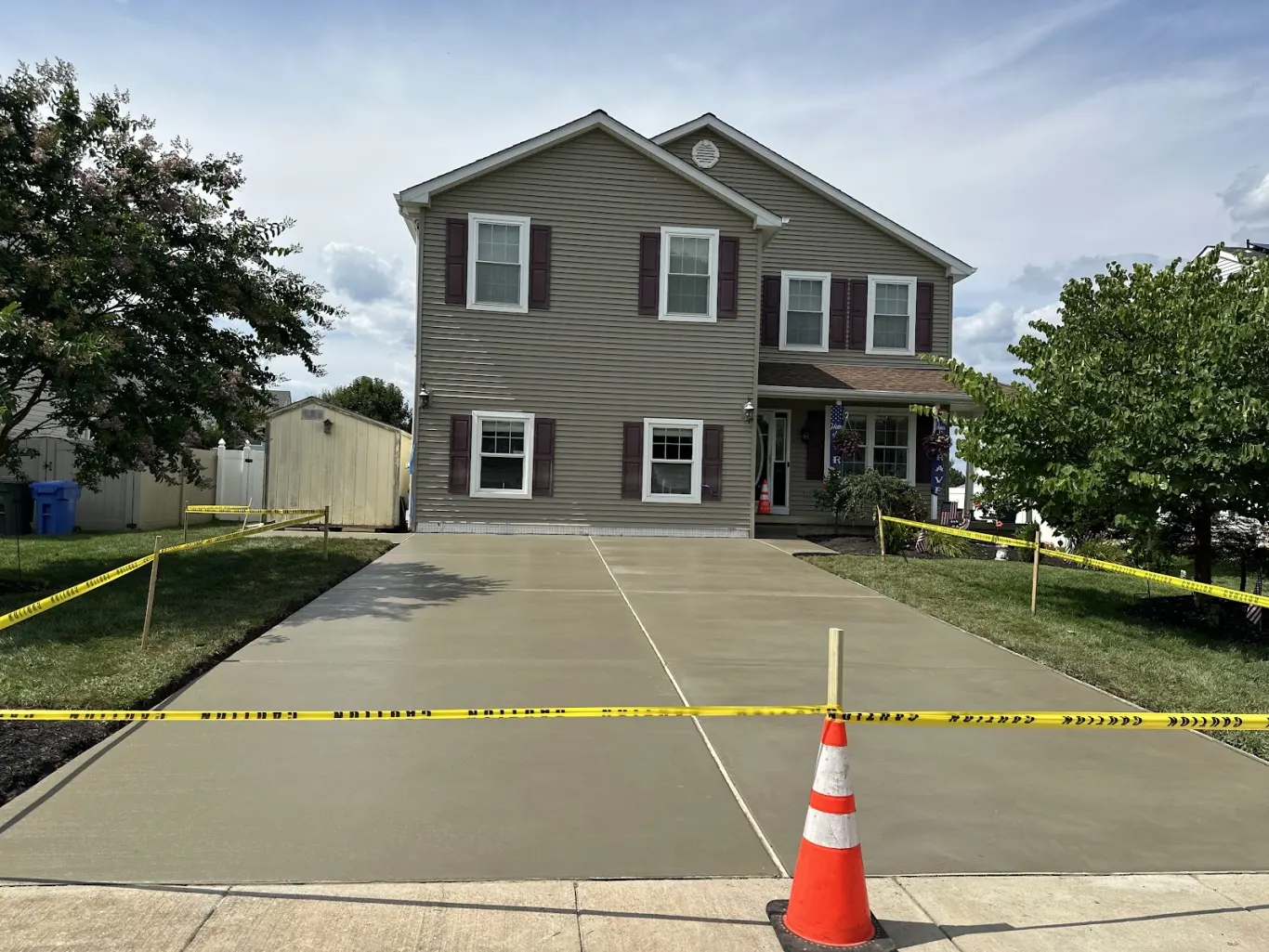
A per-square-foot range gets you close. A walkthrough gets you the actual price, including what has to come out, how deep the base goes, and where the water ends up. Papaneri & Sons pours driveways across Cherry Hill, Voorhees, Marlton, Mount Laurel, and Haddonfield. Family crew since 1987, free on-site estimates, and a 4,500 psi mix on every residential pour.