
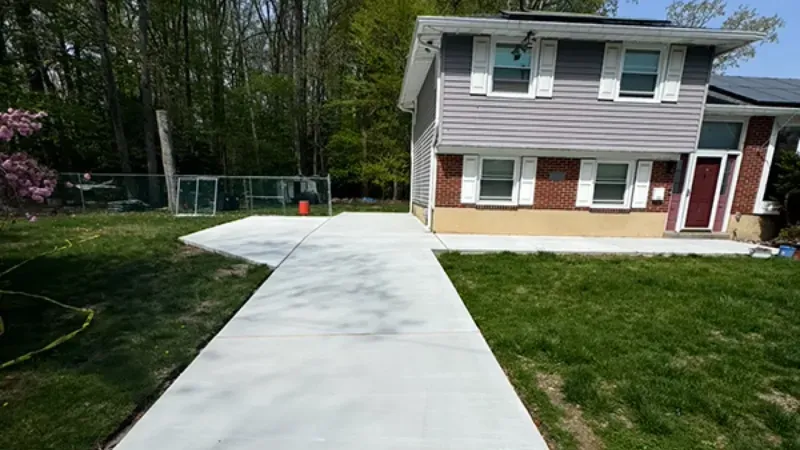
Water decides how long a slab lasts in South Jersey. Here is how the fall gets set on a driveway or patio, and where the water goes after it leaves.
A new slab is a sheet of stone. Every drop of rain that lands on it has to run somewhere.
So that somewhere gets picked before the forms go in. Papaneri & Sons Concrete sets the fall on every concrete driveway and patio poured in Cherry Hill.
Get it right and you never think about it again. Get it wrong and you look at a puddle by the garage door for thirty years.
This page covers four things. Which way the water should run, where it ends up on a normal Cherry Hill lot, what to do about downspouts, and when a drain is worth paying for.
The rule is short. Water leaves the house. It does not come back toward it, and it does not stop halfway.
The Department of Energy's building guide covers patio slabs, walks and driveways. It says to slope down and away from the foundation at a 2% grade [1]. Hold that for 10 feet, or to the edge of the surface, whichever is less. In a figure you can measure, it is a quarter inch of drop per foot.
A patio that runs 12 feet out from the back door drops about 3 inches across that run. Nobody feels it underfoot. A level picks it up straight away.
The crew cuts the grade, compacts the stone, and sets the forms to a finished height at every corner. The concrete only copies what the forms say. On a concrete patio the perimeter is formed to match the grade and flow the yard already has.
A patio has to sit low enough to drain and still clear the door. When the drop available is tight, that is the moment to talk about a drain. Not after the pour.
A slab can have plenty of fall and still send water the wrong way. Pitch across a driveway toward the lawn is fine. Pitch back toward a garage door is a problem every storm.
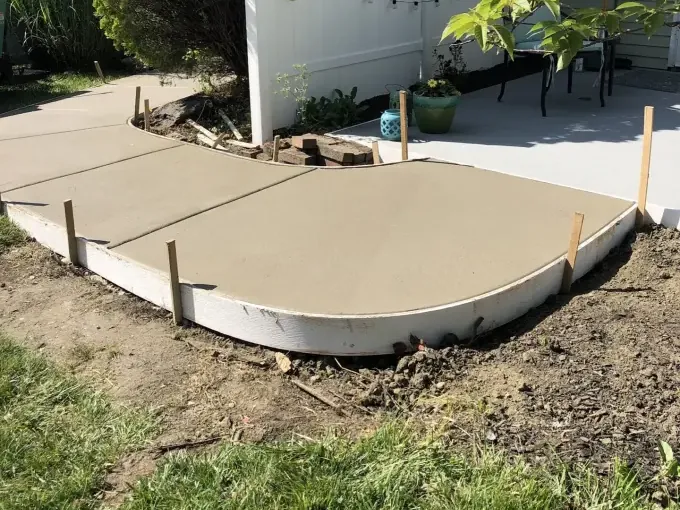
Most lots here were graded once, when the house was built. That pattern is usually still in the ground, and it is the cheapest thing to work with.
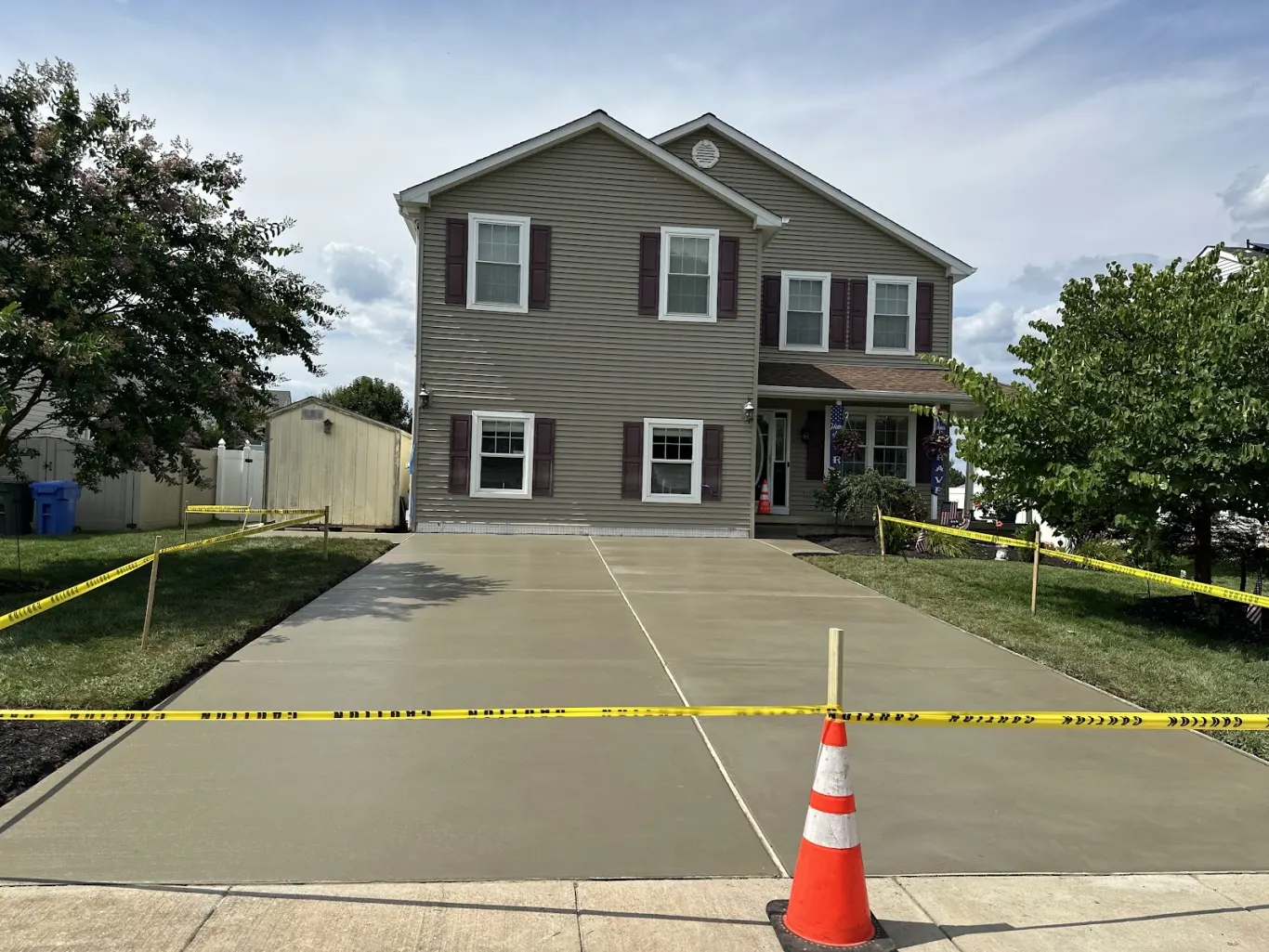
Front driveways carry water down to the apron, over the curb line, and into the inlet at the curb. The township's system is built to take it from there.
Back yards here usually fall to a shallow low line. It runs between two houses or along the rear of the lot. Find that line before you set a patio height.
Cherry Hill's performance and design standards are blunt about it. No stormwater or natural drainage starting on the property may be diverted across property lines [2]. The one exception is water carried in an approved or existing drainage system. Tipping a new patio toward the neighbor is not an option.
The same article sets a grading permit for new home grading and earthwork on residential lots. The trigger is 500 square feet of disturbance or more [2]. The crew checks where a job lands before anyone digs. The zoning permit side of a driveway or patio is covered on its own page.
Plenty of Cherry Hill lots sit close to level. The slope still has to exist. It gets built into the stone base instead of hoping the yard does the work.
You know where the yard holds water after a storm. The crew does not, because the lot is dry the day they measure it. Say it at the estimate and Papaneri & Sons designs around it.
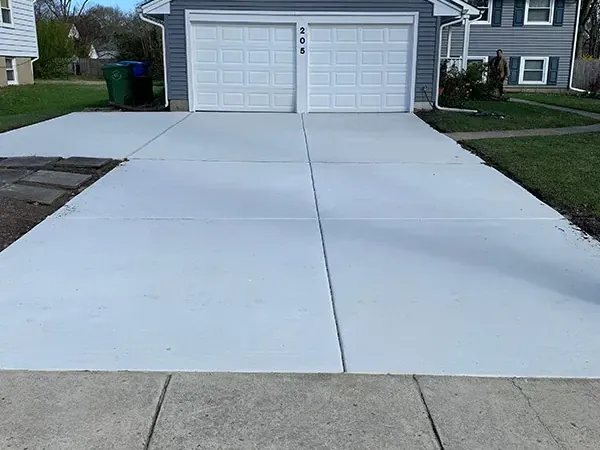
A roof gathers water off a wide area and dumps it in four or five places. Those places are usually right beside the new concrete.
Water landing on the first foot of a patio has to cross the whole slab to get off it. Move the outlet past the edge and the slope only has rain to handle.
An extension lying on the ground is the cheap fix. A pipe sleeved under the driveway before the pour is the tidy one. It costs almost nothing while the stone is still open.
Roof water is water that started on your property, so the township rule above covers it too. An extension that ends two feet short of the fence is still your water.
A splash block spreads water out. It does not carry it anywhere. On a flat lot it leaves a wet circle at the corner of the house all season.
Show the crew every downspout before the job starts. It is the same habit the pour day prep list asks for with sprinkler heads and private lines. Both are things nobody can see from the street.
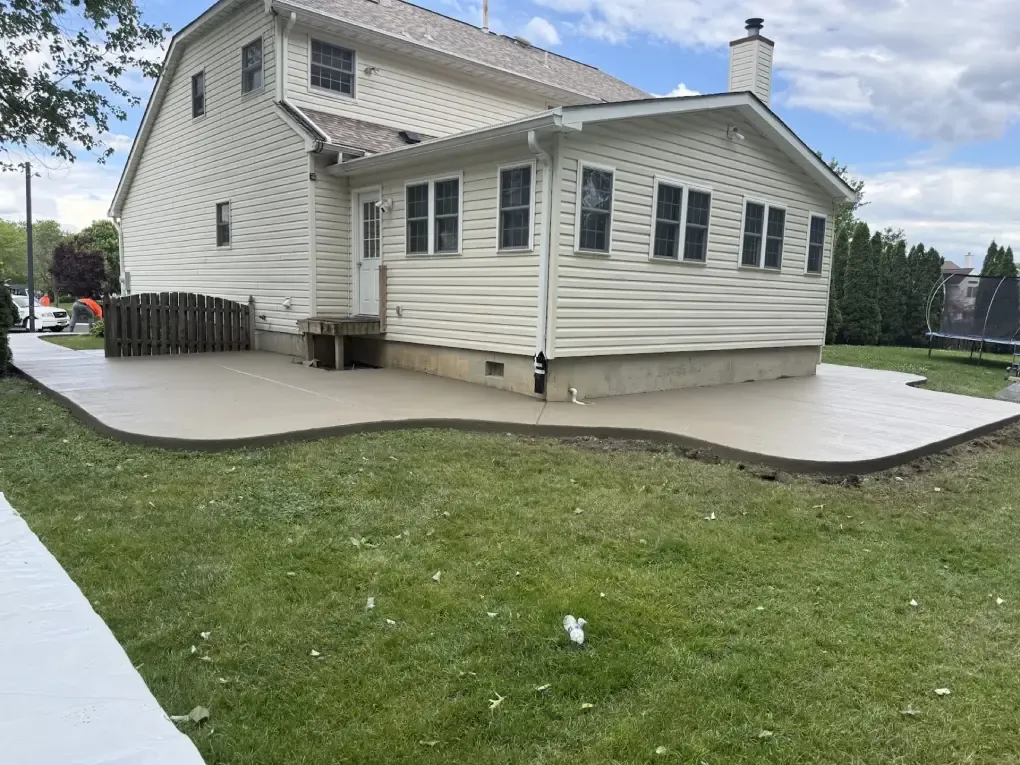
A slab holds water two ways. One is a dish left in the middle of a pour. The other is a corner of the yard that was always the lowest point.
Run a hose on the slab and watch where the water stalls. Or walk out ten minutes after a storm stops. Anything still wet then is a low spot.
New Jersey's Department of Health warns homeowners about standing water. Any container holding water can be a home for mosquito larvae, and after 7 days, larvae will become adult mosquitoes [3]. A puddle sitting on a patio all week does the same job as a bucket.
Water that sits on a surface here freezes and thaws all winter. Good drainage keeps it from pooling on top of the slab or working underneath it.
Three cases earn one. A walled courtyard with nowhere to run. A patio pinned tight under a door sill. A back yard that sits lower than everything around it.
Usually a trench drain cast into the low edge of the slab. Sometimes a basin set at the low point of the yard. Either one runs to a pipe that comes out somewhere downhill and open.
On a lot with fall to spare, a drain is a leaf filter you pay to clean. Slope costs nothing to run and never clogs. Use the drain where the grade runs out.
A shallow dish can sometimes be ground down or covered with an overlay. A low corner usually means that section comes out and gets repoured to the right height. Ask for the fix in writing, which is one of the lines in how to compare concrete quotes in Cherry Hill.
Papaneri & Sons reads the lot at the estimate and sets the slope on paper before the date is booked. It is the cheapest part of the job and the one that decides the rest.
Standing water is also what starts surface damage. Read what causes concrete spalling for what that looks like, and when new concrete can be sealed for the step that keeps water out.
About a quarter inch of drop for every foot, running away from the house. The federal building guide behind that figure asks for a 2 percent grade. Hold it for the first 10 feet or to the edge of the slab.
No. Cherry Hill's design standards say drainage starting on your property cannot be sent across a property line. The exception is water running inside an approved drainage system. So the water goes to the street, or to the low line the lot already uses.
Usually, because that is where the inlets are. Some lots fall to the back or the side instead. The crew reads the grade at the estimate and sets the forms to match what the lot does.
Papaneri & Sons has poured driveways and patios across Cherry Hill, Marlton and Mount Laurel since 1987. We read the lot, set the fall, and sort out the roof water before anything gets poured. Ask for a free on-site estimate and we will walk the grade with you.