
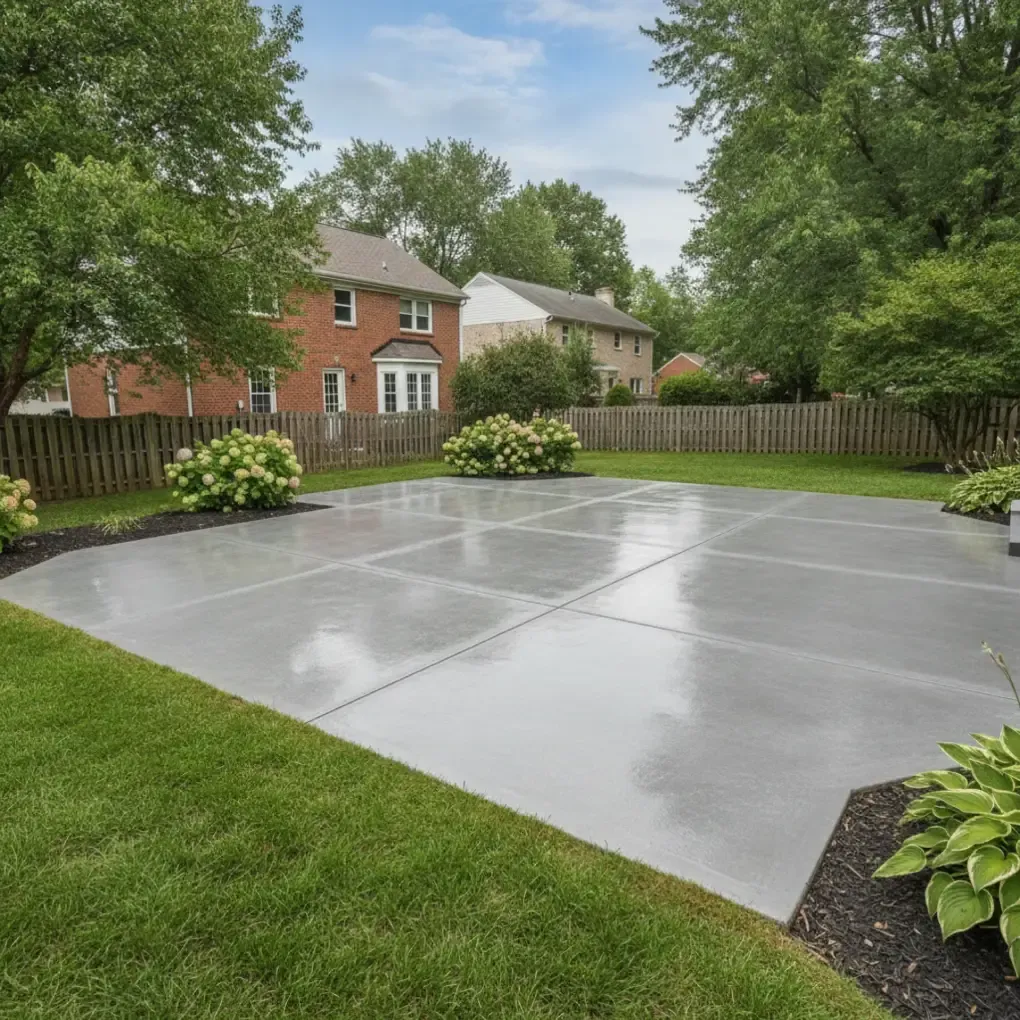
Most sealers wait 28 days. A few go on the week of the pour. The product you picked is what decides it.
Wait 28 days for most sealers. Acrylic resin sealers and reactive penetrating sealers can go on as soon as the new slab holds your weight. A cure and seal goes down the day of the pour.
The 28 days has nothing to do with the sealer. It is the age at which concrete counts as fully cured. By then most of the mix water has left the slab.
Below: what the wait is for, how it shifts with each sealer, and the three checks that prove a slab is ready. For products, prep and what sealing costs on a finished slab, see our concrete sealing page.
The wait is about water, not strength. A new slab is still pushing mix water out of itself for weeks, and a sealer laid over that water traps it.
Curing is the first week. It means holding the fresh slab at the right moisture and temperature so the cement keeps reacting. That runs typically 3 to 7 days per NRMCA. Concrete left to dry out during that window can lose as much as 50 percent of the strength it was designed for.
Drying is what comes after. The slab is still full of water it no longer needs. That water has one way out: up through the surface you want to seal.
A film forming sealer over a damp slab does not bond. Concrete Network's sealing guide says to apply only to dry concrete. The reason: applying to damp concrete could cause haziness or loss of adhesion. In practice that is a milky film, white patches, blisters, or a coat that lifts off the next season.
None of that is fixable with another coat. The failed sealer has to be stripped off and the slab resealed.
28 days is the age at which concrete is tested for the strength it was ordered at. Sealer makers borrowed it because by then the slab is dense and the surface is dry enough to take a coating. Concrete Network puts it plainly: almost all sealers can be applied after the concrete is 28 days old.
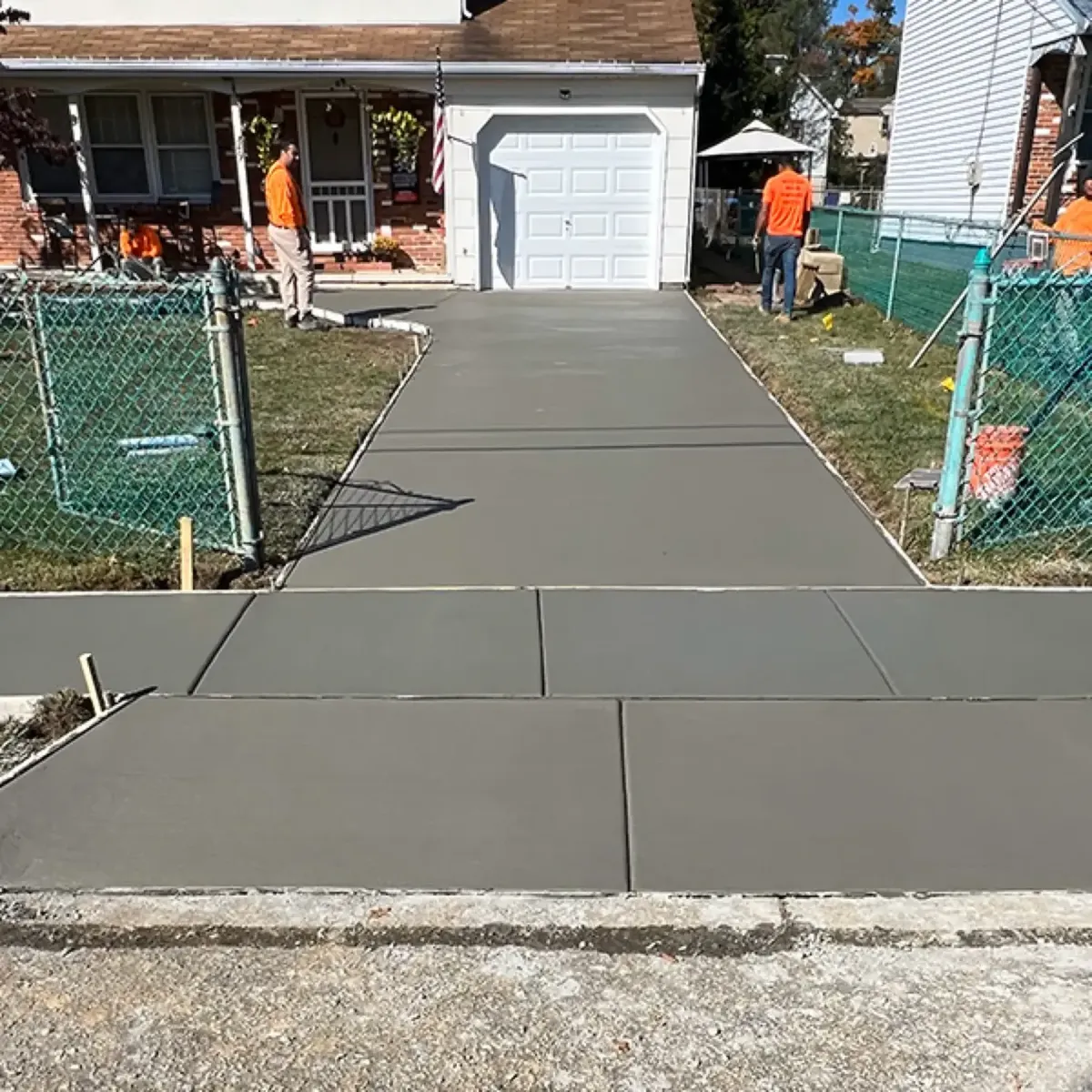
There is no single answer because there is no single sealer. Four product families, four different starting dates.
A cure and seal is a curing compound first and a sealer second. It goes on once the bleed water has evaporated off the fresh surface, not weeks later. These are liquid membrane forming compounds, and NRMCA says they must conform to ASTM C309 or C1315. Some straight acrylic sealers do the same double duty.
Foundation Armor's data sheet for its WB25 acrylic says it can also be applied to uncured concrete to help aid with proper curing. That is a sealer written to go on early, on purpose.
Acrylic resin sealers go on as soon as the new concrete carries the installer. So do the reactive penetrating types, siliconates and silicates. They sit in a thin breathable film or react inside the pores. Neither one blocks escaping water.
These wait. Silanes and siloxanes need open pores and a dry surface to drive into. Epoxies and urethanes build a thick, closed film. That is the worst thing to put over a slab still giving up water.
Labels do not all agree with the 28 day habit. The data sheet for QUIKRETE High Gloss Sealer tells you to allow a minimum of 30 days for new concrete to cure before the first coat. Read the sheet for the product actually going down, and follow that number.
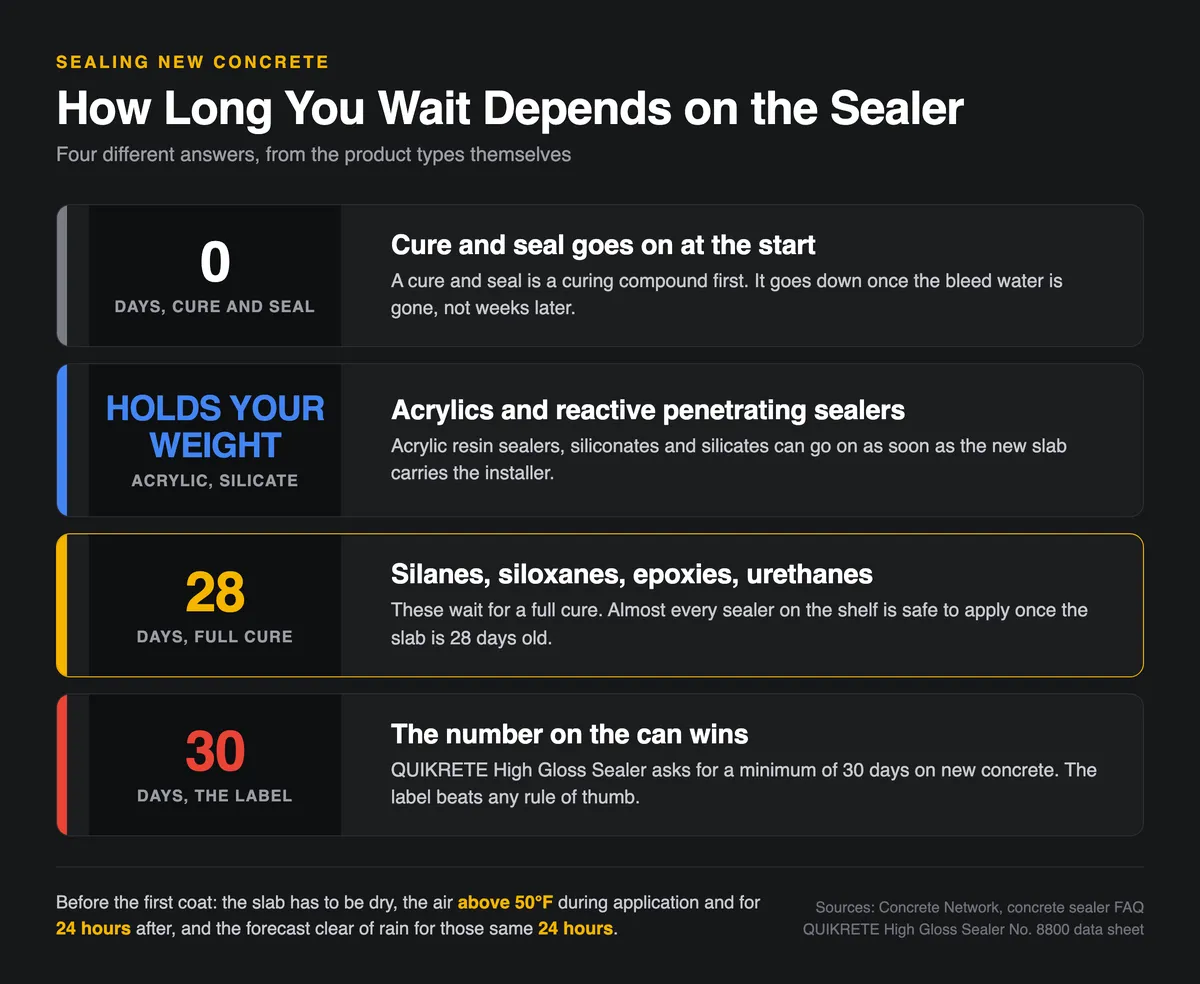
Papaneri & Sons Concrete has been sealing driveways, patios and slabs across Cherry Hill and South Jersey since 1987. The timing question comes up on almost every new pour.
On plain driveways and sidewalks we use a silane siloxane penetrating sealer, because it repels water without changing how the surface looks. That family waits for the full cure. On stamped and decorative work we use an acrylic, which can go down much earlier.
So two slabs poured the same week can have first seal dates a month apart. The finish, not the calendar, is what sets it.
Sealers want air above 50 degrees during the coat and for 24 hours after. Around here that is the real deadline. Under NOAA's climate normals for 1991 to 2020, Philadelphia averages 58.2 degrees in October and 47.4 in November. The average November high is only 55.9.
Pour a driveway in mid October and the 28 days are up in mid November, with most days too cold to coat. That slab gets sealed in spring, and it is fine sitting unsealed through one winter.
We pour a 4500 PSI mix on every job, where most crews pour 3000. Denser concrete absorbs less water, so it holds a sealer better and holds it longer.
When the day comes, prep is most of the work. The slab gets a hot water pressure wash and a degreaser. Cracks and spalling are repaired first. Then two thin coats go on, with traffic off for 24 to 48 hours.
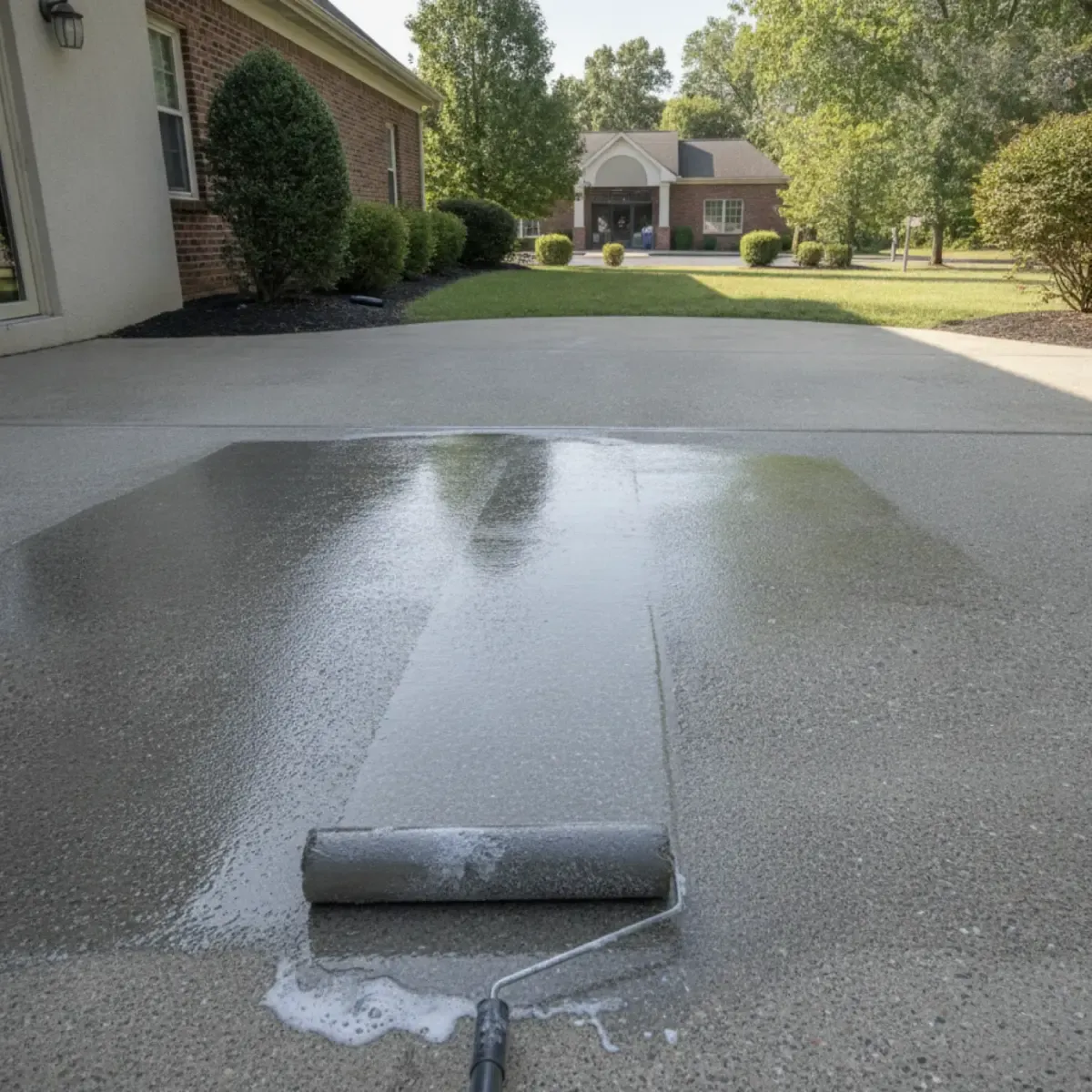
Age is only the first of three. Clear all three and the slab is ready.
Not against a blog post, and not against the last job. Pull up the data sheet for the exact product. If it says 30 days, 28 is early. For how the slab got to this point in the first place, our guide to how concrete is cured covers the first week.
A slab can look bone dry and still be wet inside. The calcium chloride test, ASTM F1869, reads how much moisture comes up over 72 hours. Per Concrete Network, anything above 4 pounds per 1,000 square feet is a no go for sealing. A relative humidity probe set into the slab is the faster version, with 75 percent the usual ceiling.
Above 50 degrees through the coat and the day after. No rain in that window, because water on a curing sealer leaves blisters and marks. And do not coat when the surface temperature is within 5 degrees of the dew point.
After that first seal, the clock resets. A penetrating sealer on a dense slab usually holds 3 to 5 years, a decorative surface 2 to 3. The joints have their own schedule. On colored work the sealer is also what keeps the color from fading.
Once the first coat is on, two things follow. Road salt on concrete covers the winter side, and oil stains on a driveway covers the clean up.
Only with the right product. An acrylic resin sealer or a reactive penetrating sealer goes on as soon as the slab holds your weight. 7 days is fine for those. A silane, siloxane, epoxy or urethane at 7 days is too early and will likely fail.
The water still leaving the slab gets trapped under the coat. You get haze, white patches, blisters, or a sealer that peels within a season. There is no patch for it. The failed sealer has to be stripped and the slab resealed once it is dry.
In Cherry Hill and the rest of South Jersey, yes. Freeze and thaw cycles and road salt both work on unsealed concrete every winter. A simple check later on: pour water on the surface. If it beads, the sealer is still working. If it soaks in, it is time to reseal.
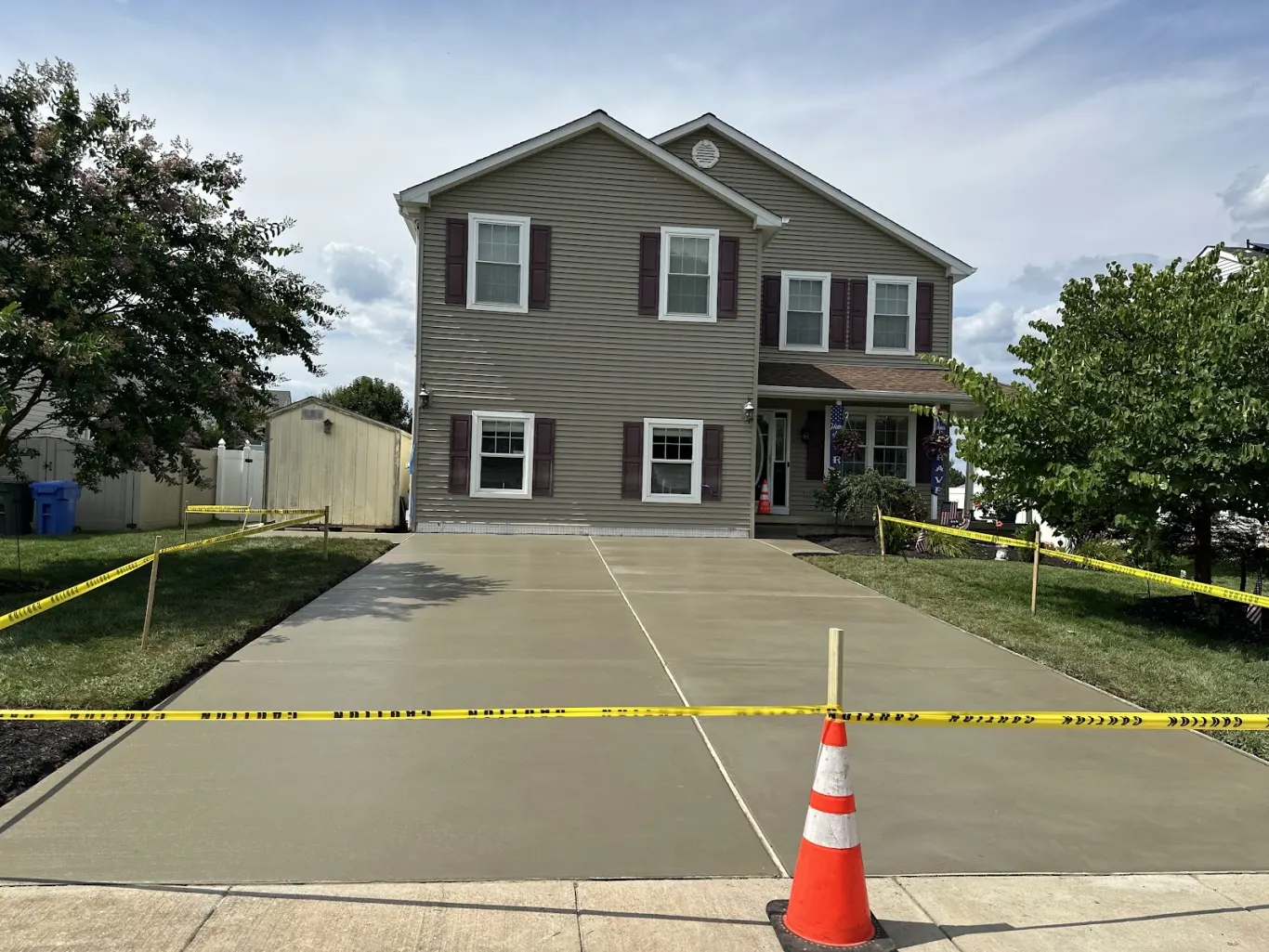
We pour and seal driveways, patios, sidewalks and slabs across Cherry Hill, Marlton, Mount Laurel, Moorestown and Haddonfield. Tell us what you had poured and when, and we will tell you the date it can be sealed.