
Yes, salt can pit and scale concrete. Learn which de-icers are gentler, how to treat new slabs in winter, and how sealing helps. Free estimates.
Yes, salt damages concrete over time. It does not eat the slab overnight, but it speeds up the surface wear that freezing weather already causes. If your slab is worn or flaking, concrete resurfacing can restore it.
This post covers how de-icers harm concrete, which ones are gentler, how to treat concrete in its first winter, and how sealing helps.
Salt melts ice by making a brine. That brine soaks into the concrete, freezes again at night, and expands. Each freeze and thaw cycle pushes on the surface a little more.
Utah State University Extension says most de-icers are salt-based and some are highly corrosive to concrete. Rock salt is cheap, but it contributes to pitting and surface damage on sidewalks and driveways.
The first sign is usually a rough, pitted top layer in spring. Small flakes of the surface come loose. The stones underneath may start to show. The slab is still strong, but it looks tired and soaks up more water each winter.
South Jersey swings above and below freezing many times a winter. Every swing is another freeze-thaw cycle. Add road salt tracked onto driveways and walkways, and surfaces wear faster than in warmer states.
Here is the simple version of how it works. De-icers melt ice by forming a brine that lowers the freezing point of water, as Utah State University Extension explains. That same brine seeps into the pores of the slab. The more brine inside the slab, the more water there is to freeze and push the surface apart.
Cracks and deep surface loss are a separate problem. We cover that in our blog on spalling repair.
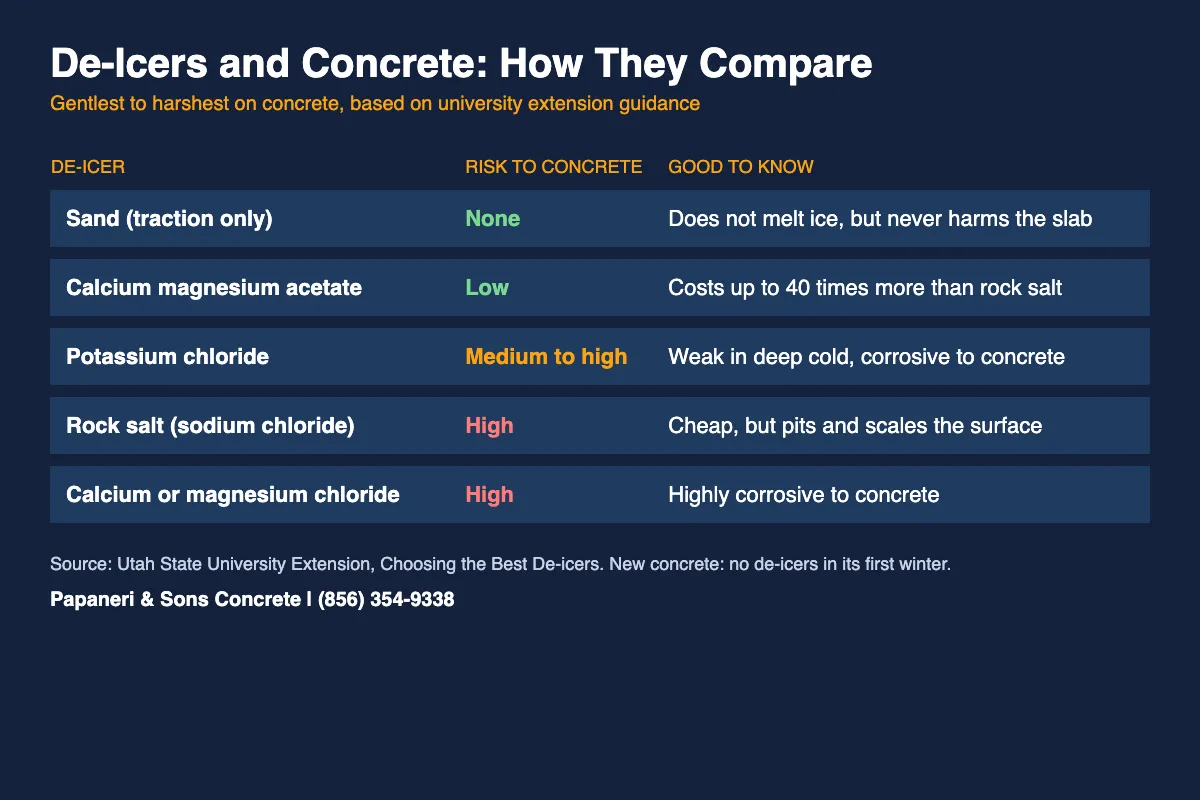
No chemical de-icer is truly safe for concrete, but some are milder. Here is how the common ones compare, based on the Utah State University Extension guide.
Sodium chloride is the most used de-icer. It is cheap and works well, but it is hard on soil, plants, and concrete surfaces.
These are slightly easier on plants but highly corrosive to concrete. They can also leave a slippery film.
This is the gentlest chemical option. It is safer for plants and less corrosive to concrete. It can cost up to 40 times as much as rock salt.
Fertilizer de-icers can stain concrete because of their iron content. Potassium chloride is less harmful to plants but still corrosive to concrete, and it works poorly in deep cold.
Price matters too. Rock salt is the cheapest, which is why most people reach for it. But a few dollars saved on a bag can mean a rough, worn surface in two or three winters. For a driveway you just paid for, the gentler option is often worth the cost.
The gentlest choice of all is a shovel. Sand adds traction without any chemical risk, even though it does not melt ice.
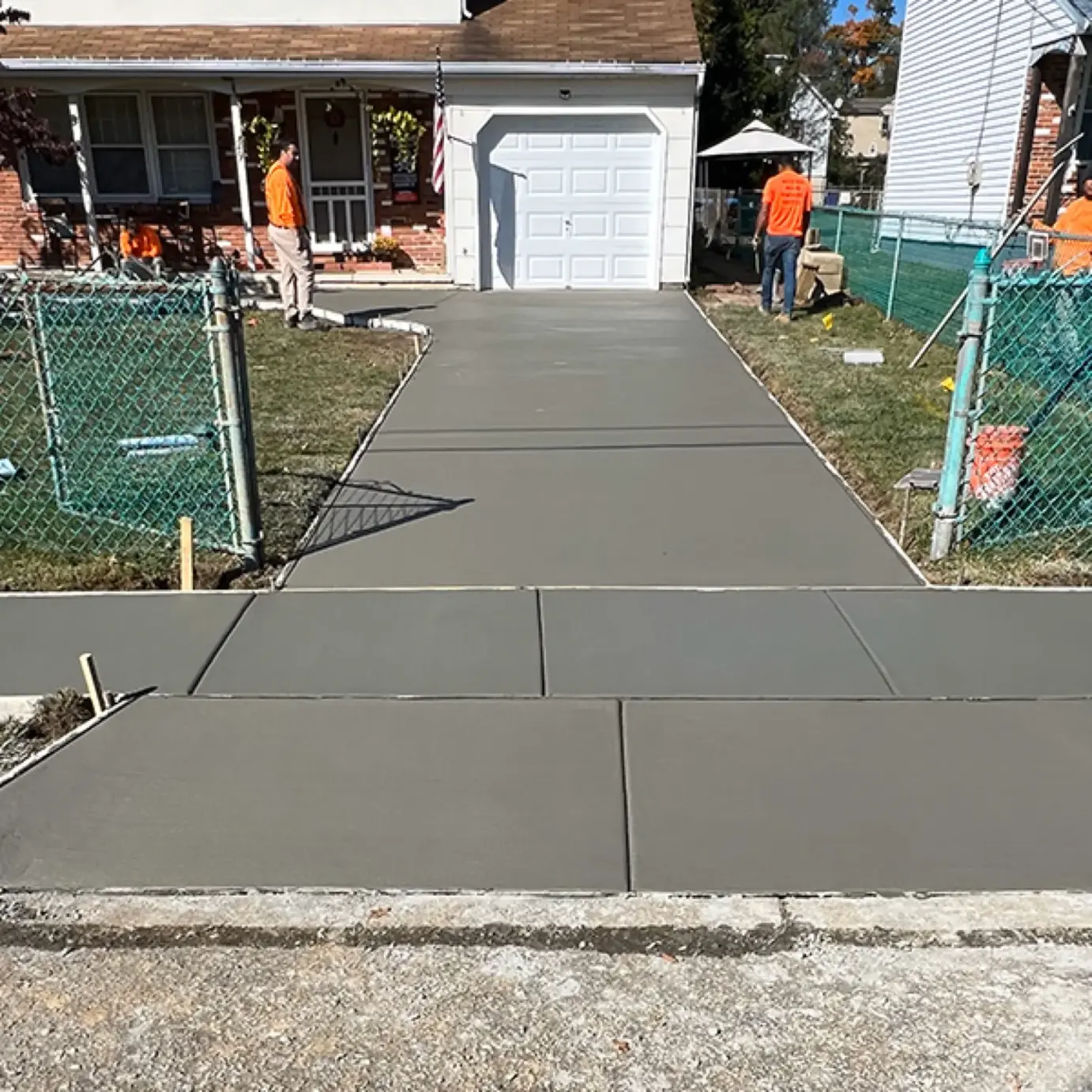
No. New concrete is the most at risk. The Euclid Chemical technical bulletin says not to use de-icing salts on new concrete in its first winter, because they speed up scaling. Use sand for traction instead.
Young concrete is still full of water and still gaining strength. A Pennsylvania Aggregates and Concrete Association bulletin says concrete should stay above freezing until it reaches design strength, usually 28 days. It also says never use a de-icer on concrete that has not fully cured.
Papaneri & Sons Concrete has poured to ACI standards since 1987. We pour a 4500 PSI mix on every job. Mix strength and careful finishing are the best early defense against freeze-thaw wear.
Our customers see the results. One Cherry Hill homeowner wrote that we replaced their driveway in a day and that it still looks brand new two winters later.
Finishing matters as much as the mix. The Euclid bulletin says to never finish concrete while bleed water is present and to avoid steel troweling on exterior slabs. Both can remove the tiny air bubbles that let freezing water expand without cracking the surface. A careful finisher protects the slab long before the first snowfall.
Tell your family and your snow plow crew that the new slab gets shovel and sand only, even if the neighbors salt theirs.
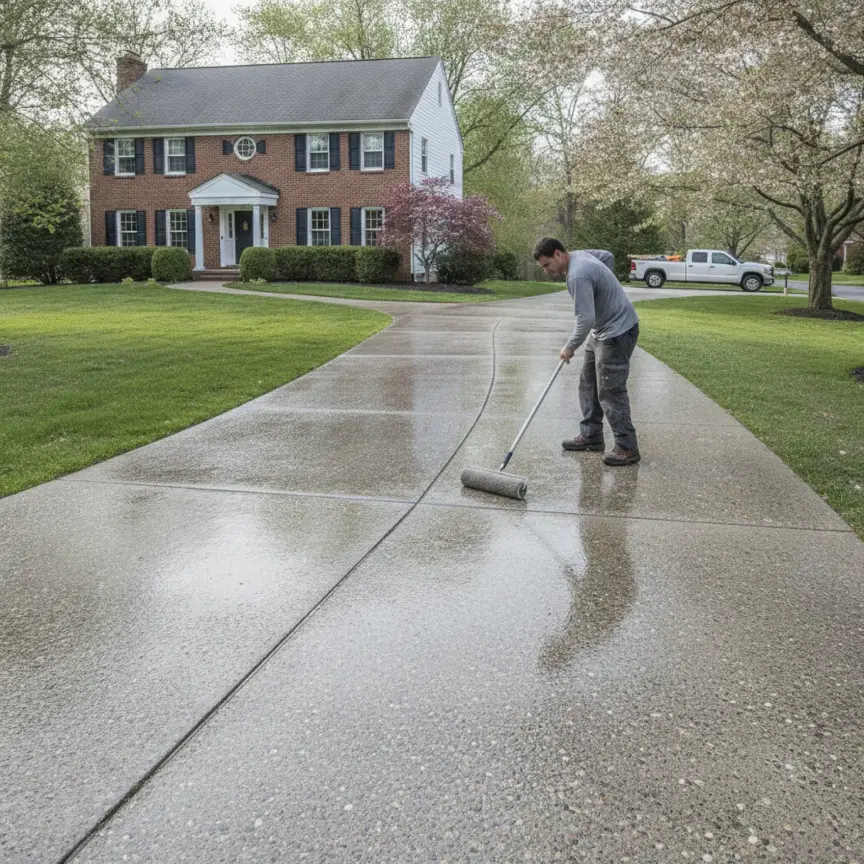
Seal it. A good sealer slows water and salt from entering the slab. The Euclid bulletin says penetrating silane and siloxane sealers reduce water and chloride absorption and typically last 5 to 10 years when applied correctly.
It also says sealers do not cause winter damage. Problems that show up after sealing usually trace back to a weak mix or finishing that removed the tiny air pockets concrete needs. Read more on our sealing page.
Shovel early, before ice bonds to the surface. Use as little de-icer as you can, and rinse salt off in spring.
Cracks let salt in fast, so read why concrete cracks. If a crack is already there, compare crack repair and replacement. Joints need care too, see how often to reseal concrete joints.
A simple routine works well. Clear snow with a shovel or a plastic blade while it is fresh. Spread sand where you need traction. Use a gentler de-icer only on the worst icy spots. In spring, hose off leftover salt before it sits through warm, wet weather.
If your slab is past sealing, call us. We will tell you honestly whether it needs a sealer, a new surface, or a repour.
Two more reads if salt has already done damage. What causes spalling covers the flaking, and how soon new concrete can be sealed covers the timing of the first coat.
Yes. Rock salt is cheap and effective, but it contributes to pitting and surface damage. Use it sparingly, or use sand for traction. Sealing the driveway helps limit how much salt soaks in.
Calcium magnesium acetate is the gentlest chemical choice. It costs much more than rock salt. Sand is gentler still, since it only adds traction. Whichever you use, apply as little as you can.
Yes, if the concrete is old enough. Cherry Hill sees many freeze-thaw cycles and heavy road salt use. A penetrating sealer helps keep water and salt out. On new concrete, wait for it to cure first and ask your contractor about timing.

Papaneri & Sons Concrete has protected Cherry Hill and South Jersey concrete since 1987. Call for a free estimate.