
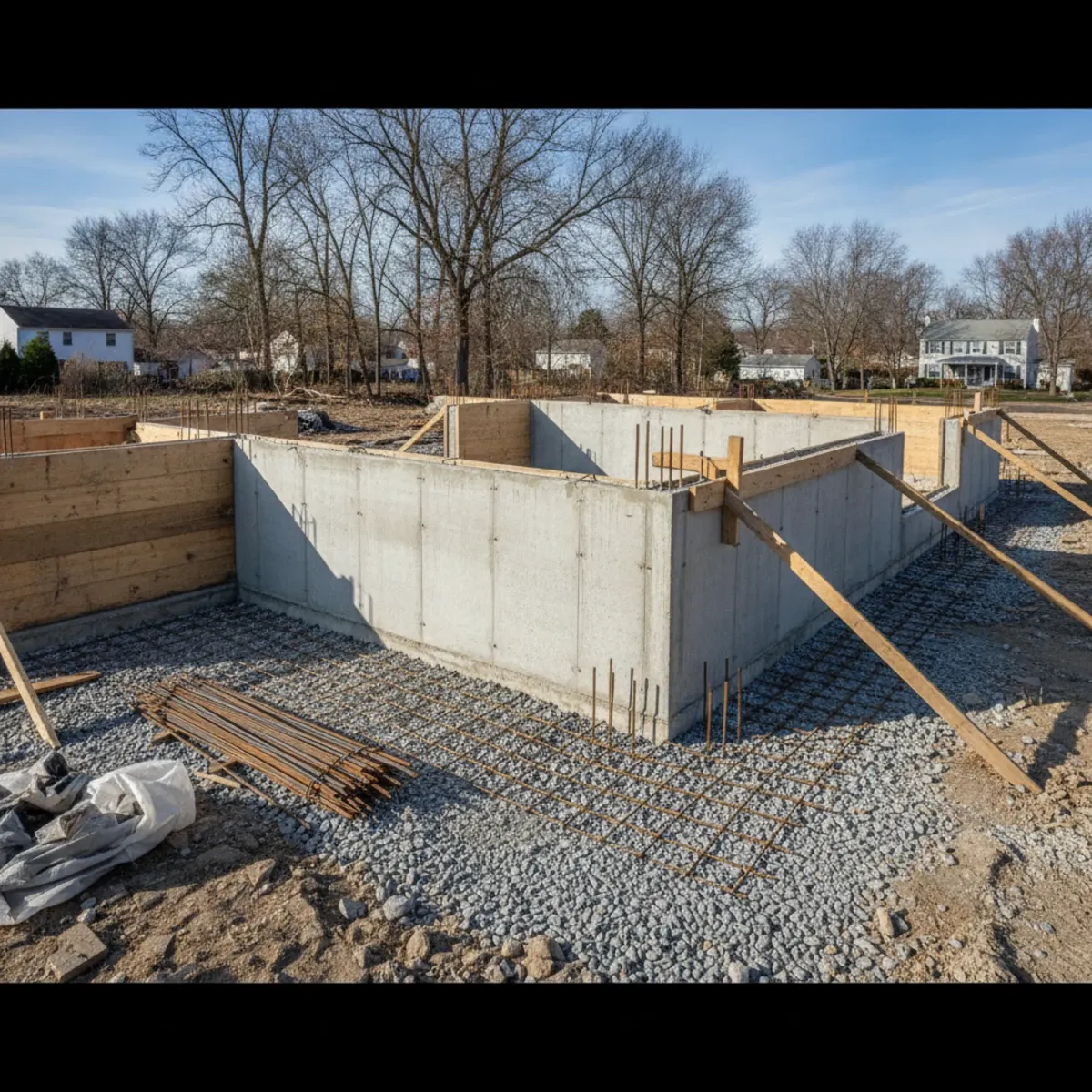
Poured concrete usually wins on price per foot. Precast wins on speed, and on some sites that speed pays for itself.
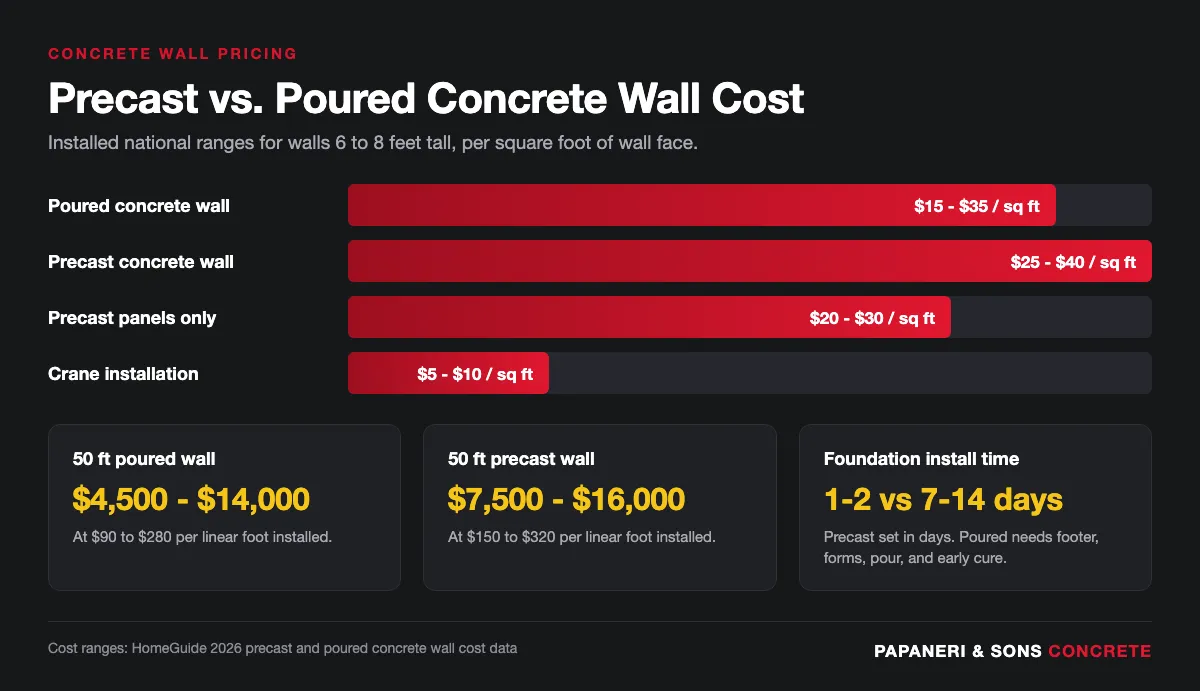
Poured concrete usually costs less. HomeGuide's 2026 concrete wall cost data puts a poured wall at $90 to $280 per linear foot. A precast wall runs $150 to $320, for walls 6 to 8 feet tall.
Papaneri & Sons has formed and poured walls across South Jersey since 1987. The price gap is real, but it is not the whole story. Precast saves days on site, and days on a job cost money too.
This post breaks both methods down line by line. For how we build a poured wall from footing to finish, see our concrete wall construction page.
Precast and poured walls end up as the same material. The difference is where the concrete gets shaped and cured, and who pays for that step.
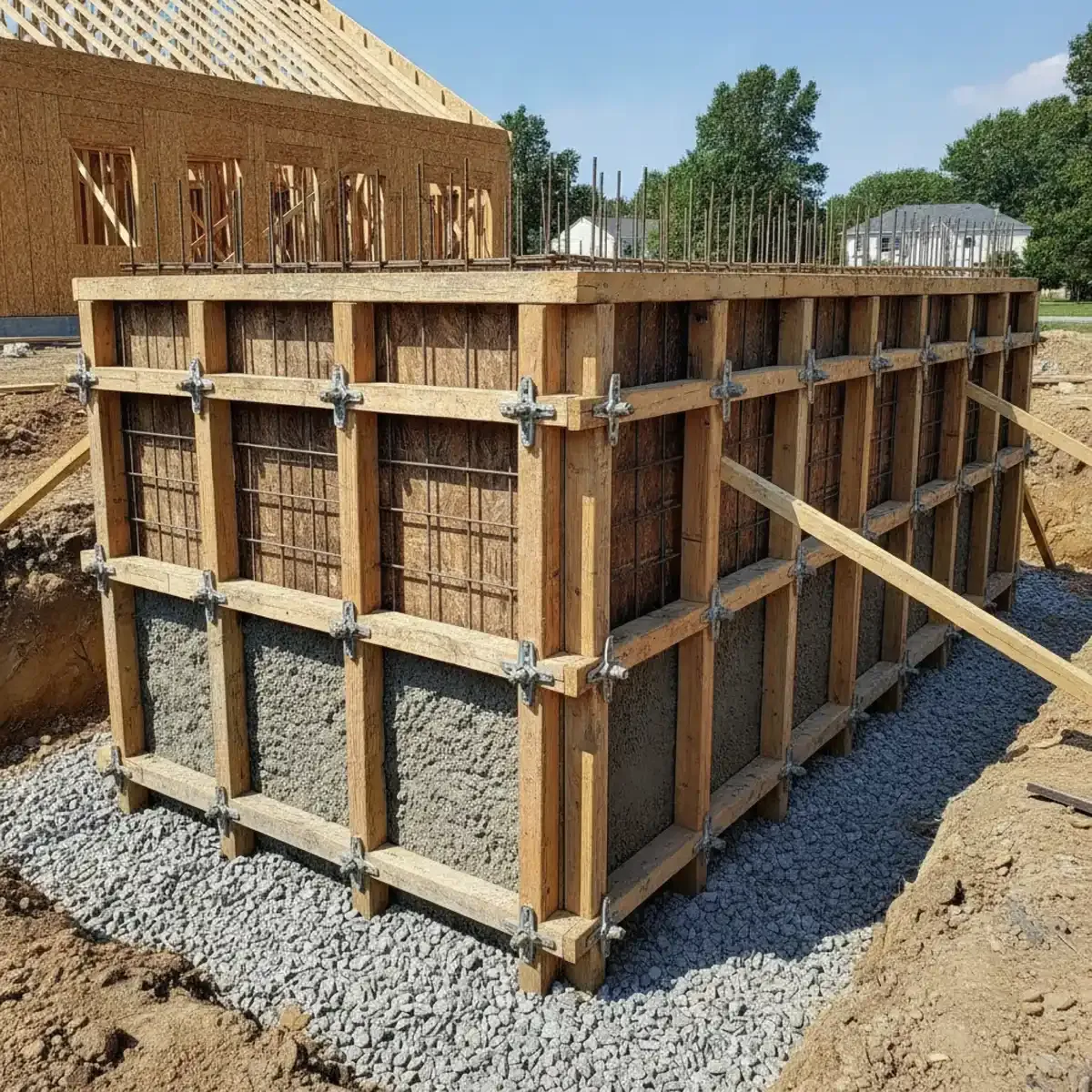
A poured wall starts with a footing, then forms, steel, and a pour. The crew builds and braces the forms, places rebar, pours, waits, and strips. Most of the bill is labor and form work at your address.
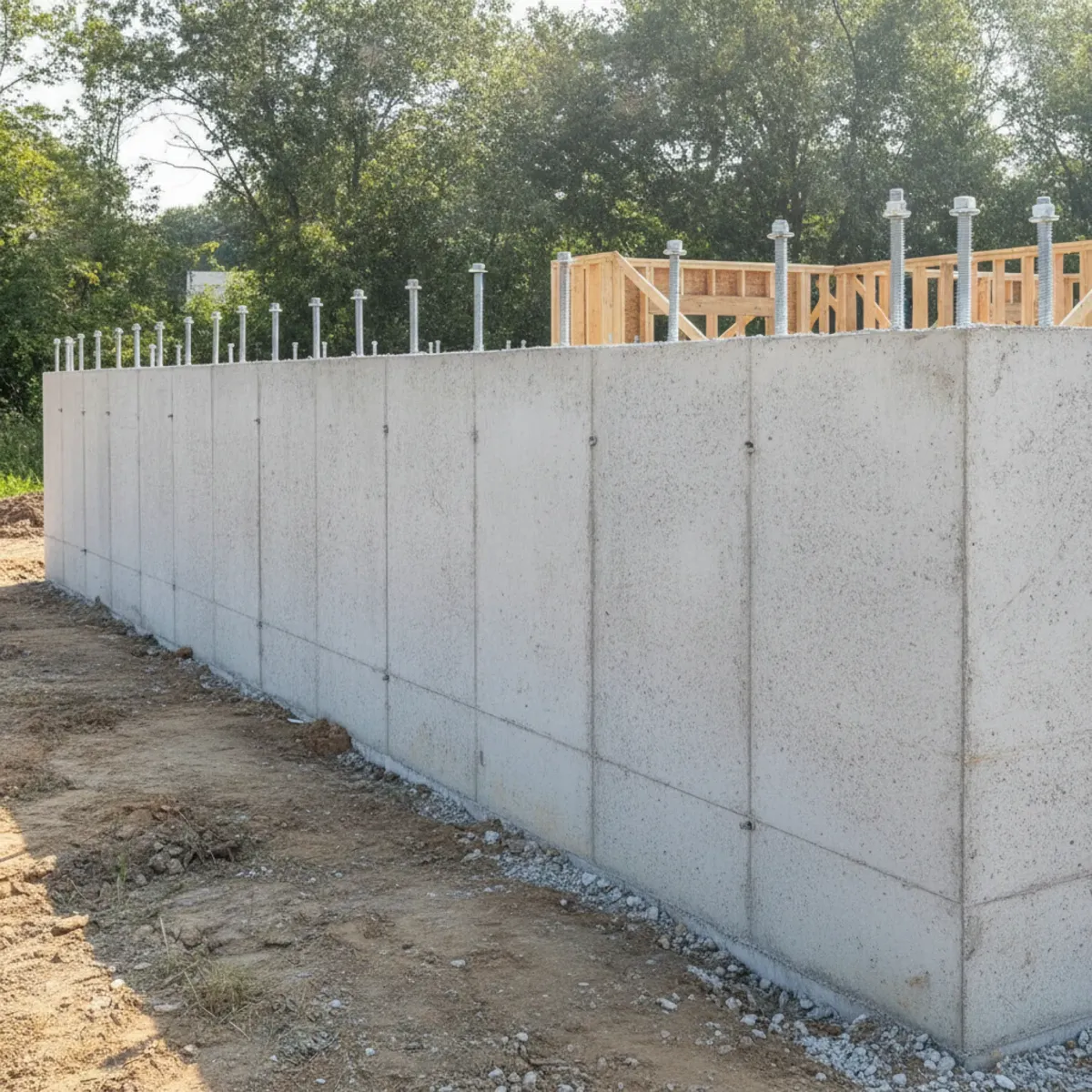
Precast panels are cast and cured in a plant, then trucked in and set by crane. You pay more for the panels themselves, plus crane time. You pay less for days of labor on site.
A poured wall needs a reinforced footer, which HomeGuide lists at $18 to $55 per linear foot. Precast foundation walls often sit on compacted gravel instead, at $1 to $3 per square foot. Neither one is free, so check that every bid includes it.
A crane needs room to swing and a firm place to park. A tight backyard or overhead wires can rule out precast before price even comes up. A concrete truck and a pump can reach most places a crane cannot.
Poured walls run $15 to $35 per square foot of wall face, and precast walls run $25 to $40, per HomeGuide's precast and poured wall guide. On a 50 foot wall, that is $4,500 to $14,000 poured and $7,500 to $16,000 precast.
Precast panels run $20 to $30 per square foot, and crane installation adds $5 to $10. Those numbers assume walls 6 to 8 feet tall and up to 8 inches thick, without footings.
The same HomeGuide comparison puts a precast foundation at 1 to 2 days to install. A poured foundation takes 7 to 14 days for the footer, forms, pour, and early curing. On a new home, those extra days carry real costs.
Some insulated precast foundation systems price close to poured. HomeGuide lists Superior Walls at $100 to $130 per linear foot installed for 8 to 9 foot walls. That is why a precast bid on a new house can land lower than you expect.
A wall permit runs $500 to $2,000. Ready-mix delivery runs $120 to $150 per cubic yard. Drainage, waterproofing, and backfill are extra on either method, so line them up side by side.
Papaneri & Sons pours foundation walls, retaining walls, and structural walls for homes and businesses. The biggest cost lesson is simple. A wall is only as cheap as the footing under it.
We pour the footing first and set rebar in it that ties into the wall above. That makes the footing and the wall one connected piece. Skip that tie, and a bargain wall can start to lean a few winters later.
Weather is the other factor. The National Precast Concrete Association notes that precast units arrive reinforced and finished, so the job does not wait on good weather. A poured wall does, and frost or heavy rain can push a pour back.
That is a fair point for precast. Our answer is planning. We time pours to the season and place our 4500 PSI mix in lifts, so each lift fills the form with no voids.
One more thing a price sheet will not show you. A poured wall can follow the site. Steps in grade, window openings, and pipe sleeves get formed right in. Precast panels are made to a plan, and a change after they ship gets expensive.
Start with the site. If a crane cannot reach the wall, precast is off the table. If the site is open and the wall is long and straight, get a precast price too.
Next, look at the whole schedule, not just the wall. A new home waiting on its foundation has carrying costs every day. A backyard retaining wall does not.
Then check the mix, because wall strength starts with the concrete. Our explainer on what 4500 PSI concrete is covers why a stronger mix matters for walls that hold soil.
If block is on the table too, read our comparison of concrete block wall versus poured wall cost. It covers the third option many homeowners get quoted.
If an existing wall has started to settle, that is a different job. Our guide to foundation underpinning cost explains what that repair runs.
Ask every bidder the same questions. Does the price include the footing, drainage, waterproofing, backfill, and permits? A low number that leaves those out is not really a low number.
Not by default. Both can be made to the same strength. Precast cures in a controlled plant, which helps keep quality steady. A poured wall on a good footing with a strong mix and careful curing holds up just as well for decades.
Forms usually come off within a few days, but concrete keeps gaining strength for about four weeks. Backfilling against a young wall too early can crack or push it. Your contractor should tell you when it is safe to backfill.
Most foundation walls and taller retaining walls need a township permit, and some need engineered plans. Rules change from town to town. In Cherry Hill and nearby towns, Papaneri & Sons pulls the permits and schedules the inspections for you.
A per-foot range gets you close. A site visit gets you the actual number, including the footing, drainage, and access. Papaneri & Sons pours walls across Cherry Hill, Haddonfield, Moorestown, Marlton, and Mount Laurel. Family crew since 1987, ACI certified, and a 4500 PSI mix on every pour.