
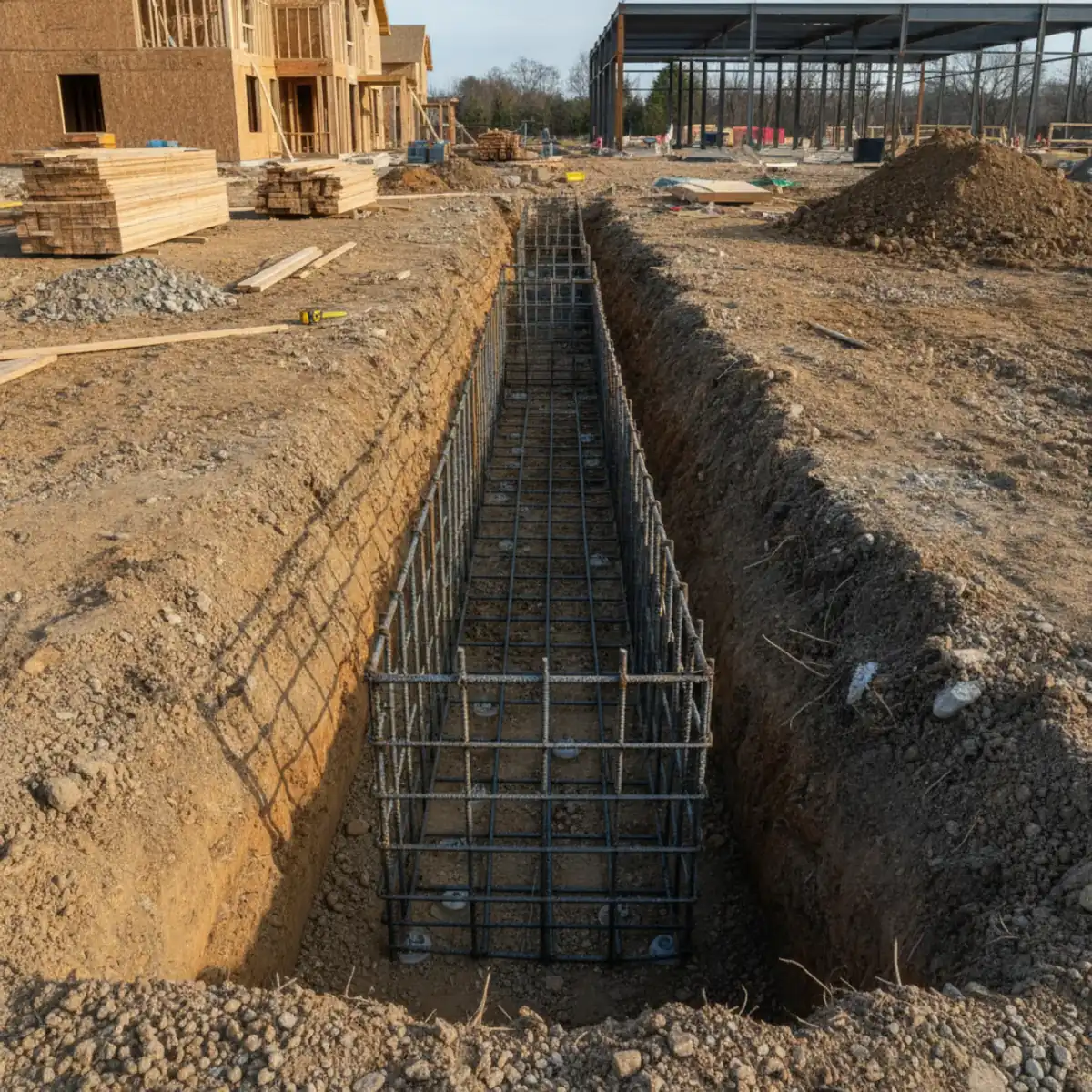
Underpinning is priced by the foot and paid for in patience. Here are the real ranges, the schedule, and the parts of the job you should never let anyone cut.
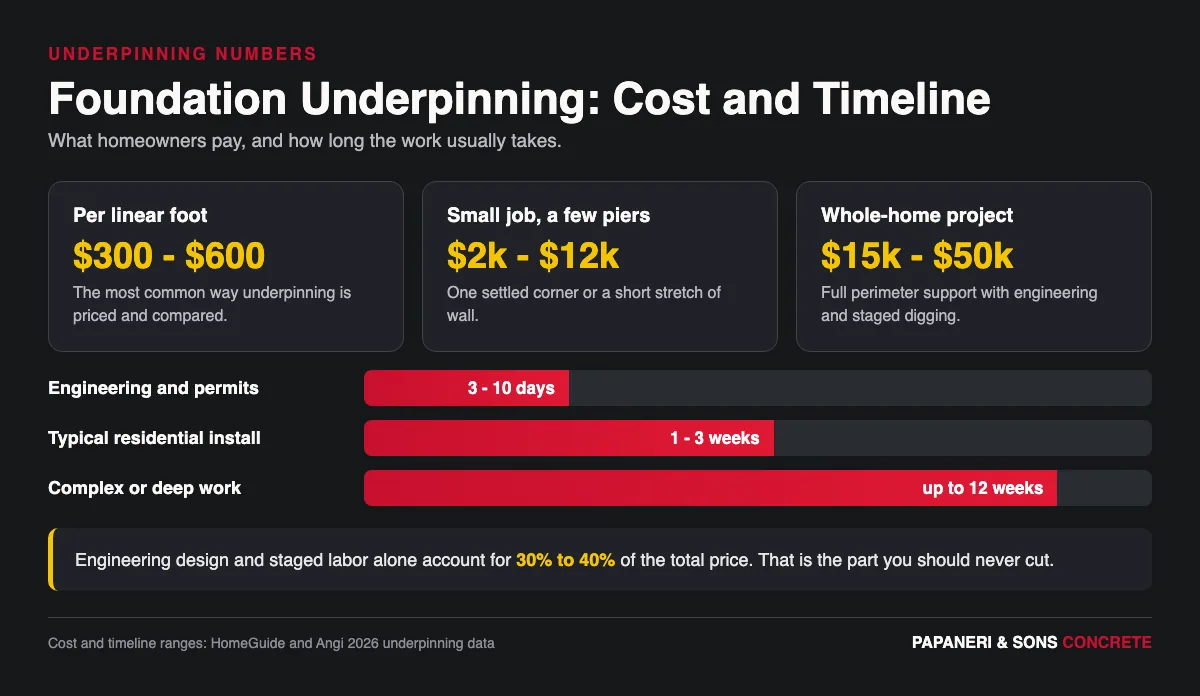
Foundation underpinning costs about $300 to $600 per linear foot, and HomeGuide's 2026 cost research puts most residential projects between $6,000 and $25,000 total. Small jobs of a few piers start near $2,000, while a full perimeter can reach $50,000.
The schedule surprises people more than the price. Papaneri & Sons has been digging under South Jersey foundations since 1987, and the digging is never the slow part. Engineering, permits, and staged work are.
Below is how the money and the calendar break down. For the service itself, see our concrete underpinning page.
Underpinning means extending an existing foundation down to soil that can carry the load. It is slower and more technical than pouring a new foundation, because the house is standing on the thing you are rebuilding. You are paying for engineering, careful excavation, and concrete placed in a very specific order.
A licensed engineer decides how deep to go, how wide the new support has to be, and what sequence keeps the house standing while you dig. This is not optional paperwork. It is the design the crew builds to.
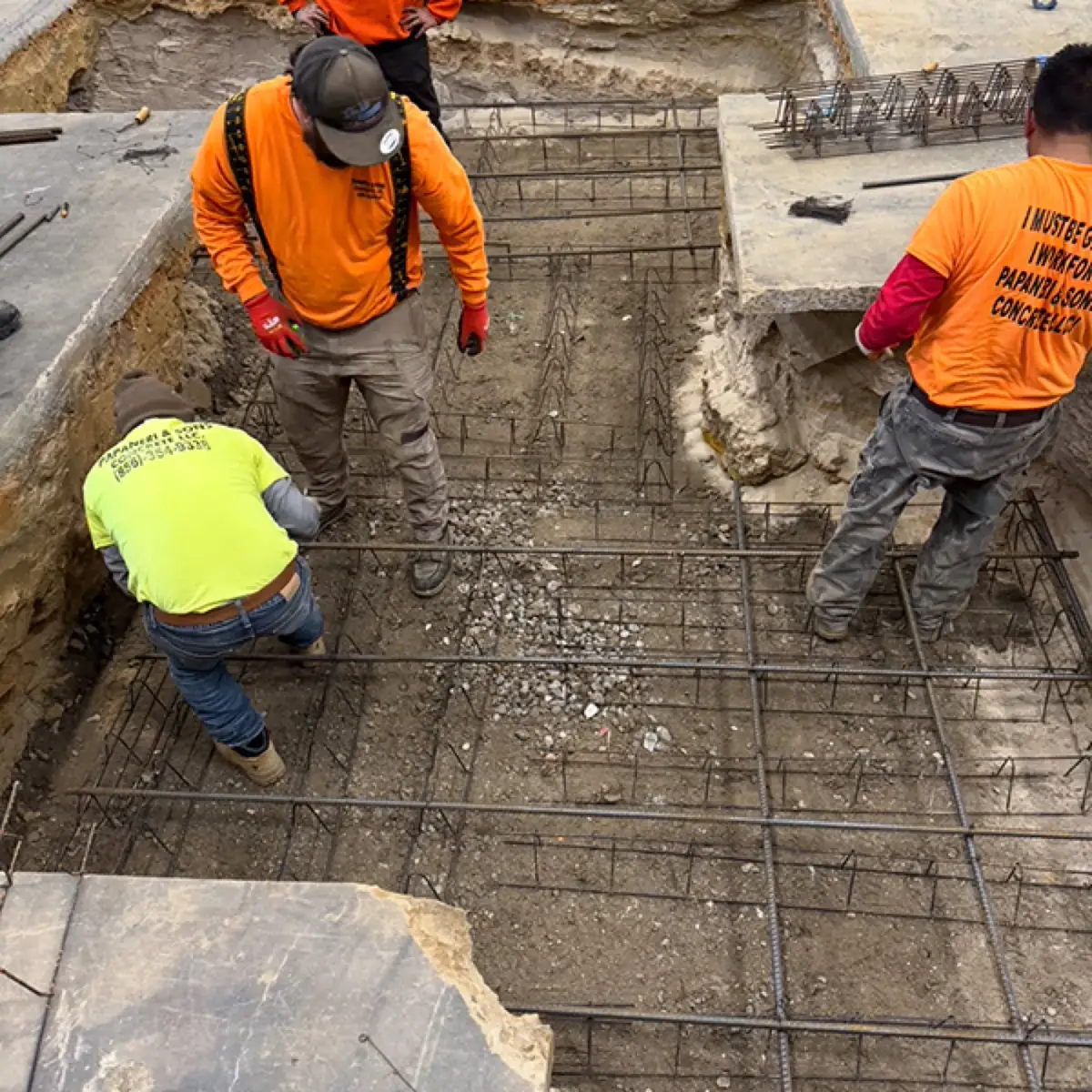
Nobody digs the whole wall at once. Crews open short sections, support them, pour, and let them cure before moving to the next bay. That stop-and-start rhythm is exactly why underpinning costs more per foot than a new footing.
Mass concrete underpinning pours new footing sections below the old one. Pier systems drive steel down to firm soil instead. Depth, soil, and house weight decide which one your engineer specifies, and the two rarely price the same.
Digging next to a finished basement, a driveway, or a neighbor's property line adds hand work and protection. Putting the site back together afterward is a real line item, not an afterthought.
Temporary support holds the structure while a section is open. Needle beams, cribbing, and bracing get rented, installed, and removed, and on tight sites that equipment is a line item of its own.
Most residential underpinning takes one to three weeks on site, and cost and schedule data compiled by HomeGuide shows complex projects stretching much longer once soil conditions and depth come into play.
Design and staged labor are the expensive half of the job. Engineering design and sequenced work account for roughly 30% to 40% of the total, per the same HomeGuide underpinning breakdown. That is the part you should never shop on price alone.
One corner or a short stretch of wall usually means a handful of support points. Expect a smaller job in the $2,000 to $12,000 range, often finished inside a week.
Supporting an entire house means engineering, permits, and weeks of staged excavation. These land in the $15,000 to $50,000 range and can run a month or more before the site is back to normal.
Permits, soil testing, and inspections come before anyone digs. Budget several days to a couple of weeks for that step, since the crew cannot start until the plans are approved.
Papaneri & Sons has poured foundations and footings across South Jersey since 1987, and we still see homeowners hold three underpinning quotes that look nothing alike. Almost always, they are not pricing the same job.
One bid assumes a shallow dig. Another assumes deep sections with shoring and a full engineer's design. Until every bidder is working from the same stamped drawing, you are comparing guesses, not prices.
There is a code reason for that drawing. Model building code requires a registered design professional to determine the support requirements and prepare site-specific plans and a sequence of work before underpinning begins, as published in Chapter 18 of the International Building Code. A bid with no engineer attached is missing a legal requirement, not just a nicety.
The other thing we tell homeowners is to fix the water first. Downspouts dumping at the wall, a clogged drain, or a grade sloping toward the house will keep moving soil no matter how much concrete goes underneath it.
Ask how the work will be monitored, too. Good underpinning contractors set reference marks and check them as each section is poured, so movement gets caught while the crew is still on site.
Plenty of cracks never need underpinning. Hairline cracks in a wall, a slab crack that has not moved in years, and doors that stick only in humid weather are usually not settlement.
Call an engineer when cracks are wider than a quarter inch, run diagonally from window corners, keep growing month to month, or when one part of the house is visibly lower than the rest. Our guide to why concrete cracks and how to prevent it walks through which patterns matter.
If the foundation checks out and only the interior slab is bad, you have a much smaller project. See what a replacement floor runs in our post on concrete basement floor cost before you assume the worst.
Ask for the sequence drawing before you sign anything. It shows which bays get opened, in what order, and how long each one stays open. A contractor who cannot produce that drawing is planning the job in his head.
Do not sign a proposal that skips the engineer, skips the permit, or promises a fixed price before anyone has looked at the soil. Underpinning done in the right order is permanent. Done fast, it is money buried in the yard.
For a closer look at the price, see block versus poured foundation wall cost.
Usually yes. Most residential underpinning happens outside or in one section of the basement at a time, so the house stays occupied. Larger projects that involve interior digging or utility work may need you out for a few days.
Underpinning stops the movement that caused the cracks. It does not close them by itself. Once the foundation is stable and has been watched for a season, the cracks get patched and the finishes get repaired as a separate step.
Call an engineer first for anything that looks like settlement, then bring the contractor in to price the approved plan. Papaneri & Sons works from engineered drawings on foundation work across Cherry Hill and South Jersey, and we are happy to walk the site with you first. Call (856) 354-9338.
Not every crack is a $30,000 problem, and not every quiet foundation is fine. A walkthrough costs you nothing and tells you which one you have. Papaneri & Sons has been pouring footings, foundations, and support work across Cherry Hill, Voorhees, Marlton, and Mount Laurel since 1987. Family crew, engineered plans, free on-site estimates.