
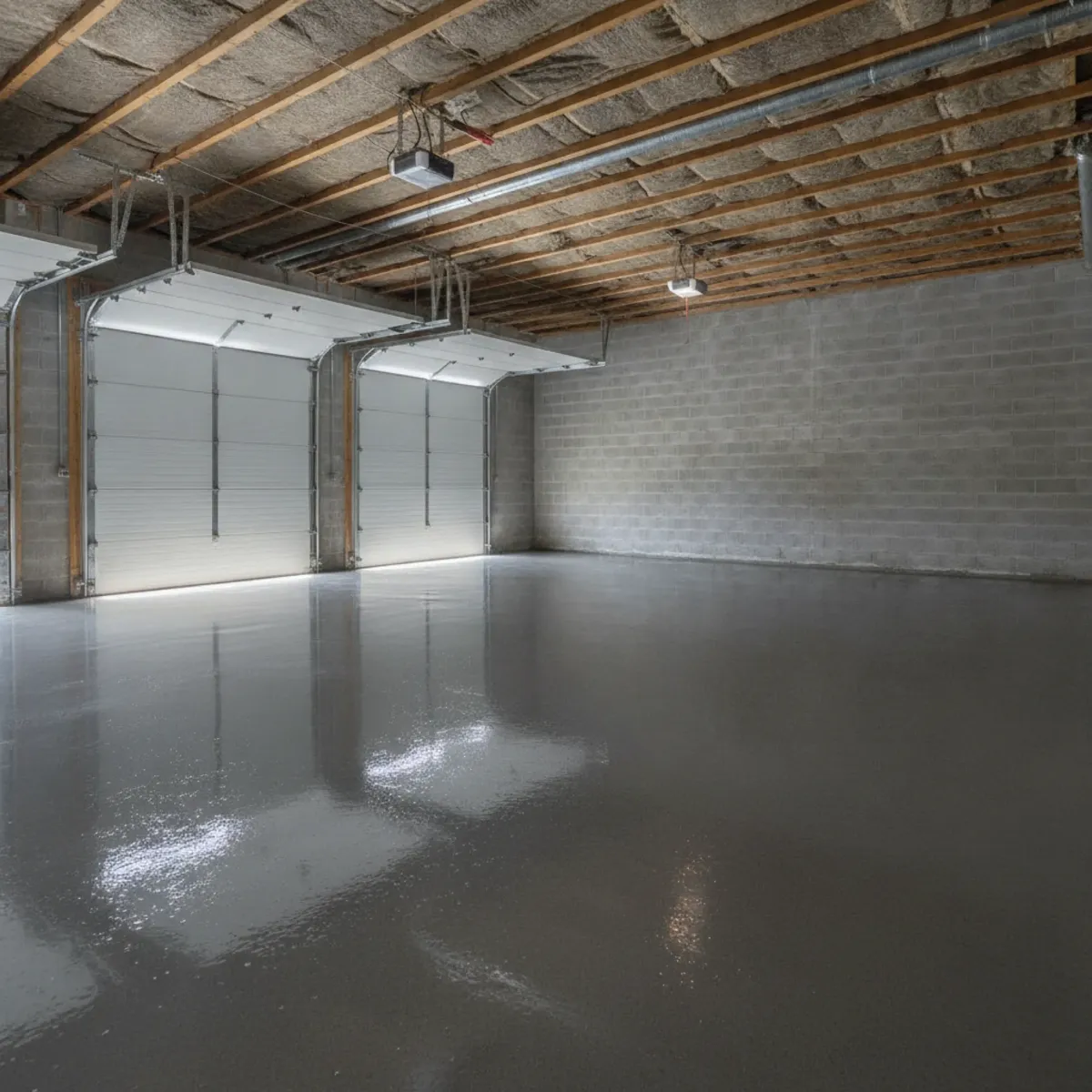
On a small garage floor, epoxy usually costs less up front. On a large floor you plan to keep for decades, polished concrete often wins.
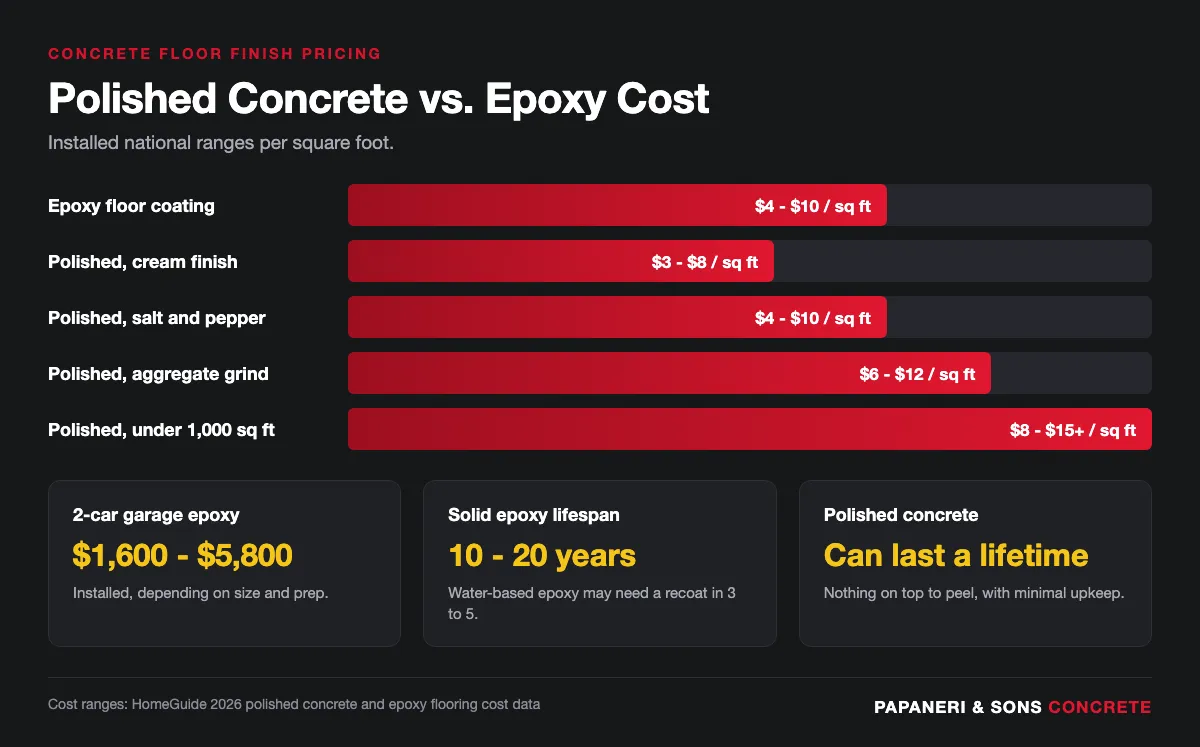
Epoxy flooring costs $4 to $10 per square foot installed. Polished concrete costs $3 to $12 for basic finishes, according to HomeGuide's 2026 polished concrete cost guide and its epoxy flooring cost guide.
Those ranges overlap, so the real answer depends on floor size and how long you plan to keep it. Papaneri & Sons has poured garage and interior floors across South Jersey since 1987, and both finishes start with the same thing: a good slab.
This post compares the two on price, upkeep, and lifespan. For how we pour a floor built to take either finish, see our concrete floor installation page.
Polished concrete and epoxy can look alike from the doorway. Underneath, they are opposite approaches.
Crews grind the surface with finer and finer diamond pads, harden it with a densifier, and polish it to a sheen. Nothing is added on top. The floor is the concrete.
Epoxy is a resin and hardener mix that bonds to the concrete as a coating. Crews clean and etch the slab, then roll or squeegee the epoxy on. Flakes, color, and metallic looks are easy to add.
A polished floor has nothing to peel. HomeGuide notes that polished concrete can last a lifetime with minimal upkeep. Solid epoxy lasts 10 to 20 years, while water-based epoxy may need a new coat every 3 to 5 years, per its epoxy cost guide.
Epoxy can peel if moisture pushes up through the slab or if the prep was rushed. Polished concrete shows every crack and stain already in the slab, and it can get slippery when wet.
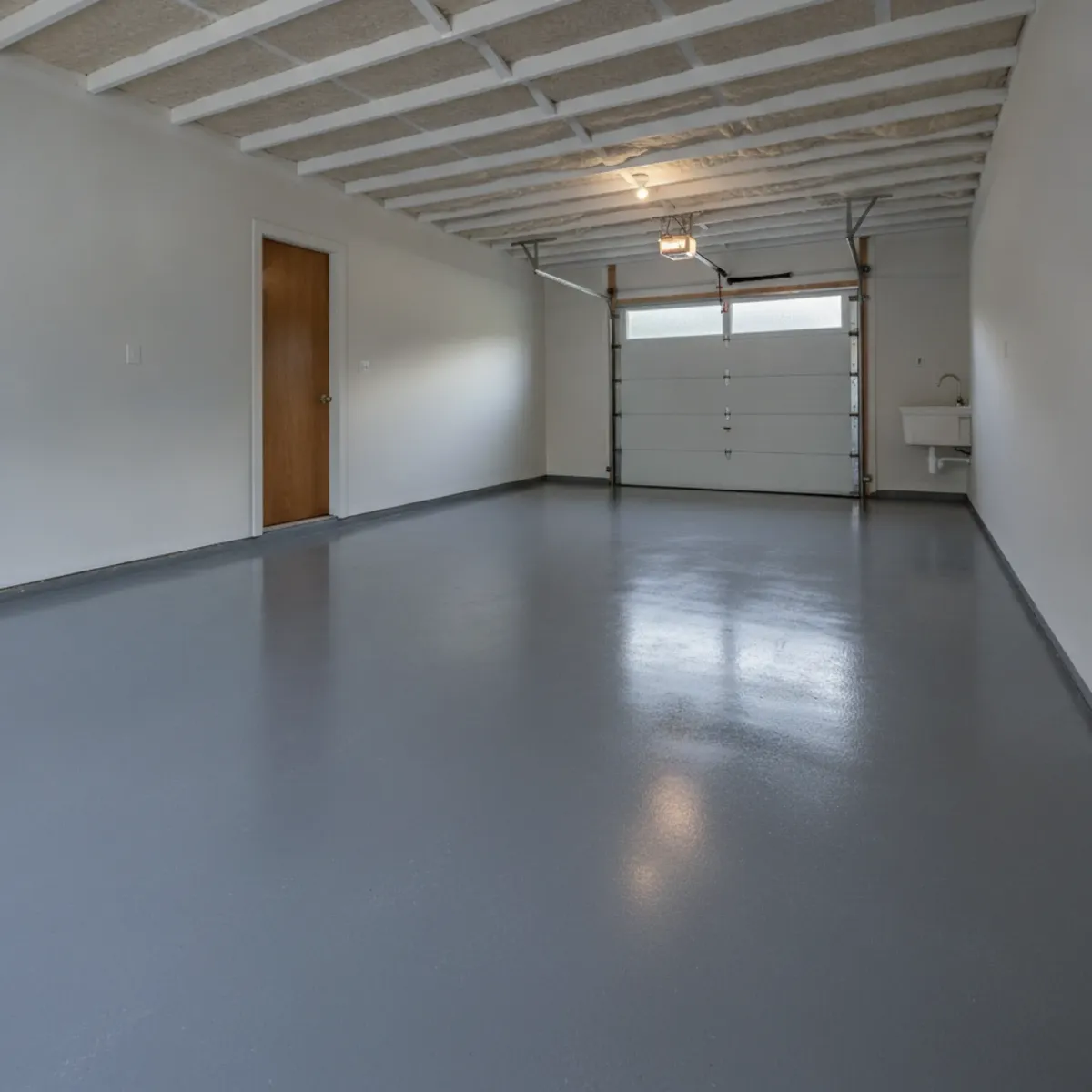
Size changes this comparison more than anything else. HomeGuide's polished concrete guide prices a 200 square foot floor at $1,600 to $3,000 and a 1,000 square foot floor at $7,000 to $12,000.
Projects under 1,000 square feet often carry premium pricing of $8 to $15 or more per square foot. The grinding equipment and setup cost the same whether the floor is big or small.
An epoxy floor for a 2-car garage costs $1,600 to $5,800, per HomeGuide. Materials run $1 to $5 per square foot and labor runs $3 to $5, according to its epoxy flooring cost data.
A cream polish runs $3 to $8 per square foot. A salt and pepper look runs $4 to $10. A full aggregate grind runs $6 to $12. Each level takes more grinding time.
Cracks, pits, and old coatings add cost to both finishes. HomeGuide lists concrete leveling at $3 to $12 per square foot and minor repairs at $100 to $800 before polishing.
Polished concrete may get an optional stain guard sealer that runs $1 to $3 per square foot every 2 to 5 years. Epoxy may need a full recoat. Over 20 years, that recoat is where epoxy loses ground.
Papaneri & Sons pours garage floors with a smooth trowel finish that is ready for epoxy, a sealer, or heavy daily use. We also offer a polished finish, which gives a hard, low-upkeep surface with a light sheen.
The lesson that ties both together is moisture. On interior floors, we lay a vapor barrier under the slab to block ground moisture from rising through it. That barrier protects anything that goes on top.
It matters most for epoxy. When moisture comes up through a slab, it can lift a coating off in patches. HomeGuide notes that a moisture test costs about $50 to $300 before coating, per its concrete coating cost guide. On an older slab, that test is money well spent.
Timing matters too. A brand-new slab needs time to cure before any coating goes down. Rushing a coating onto green concrete can cause a new garage floor to peel early.
South Jersey weather plays a part as well. Epoxy should only go down when the temperature is between 60 and 85 degrees and humidity stays under 85 percent, per HomeGuide. A muggy July week can push an epoxy job back.
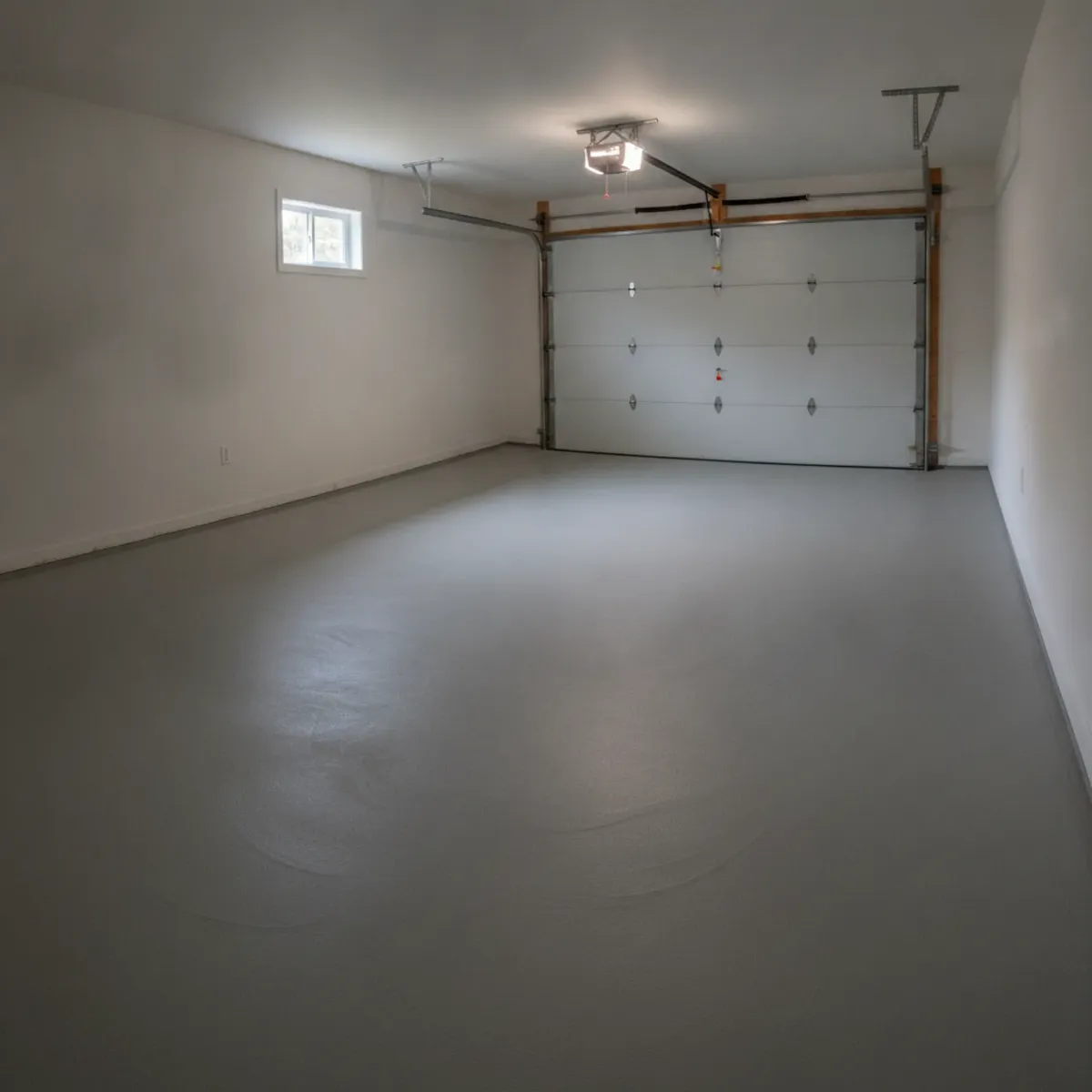
Start with the size of the floor. For a one or two car garage, epoxy usually costs less up front. For a large basement, shop, or showroom, polished concrete often comes out ahead.
Next, look at the slab. A polished floor shows everything in the concrete, including old cracks and stains. If the slab is rough, a coating or overlay hides more.
If the floor is worn or uneven, fix that first. Our guide to concrete overlay versus a new slab helps you decide whether to resurface or start over.
If you are finishing a basement, the slab underneath matters most. Our breakdown of concrete basement floor cost covers what a new floor costs before any finish.
Think about safety too, especially near a door where water tracks in. Our guide to slip-resistant concrete cost covers textures and additives that add grip.
Ask how long the floor will be out of use. Most home polishing jobs take 2 to 4 days for spaces up to 2,000 square feet, per HomeGuide.
Finally, match the finish to the use. Car tires, jacks, and dropped tools are hard on any floor. Ask each installer how the finish handles hot tires, oil, and road salt.
For most home garages, epoxy makes more sense because it costs less on small floors and resists oil stains. Polished concrete lasts longer with less upkeep. It is a better fit for large or heavily used spaces.
Yes, most sound existing floors can be polished. Cracks, pits, and old coatings may need repair or removal first. The slab has to be structurally solid for the polish to look good.
A solid epoxy floor can last 10 to 20 years with good prep and care. Winter road salt and hot tires wear it faster, so mats and regular cleaning help. Papaneri & Sons pours garage floors across Cherry Hill, Mount Laurel, and Moorestown that are ready for epoxy.
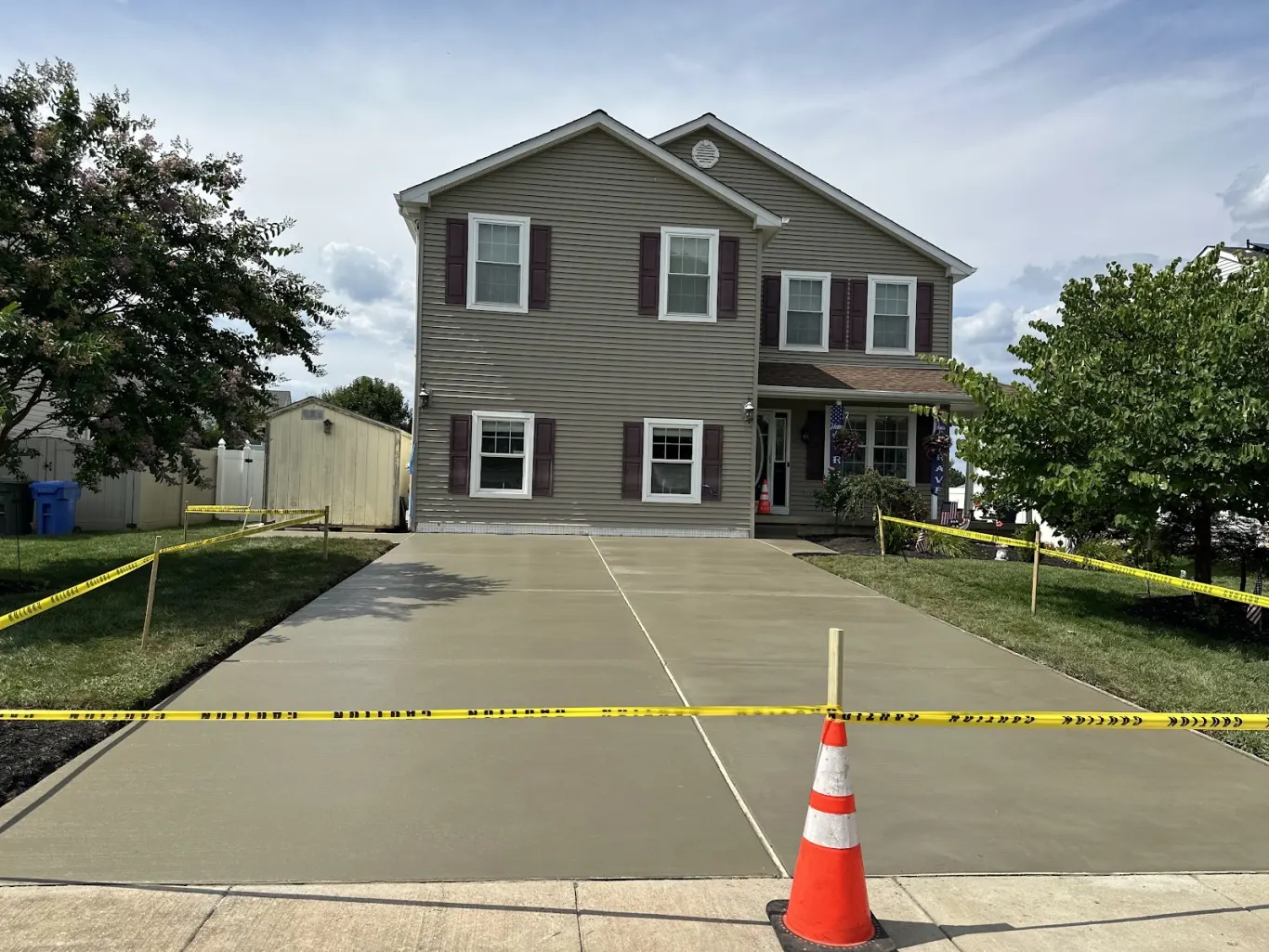
Any finish is only as good as the slab under it. A site visit tells you whether your floor is ready for polish, epoxy, or a fresh pour. Papaneri & Sons pours floors across Cherry Hill, Voorhees, Haddonfield, Marlton, and Mount Laurel. Family crew since 1987, ACI certified, and a 4500 PSI mix on every pour.