
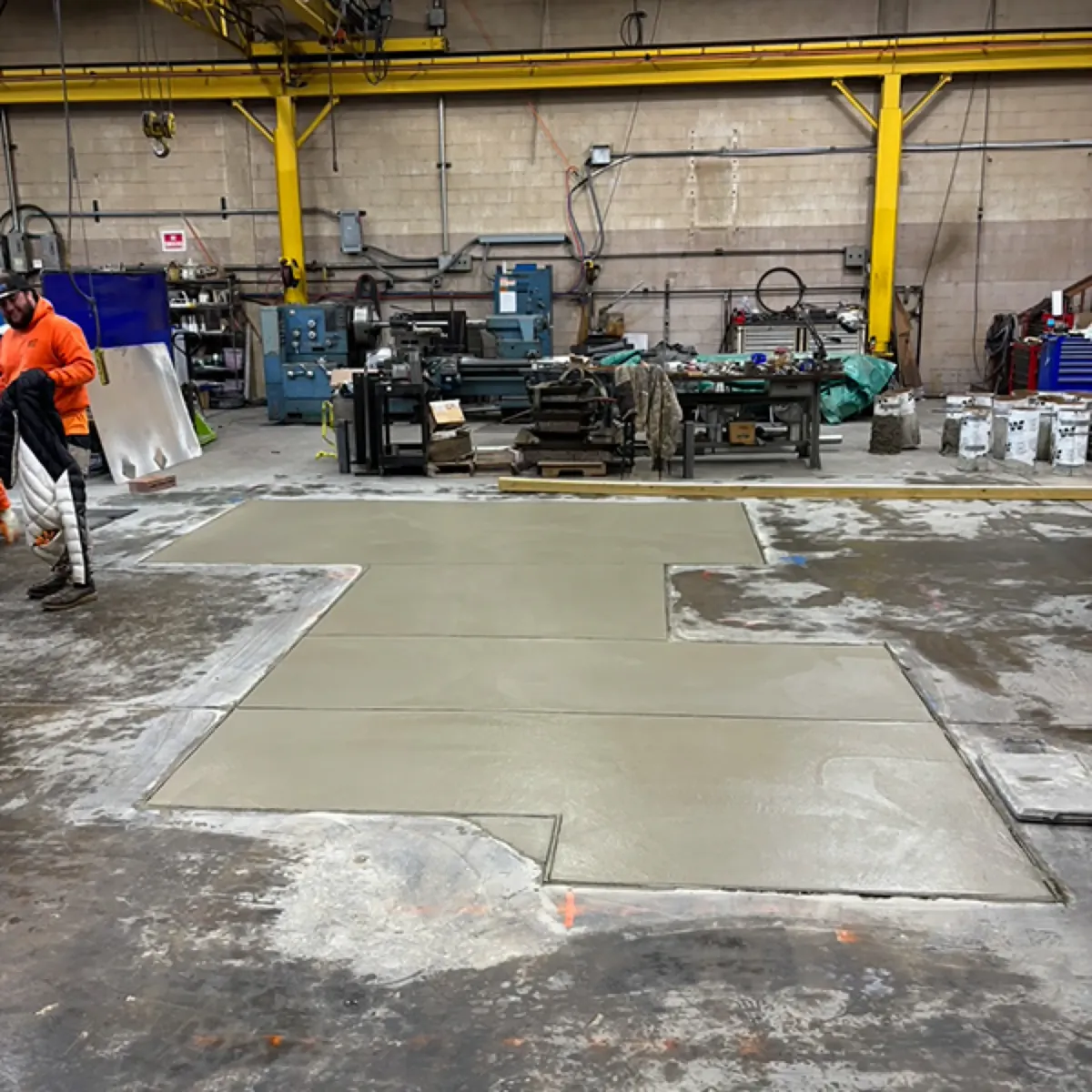
Basement slabs are priced by the square foot, but access and prep decide where your number really lands. Here is how contractors build the price, line by line.
Pouring a concrete basement floor costs about $4 to $25 per square foot, and national cost data from Angi puts the average whole-basement project near $30,000. That spread is wide because a basement is one of the hardest places on a property to pour.
Papaneri & Sons has poured slabs since 1987, and the cheapest basement floor is almost never the one with the lowest price per foot. It is the one where the crew can actually get concrete to the hole.
This post breaks down what you are paying for, what changes the number, and when a new pour beats a patch. If you want the service details instead of the math, start with our basement concrete floors page.
Square footage sets the starting point. Five other factors decide whether you land at the low end or the high end of the range.
A walkout basement lets a truck chute concrete straight to the slab. A finished home with one narrow stairwell means buggies, pumps, or wheelbarrows, and that labor is the single biggest swing in the quote.
A basic residential basement slab is usually four inches thick. Add wire mesh, rebar, or extra thickness for a shop floor or a lift, and both the material and the labor go up.
Concrete is only as good as what it sits on. If the crew has to excavate, haul in clean stone, grade it, and compact it, that prep is priced separately from the pour.
Tearing out a cracked or sunken slab and carrying it up the stairs adds real cost. Demolition and disposal on a closed-in basement can rival the price of the new pour.
Pouring in an empty shell is fast. Pouring in a basement with a furnace, water heater, and finished walls means protecting everything, working around obstacles, and cleaning as you go. That care shows up as hours on the invoice.
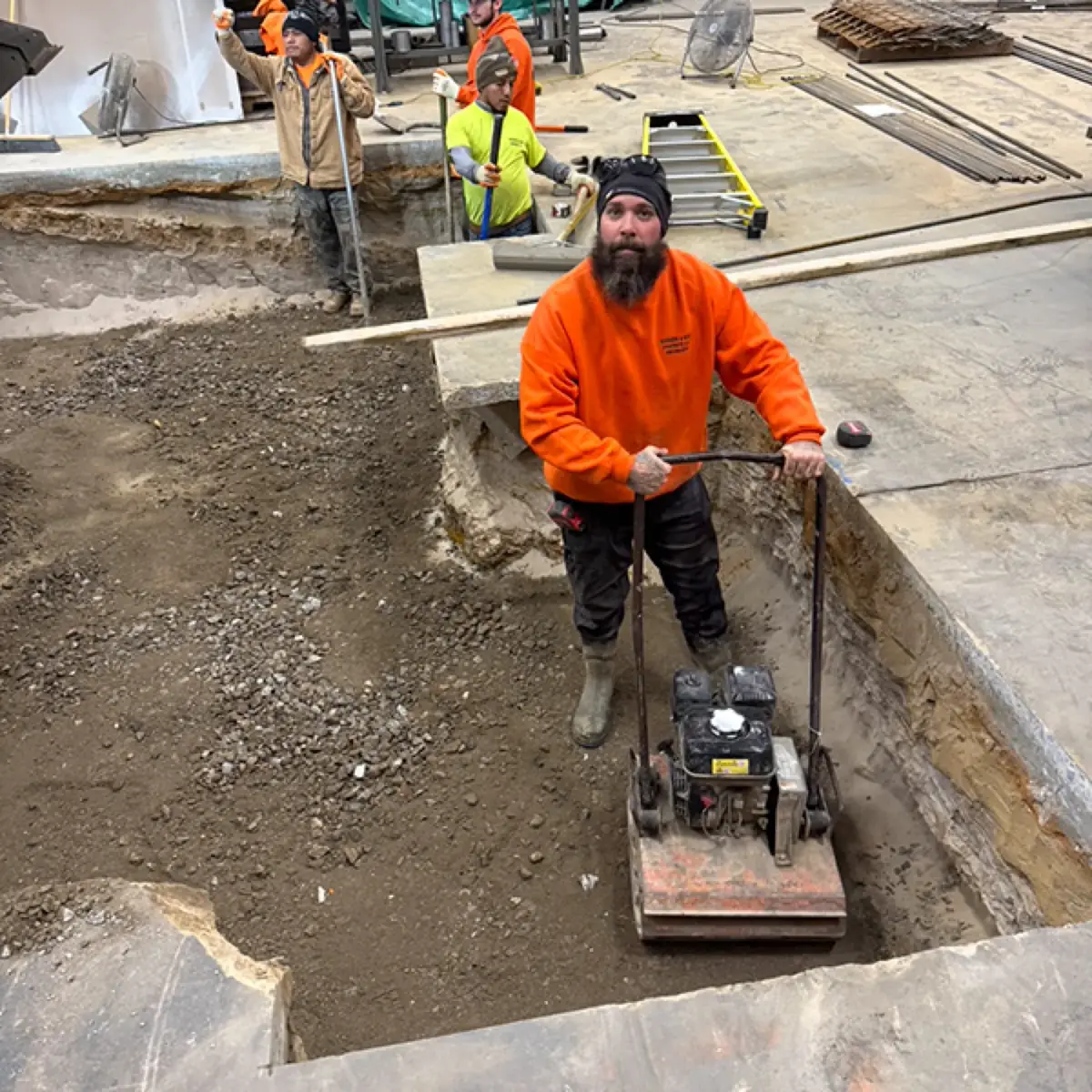
A plain slab in an open, easy-access basement sits at the bottom of the range. A replacement slab in a finished home sits in the middle, and a floor that needs a new sub-base or hand-hauled concrete sits at the top. Angi's 2026 cost data shows most projects landing between $2,000 and $80,000 depending on size and difficulty.
Materials and labor split the bill fairly evenly. Between 40% and 60% of the total goes to materials, with the rest going to labor, according to the same Angi basement floor report, because moving and finishing concrete in a basement is slow work.
A broom or trowel finish is included in a standard pour. Polishing, staining, or a decorative overlay adds roughly $3 to $12 per square foot on top of the slab price.
At the low end you might see $4,000 for a straightforward pour in an open foundation. At the high end, the same footprint can pass $20,000 once demolition, a new stone base, and hand-hauling are added.
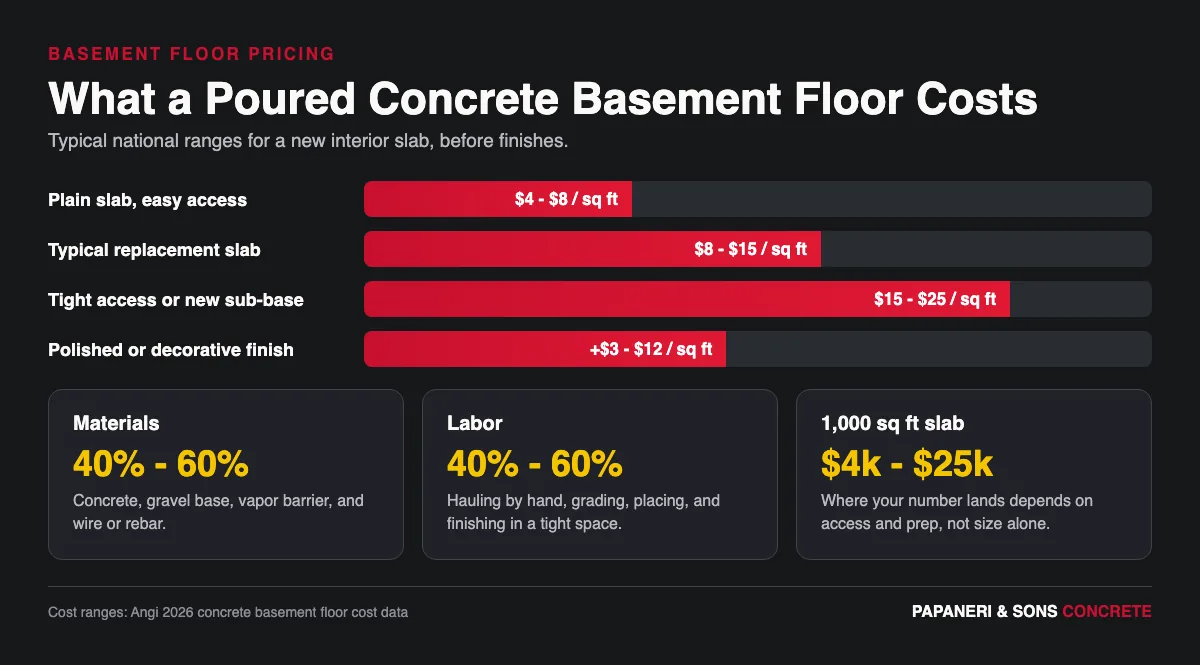
Papaneri & Sons is a family crew that has poured more than 5.7 million square feet of concrete since 1987.
Mario Sr. still walks every pour, and the first thing he checks in a basement is not the slab. It is the ground and the water underneath it.
On older homes we often open a basement floor and find bare dirt or a thin skim of concrete with no stone under it. That is why the old slab cracked, and it is why a straight patch usually fails within a few winters.
A slab that will last needs a proper gas and moisture layer beneath it. The EPA's radon-resistant construction guidance calls for a four-inch layer of clean coarse gravel with heavy plastic sheeting over it before the concrete goes down. That detail costs a few hundred dollars and saves a basement.
We pour a 4500 PSI mix on residential slabs, which is stronger than the code minimum most basements are built to. It costs a little more per yard and it is the reason our floors hold up under storage racks, gym equipment, and vehicles.
Water management belongs in the same conversation. If the basement has a sump pit or a perimeter drain, the new slab has to be poured around it correctly, and skipping that detail turns a dry basement into a wet one.
Repair makes sense when the slab is level, dry, and cracked in one or two spots. Filling and resurfacing a sound floor is a fraction of the cost of a full pour.
Replace the slab when it has sunk, when several cracks run wide enough to catch a fingernail, or when water pushes up through the floor. Those are base problems, not surface problems, and our guide to why concrete cracks and how to prevent it explains what each crack pattern is telling you.
Check the walls before you spend a dollar on the floor. If the foundation itself has moved, the slab is a symptom, and you should read our breakdown of foundation underpinning cost and timeline before scheduling any concrete work.
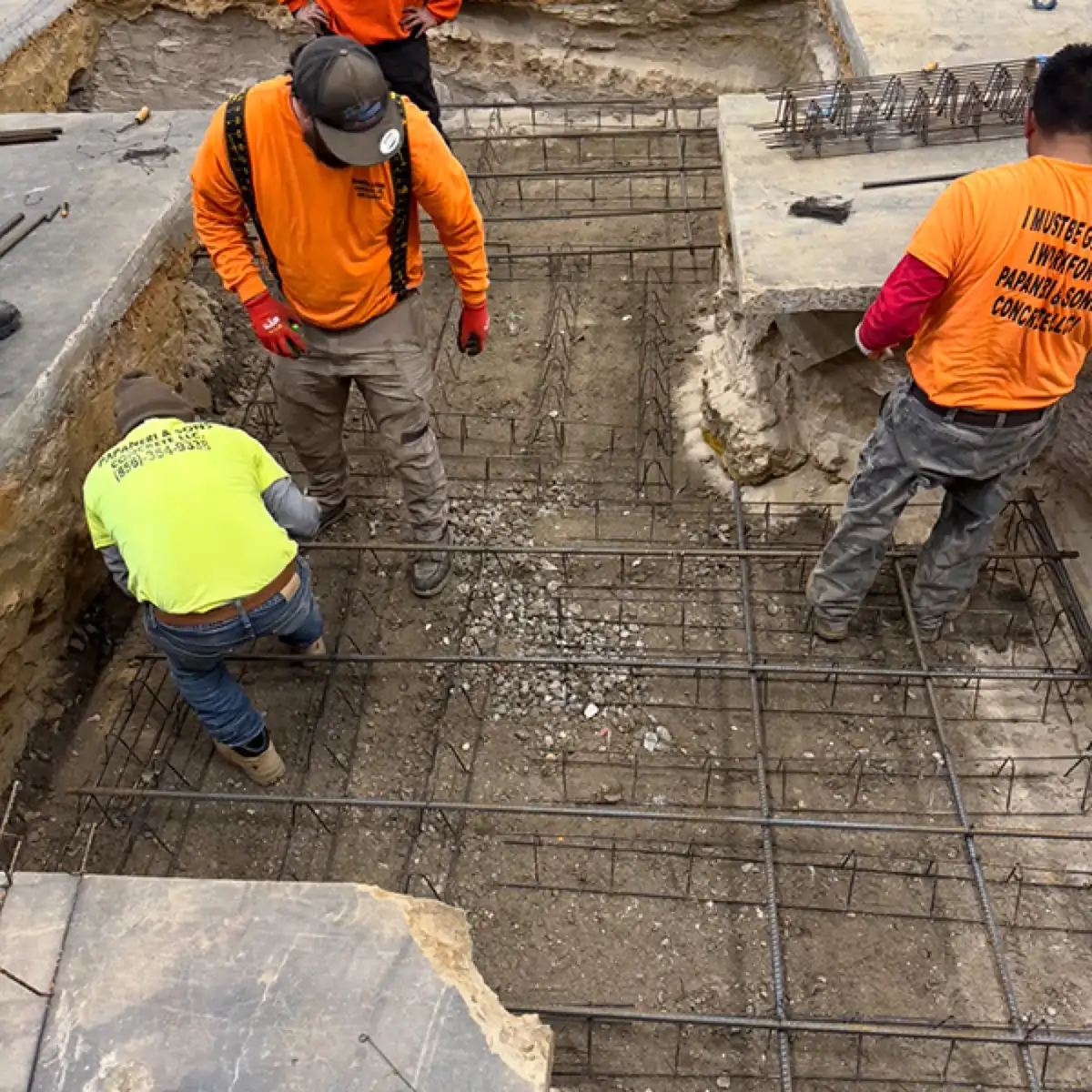
A complete basement floor quote lists five things: demolition and disposal, the stone base, the vapor barrier, slab thickness and reinforcement, and the finish. Ask any bidder to write those out. Two quotes only compare when both include the same five lines.
Get at least two written quotes and make sure both include the same scope. A quote without demolition, stone base, and a vapor barrier written on it is not really cheaper. It is just missing the parts that make the floor last.
If cost is your next question, our post on polished concrete or epoxy for a basement walks through it.
Four inches is the standard for a residential basement floor. Go to five or six inches with reinforcement if you plan to park a vehicle, install a lift, or store heavy equipment down there. Thickness is cheap insurance compared to replacing a cracked slab later.
You can usually walk on a new slab after about 24 to 48 hours, and set light furniture on it after a week. Wait 28 days before heavy loads or before installing flooring on top, because that is when concrete reaches its rated strength.
Most townships require a permit for a new or replacement basement slab, and some want an inspection of the base before the pour. In Cherry Hill and the rest of South Jersey, Denise in our office pulls those permits for you. Call (856) 354-9338 and we will tell you what your town requires.
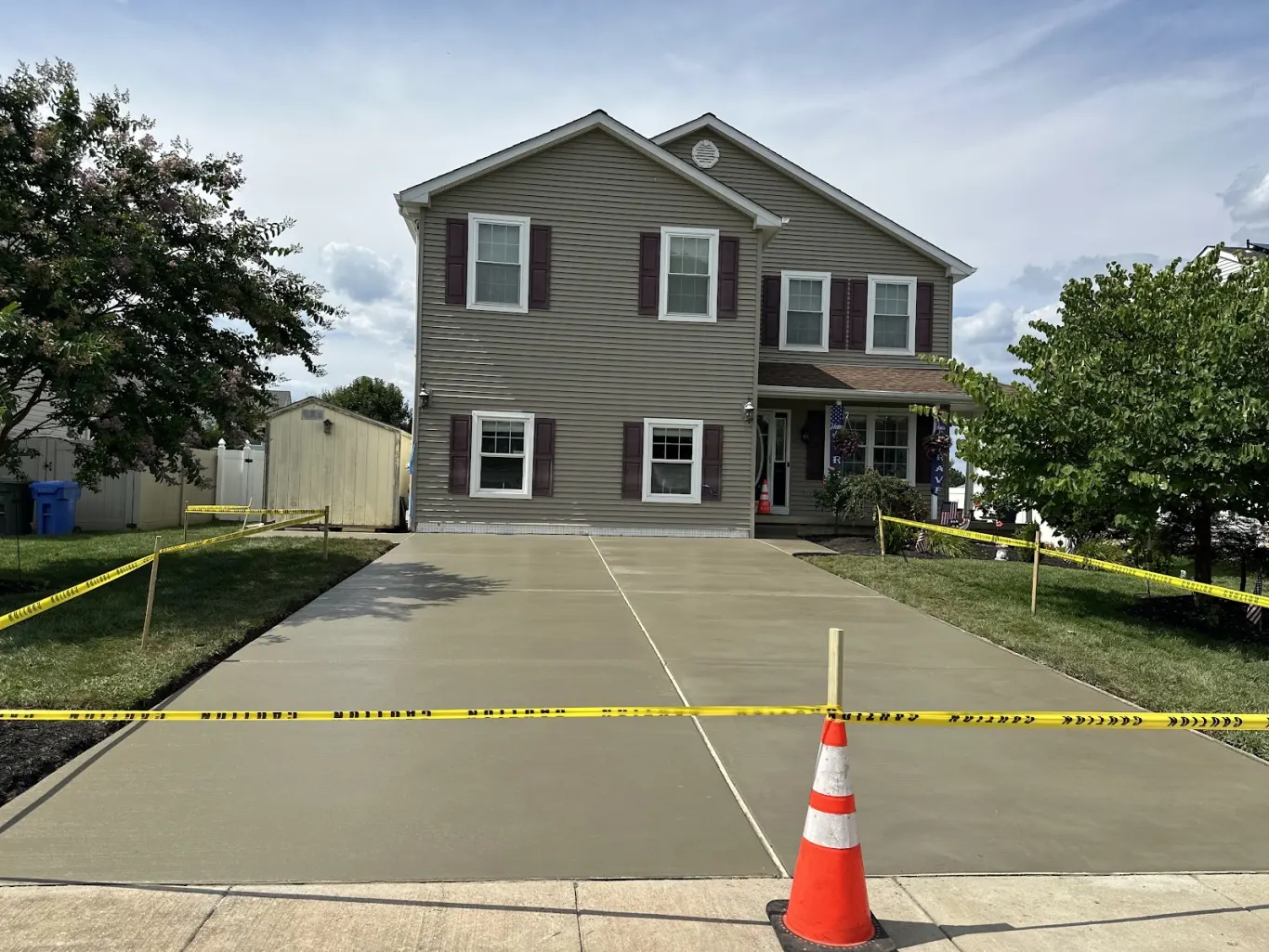
A basement slab quote should be based on a walkthrough, not a phone guess. Papaneri & Sons measures the space, checks the access, and prices the base and the pour separately so you can see what you are buying. We pour basement floors across Cherry Hill, Voorhees, Marlton, Mount Laurel, and the rest of South Jersey. Free on-site estimates, family crew, same standards since 1987.