
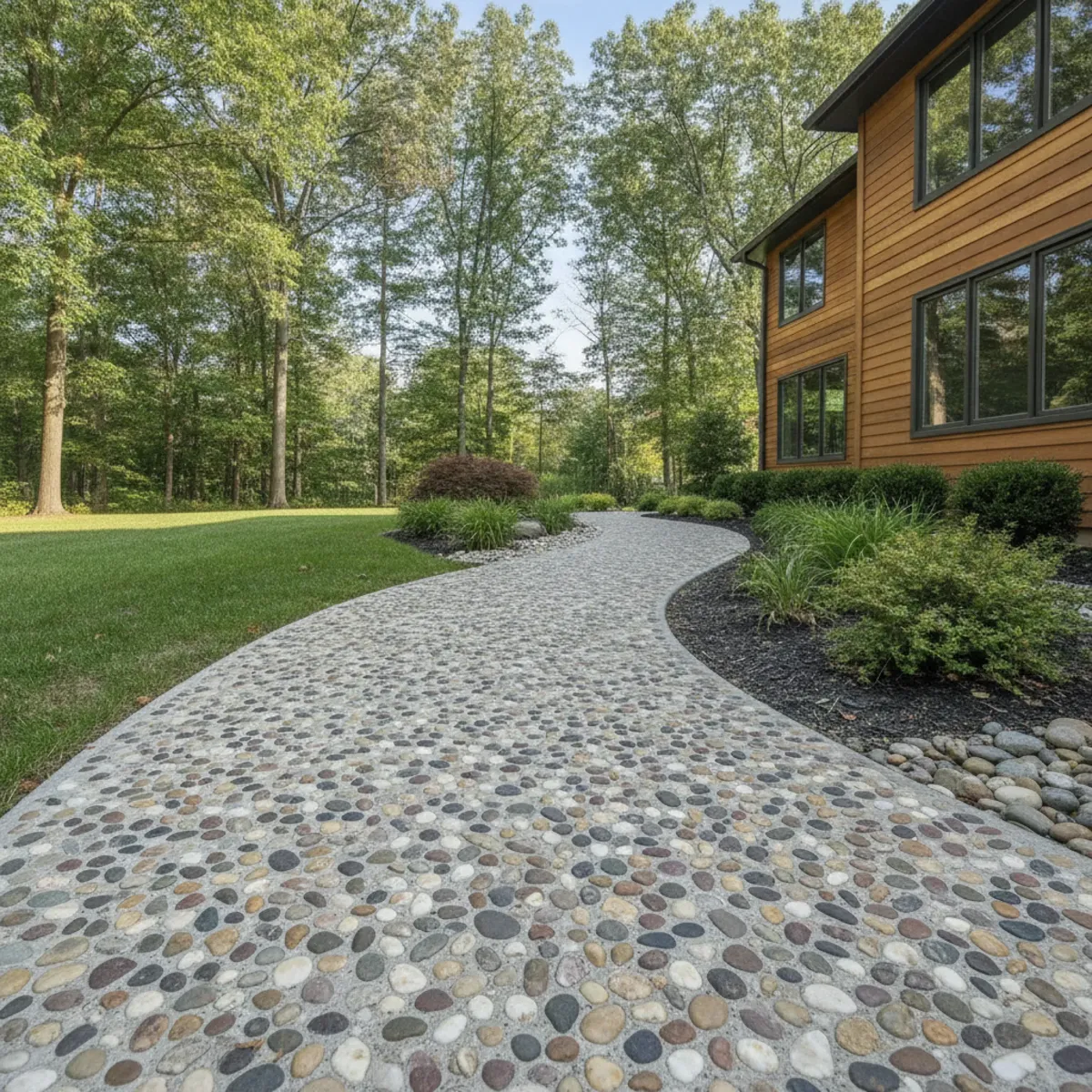
Some of the best grip costs nothing extra if it is planned before the pour. Fixing a slick slab later runs from a few dollars a foot to about $12.
Slip-resistant concrete costs $1 to $12 per square foot to add to an existing slab. A grit sealer sits at the low end. HomeGuide's 2026 concrete coating cost guide puts full coatings at $4 to $12 per square foot installed.
On a new pour, a textured finish can cost little or nothing extra. Papaneri & Sons has poured and finished concrete across South Jersey since 1987. The cheapest grip is the one built in on day one.
This post covers every option, what each one costs, and where each one makes sense. If you are planning a pool area, start with our concrete pool decks page.
Bare concrete with a rough texture has good grip. Trouble starts when the surface gets smooth, sealed with a glossy film, or wet. Pool decks, sloped walks, and steps are the usual trouble spots.
A broom finish drags light ridges across wet concrete. Exposed aggregate washes away the top paste to show the stone. A salt finish presses rock salt into the surface and washes it out. Each one gives your shoes something to catch.
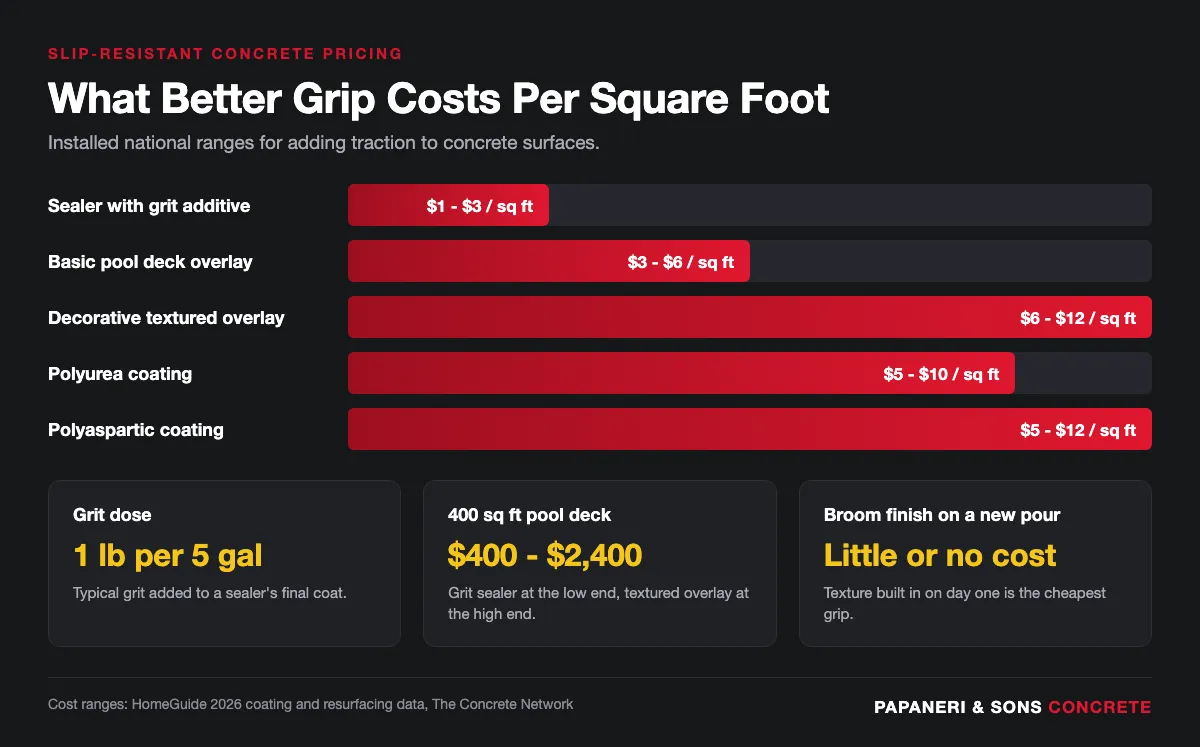
Many sealers leave a smooth film. Adding grit to the final coat brings back traction. The Concrete Network reports a typical dose of 1 pound of grit per 5 gallons of sealer, usually fine plastic beads that turn nearly clear.
When the old surface is worn or too smooth, a thin overlay or coating goes on top. These can carry texture, color, and grip in one step. They cost more because they add material and labor.
Most concrete feels fine when dry. The real test is a wet, sealed, or shaded surface. That is where a smooth finish and a glossy sealer together cause the most trouble.
Tape works on a single step edge or a short ramp. It is fast and cheap to try, but it wears, peels in cold weather, and looks out of place on a patio.
Here is how the common options compare, per square foot, installed. Sealing concrete runs $1 to $3 per square foot, according to HomeGuide. A grit additive rides along with that sealer, so the grip itself adds very little.
A basic pool deck overlay costs $3 to $6 per square foot. Decorative designs run $6 to $12, per HomeGuide's concrete resurfacing cost data. A cool, non-slip pool deck coating like Kool Deck adds about $4 per square foot.
Polyurea coatings run $5 to $10 per square foot and polyaspartic runs $5 to $12. Installers often broadcast grit or flakes into the top coat for traction. These make the most sense on garage floors and covered areas.
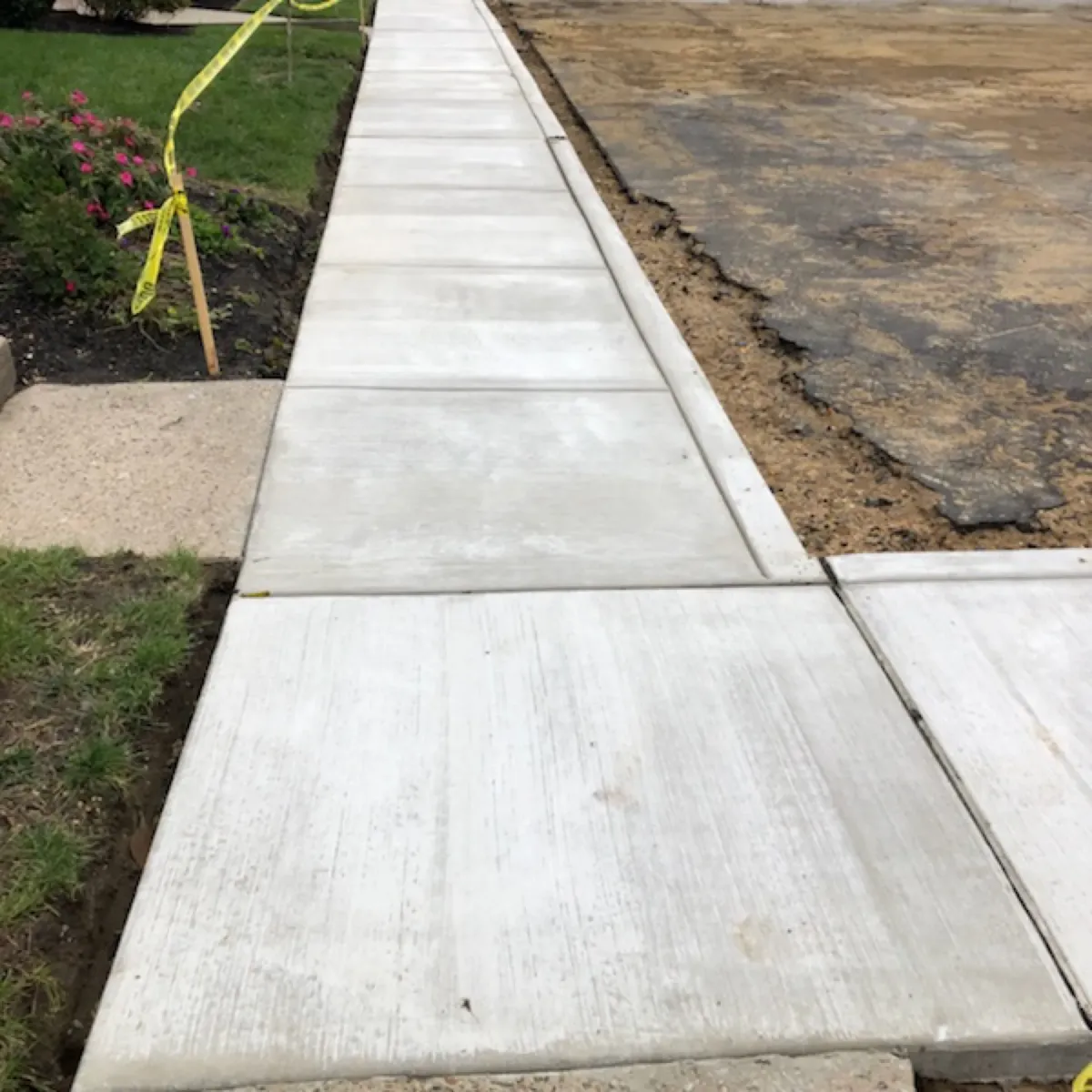
A broom finish is the standard exterior finish, so it adds little or nothing to the price. Exposed aggregate and salt finishes add some labor, so ask for a price on each.
On a 400 square foot pool deck, a grit sealer might run $400 to $1,200 and a textured overlay about $1,200 to $2,400. A premium coating can reach $4,800.
Papaneri & Sons finishes every step tread with a broom texture. It gives a safe walking surface in wet and icy weather without looking rough.
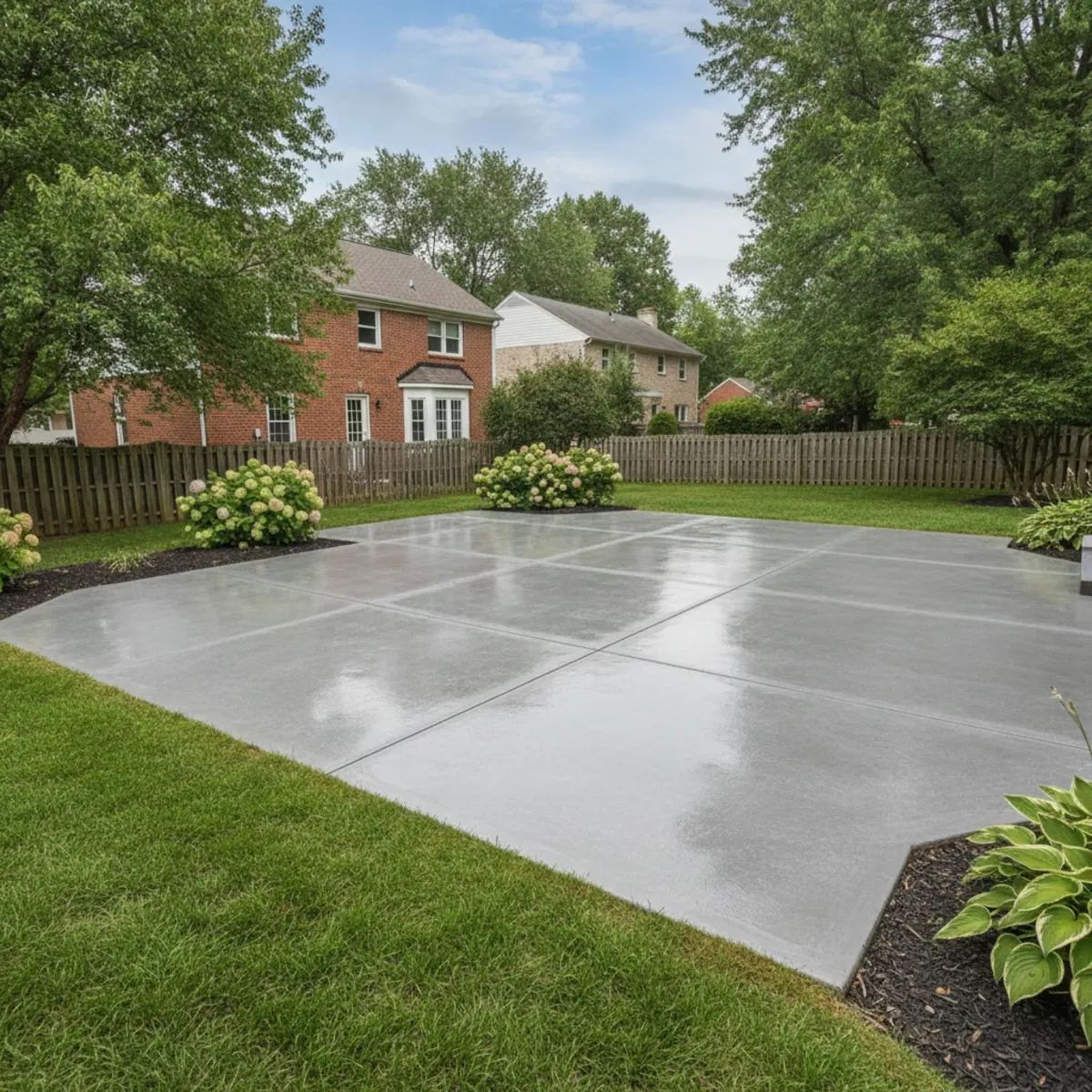
On decorative work, the sealer is usually the real issue. A high-gloss coating makes stamped concrete look great, and it can turn slick around pools or in shady spots that stay damp.
That is why we typically recommend a sealer with an anti-slip additive for driveways, pool surrounds, and walkways. Where the look allows it, a penetrating sealer repels water without changing the texture at all.
Winters here add ice to the list. Grip matters for more than comfort, too. Injury Facts from the National Safety Council counts 264,920 workplace injuries from same-level falls in 2023 and 2024. Each one kept a worker off the job for days.
For businesses, the rules are clear. The ADA Standards require floor and ground surfaces on accessible routes to be stable, firm, and slip resistant. That covers entrances, walks, and ramps at your property.
If the concrete is not poured yet, ask for texture now. A broom finish or exposed aggregate costs far less than any fix later.
If you like the look of stone, compare finishes before you commit. Our guide to exposed aggregate versus regular concrete covers traction, cost, and upkeep side by side.
Stamped concrete needs extra thought around water. Our breakdown of stamped versus regular concrete pricing explains what the sealer step adds to the budget.
If the slab is already sealed and slick, start cheap. A fresh coat of sealer with grit can fix many patios and walks for a small cost.
If the surface is worn, pitted, or peeling, grit will not hide it. Resurfacing is the better spend, and our guide to concrete overlay versus a new slab helps you decide how far to go.
Keep up with maintenance. Grit in a sealer wears away with traffic, so plan to reseal on schedule. Moss and algae in shady spots also make any surface slick, so keep those areas clean.
For ramps, steps, and business entrances, do not guess. Choose the most textured option the space allows, and keep it maintained.
Yes. A broom finish is one of the grippiest finishes you can put on outdoor concrete, which is why it is standard on sidewalks and steps. The ridges wear down slowly over many years. A glossy sealer can reduce that grip, so choose the sealer carefully.
It can. Film-forming sealers leave a smooth layer that gets slick when wet. Penetrating sealers soak in and leave the texture alone. If you want a film sealer for color, add grit to the final coat.
A textured finish such as exposed aggregate, a salt finish, or a textured overlay works best around pools. Avoid a high-gloss sealer where people walk barefoot. Papaneri & Sons builds and resurfaces pool decks across Cherry Hill, Moorestown, and Marlton with grip in mind.
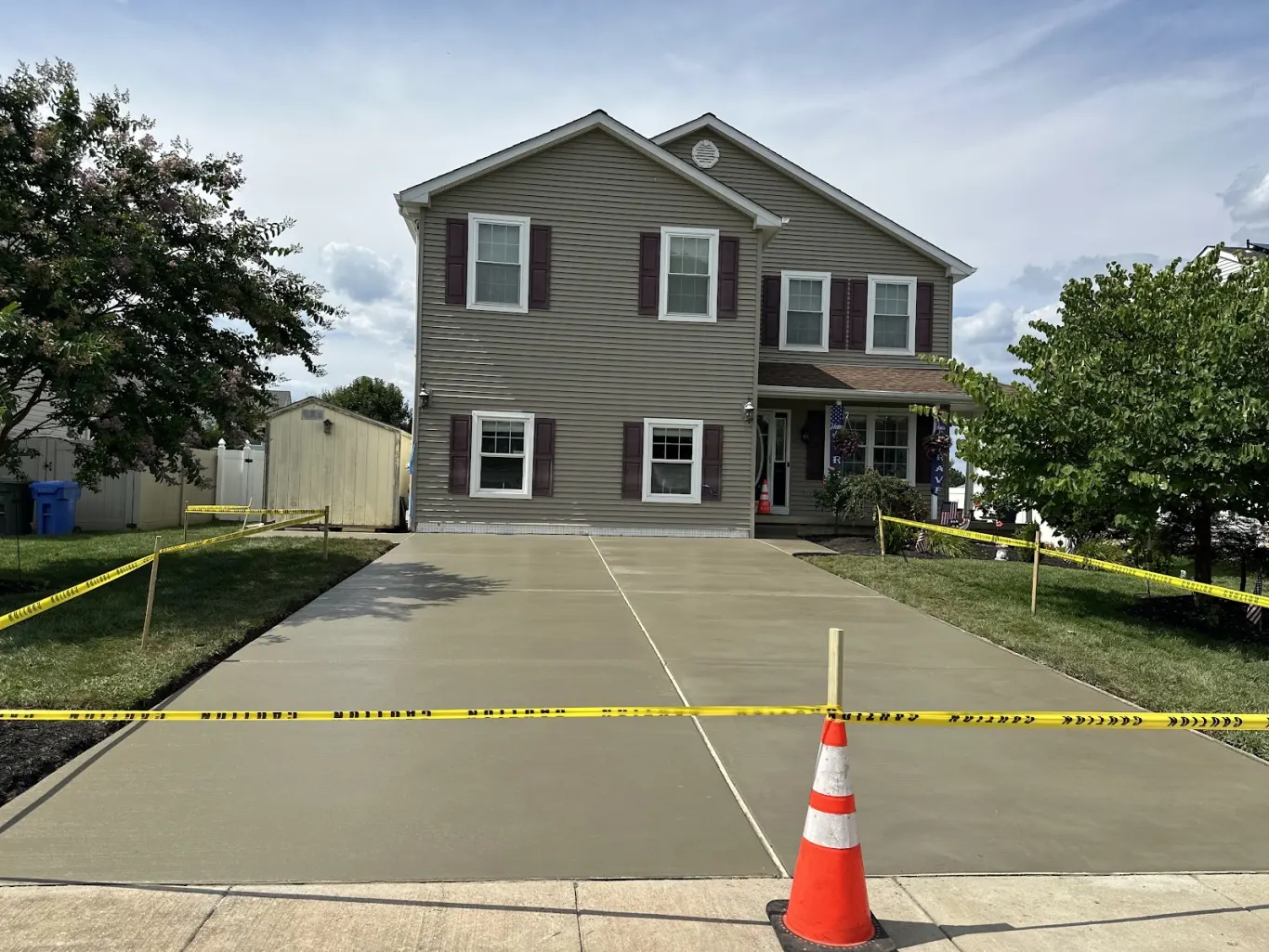
A walkthrough shows exactly why a surface is slick and which fix will last, whether that is grit, a new finish, or an overlay. Papaneri & Sons serves Cherry Hill, Haddonfield, Voorhees, Mount Laurel, and Marlton. Family crew since 1987, ACI certified, and free on-site estimates.