
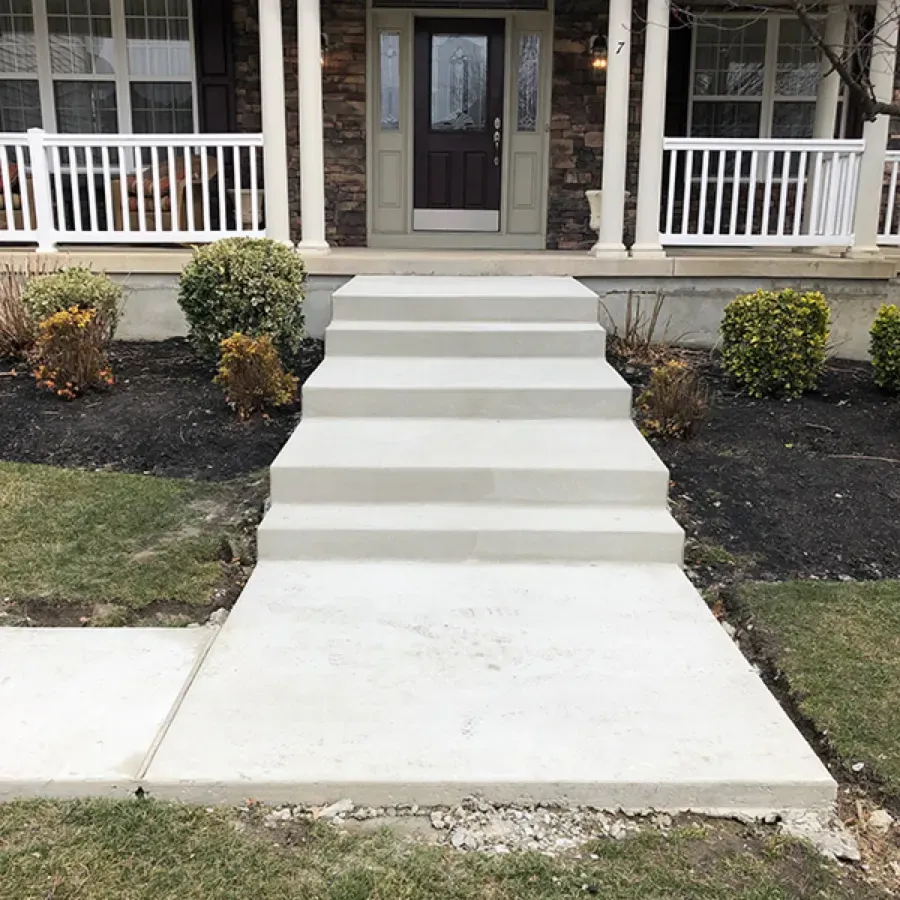
Most concrete ramps cost $200 to $250 per linear foot. The height of your door decides how many feet you need.
A concrete wheelchair ramp costs about $200 to $250 per linear foot installed, according to HomeGuide's 2026 wheelchair ramp cost guide. For a door 12 to 30 inches off the ground, the ramp itself runs about $2,400 to $7,500.
Papaneri & Sons has poured entries, walks, and steps across South Jersey since 1987. A ramp is priced by the foot, but the foot count comes from one number most people never measure: the total rise.
This post shows how to figure your ramp length and budget before you call anyone. If your entry needs new steps too, see our concrete steps construction page.
Measure straight down from the top of your door threshold to the ground where the ramp will start. That height is the rise, and it drives the whole project.
The ADA Standards for Accessible Design limit ramp slope to 1:12. That means every inch of rise needs at least 12 inches of ramp. A 24 inch rise needs at least 24 feet of ramp.
The same standards cap each ramp run at 30 inches of rise. After that, you need a flat landing at least 60 inches long before the next run. Landings are also needed at the top, the bottom, and anywhere the ramp turns.
A ramp run needs at least 36 inches of clear width between handrails. Any run with more than 6 inches of rise needs handrails. HomeGuide notes that 42 inches is a more comfortable width for home ramps.
ADA rules are written for public buildings and businesses. A private home ramp may not be required to meet them. They are still the safest guide, because a steeper ramp is hard to climb and dangerous to come down.
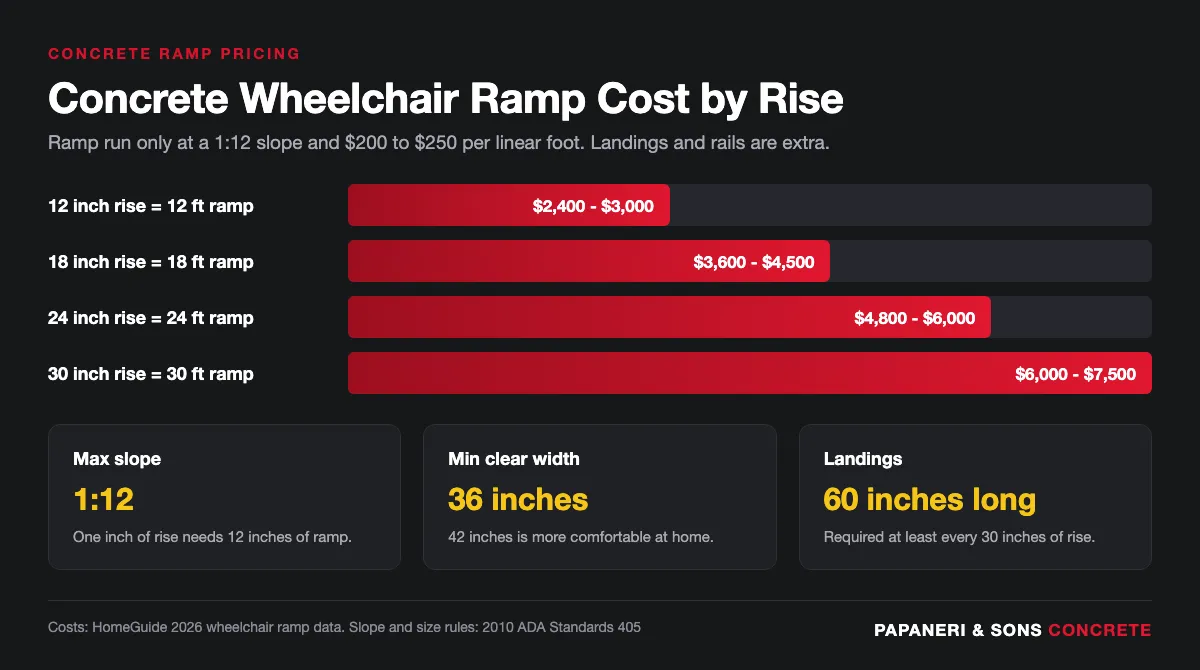
Using the $200 to $250 per foot range from HomeGuide, here is what the ramp run alone costs at common door heights. Landings, handrails, and demolition are added on top.
A 12 inch rise needs about 12 feet of ramp. At $200 to $250 per foot, that is roughly $2,400 to $3,000.
An 18 inch rise needs about 18 feet of ramp, or roughly $3,600 to $4,500.
A 24 inch rise needs about 24 feet of ramp, or roughly $4,800 to $6,000.
A 30 inch rise needs about 30 feet of ramp, or roughly $6,000 to $7,500. Anything taller needs a landing in the middle and a second run.
Handrails, landings, and a level platform at the door all add to the per-foot price. A landing is a small slab of its own, so budget for it like one.
For comparison, HomeGuide lists aluminum ramps at $130 to $225 per foot and wood at $100 to $250. Concrete costs more up front, but it does not rot, needs little upkeep, and stays put.
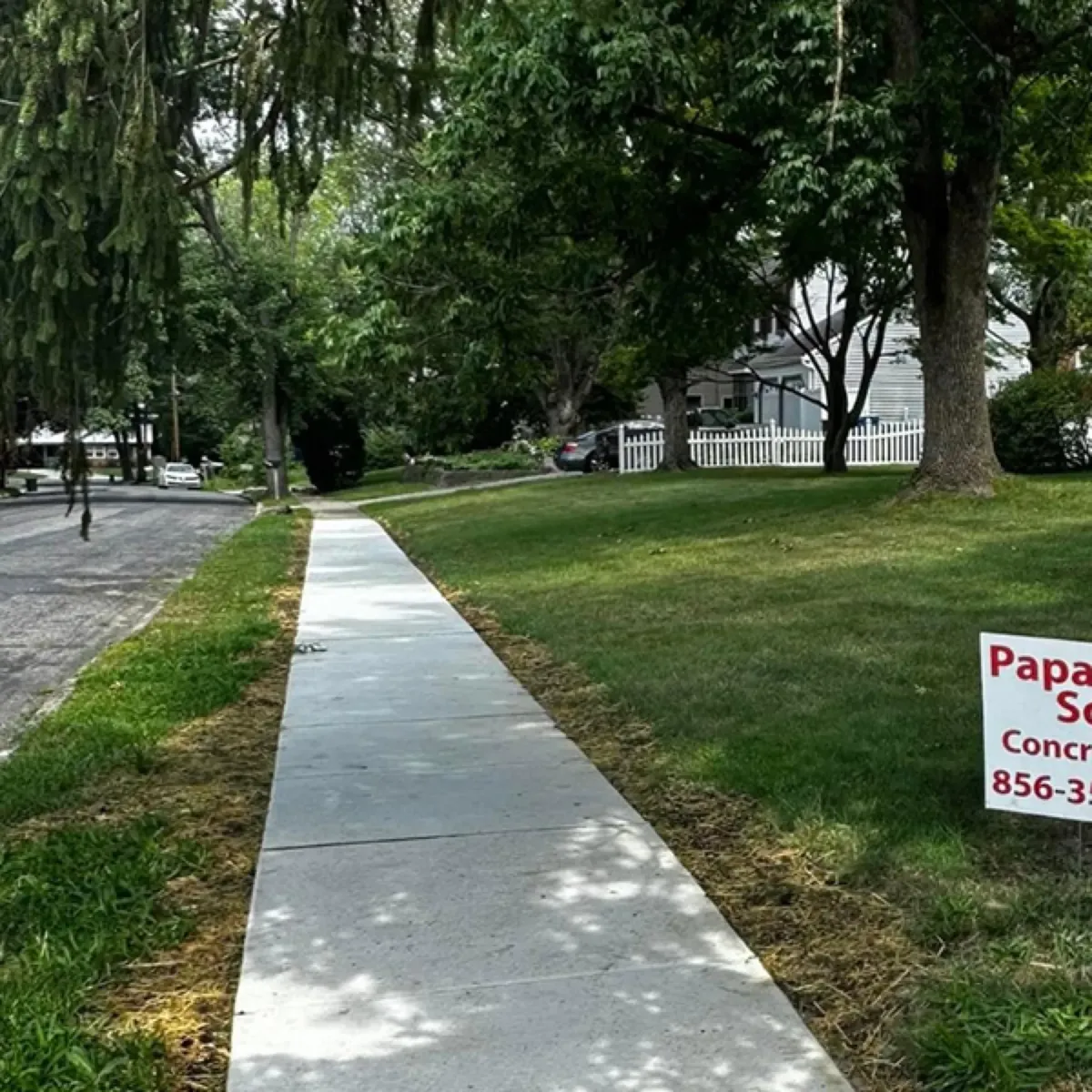
Papaneri & Sons builds accessible stalls, access aisles, and ramps on commercial parking lots to the slopes the site plan calls for. The same care goes into a ramp at a home.
The first lesson is that the ramp is only part of the job. Most ramps meet an existing walk, a stoop, or a driveway. Those connections need to line up flush, with no lip for a wheel to catch.
The second lesson is surface. We finish every step tread with a broom texture for grip in rain and ice, and a ramp deserves the same finish. A smooth trowel finish on a ramp is a fall waiting to happen in a South Jersey winter.
The third lesson is the base. A ramp that settles even a little creates a trip edge where it meets the house. We compact a proper stone base and pour our 4500 PSI mix, which is built to handle freeze-thaw winters. The ADA ramp standards also call for edge protection on ramps with drop-offs, so plan curbs or rails early.
Paperwork is the last lesson. Most permanent ramps need a township permit. Denise in our office handles permits and inspections for our customers, so that part never slows the pour.
Start with the rise. Measure it, multiply by 12, and you have the minimum ramp length in inches. Divide by 12 again for feet.
Then walk the yard. A straight ramp needs a long clear run. If you do not have one, plan a switchback with a landing, and add that landing to your budget.
If the ramp will replace old steps, look at their condition first. Our guide to concrete stairs repair cost explains when steps can stay and when they should come out.
Think about grip before the pour, not after. Our breakdown of slip-resistant concrete cost covers finishes that keep a ramp safe when wet.
For a business, the ramp is often one piece of a larger lot. Our guide to concrete parking lot paving cost covers the accessible stalls and aisles that connect to it.
Leave room at the top. The ADA standards call for a landing at least 60 inches long, which also gives someone space to open the door.
Ask about funding, too. HomeGuide notes Medicare typically does not cover ramps, but some Medicare Advantage plans, nonprofits, and state programs help with home changes.
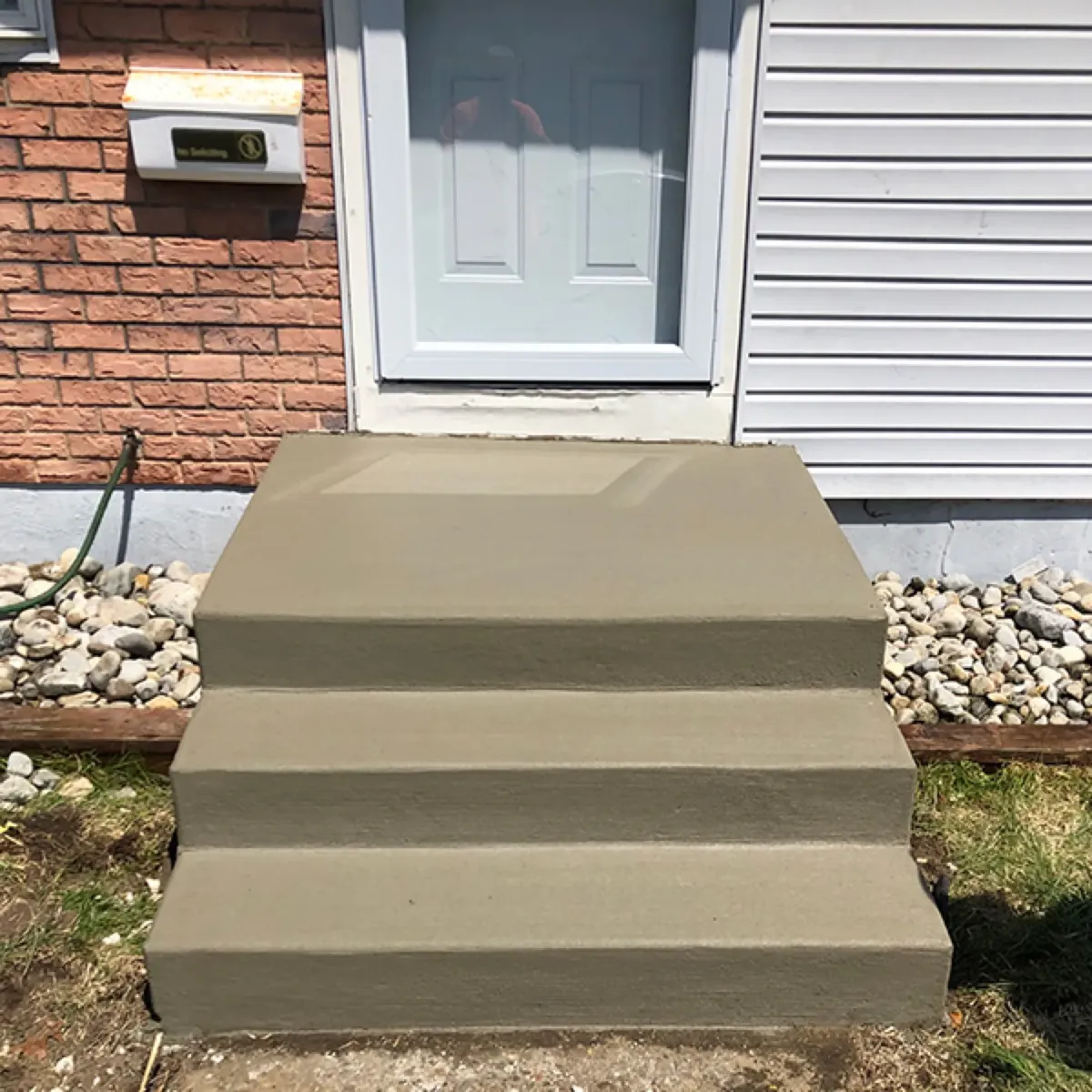
Three steps usually rise about 21 inches. At a 1:12 slope, that needs about 21 feet of ramp. Measure your actual rise, because step heights vary from house to house.
For a permanent ramp, usually yes. Concrete does not rot, warp, or get slick from algae the way wood can. Wood can cost less up front and is easier to remove later, so it fits short-term needs better.
Most permanent concrete ramps need a township permit, and some towns want a drawing first. Rules vary, so check before work starts. Papaneri & Sons pulls permits for ramps and entries in Cherry Hill, Haddonfield, and nearby towns.
A per-foot range gets you close. A site visit gets you the real number, including the rise, landings, rails, and how the ramp meets your walk. Papaneri & Sons pours ramps, steps, and walks across Cherry Hill, Voorhees, Marlton, Mount Laurel, and Moorestown. Family crew since 1987, ACI certified, and free on-site estimates.