
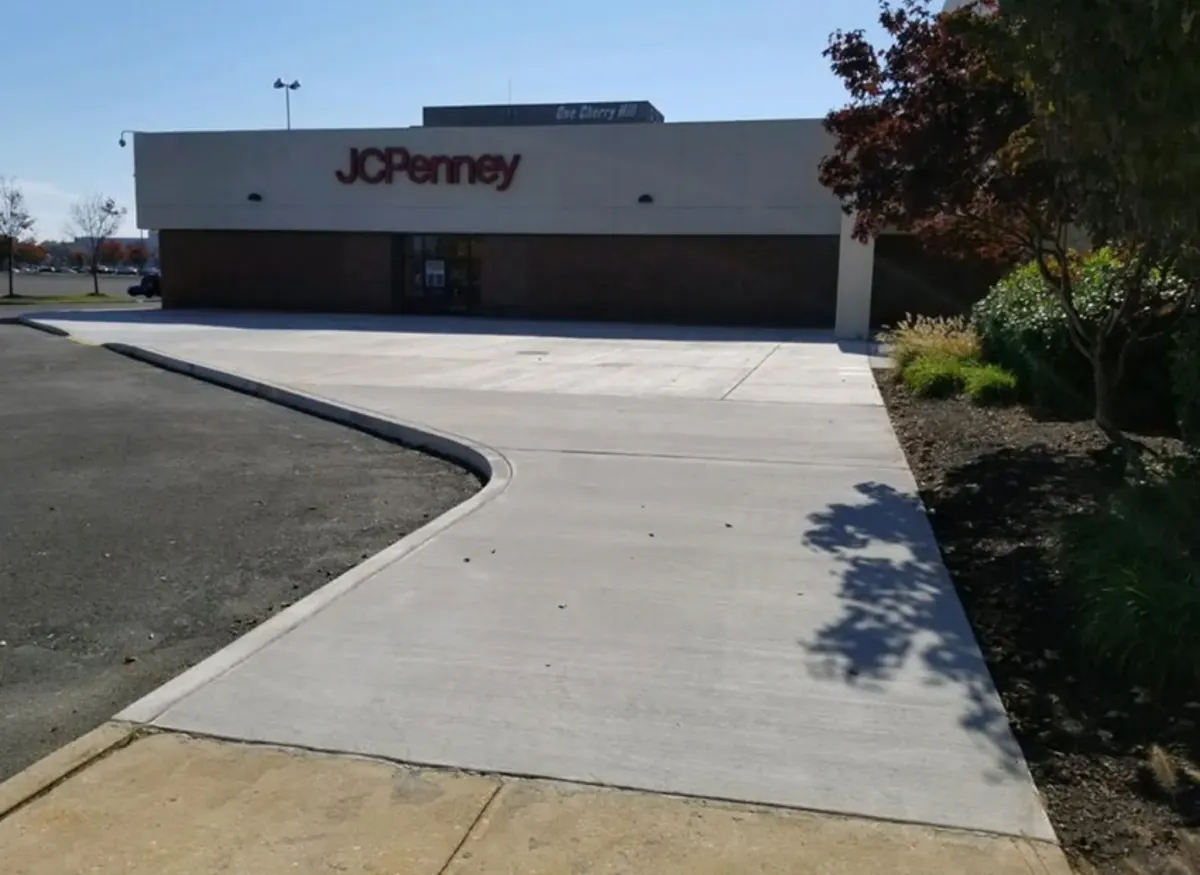
Concrete costs more per square foot than asphalt and outlives it by decades. Here is how the installed price is built and where owners get surprised.
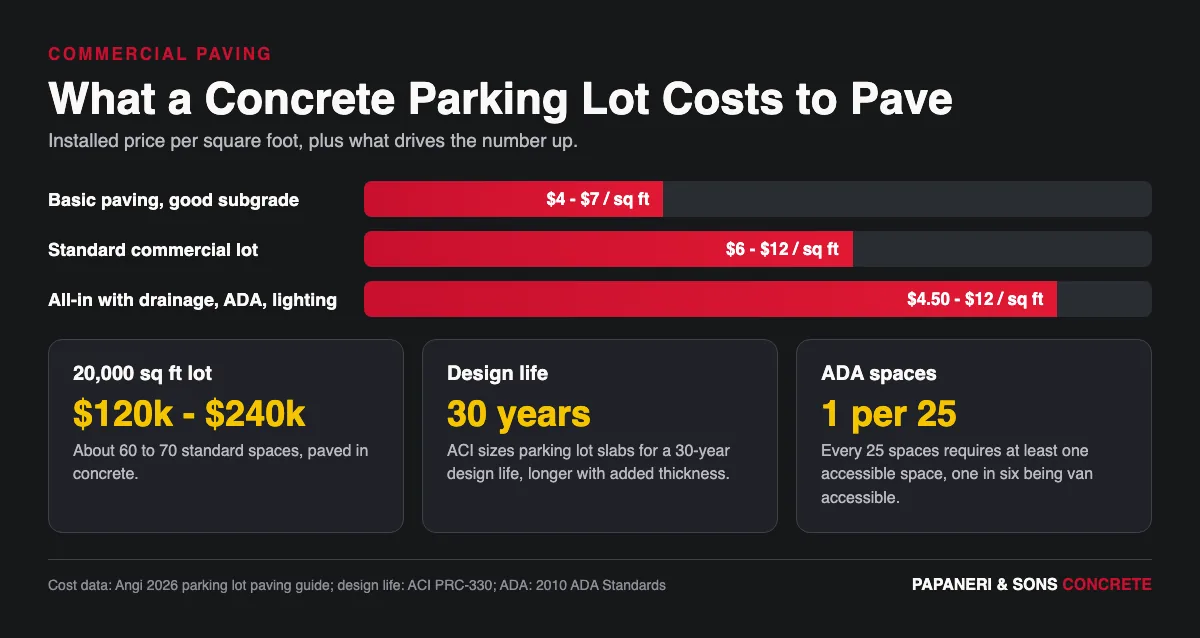
A concrete parking lot costs roughly $6 to $12 per square foot installed, with basic paving on good subgrade closer to $4 to $7. Angi's 2026 parking lot paving guide puts all-in projects, including drainage, lighting, and accessible parking work, between $4.50 and $12 per square foot.
Papaneri & Sons has poured commercial slabs, aprons, and lots across South Jersey since 1987. On a lot, the concrete itself is rarely the line that blows the budget. Site work is.
This post walks through the whole number, from subgrade to striping. For the service and scheduling details, see our concrete parking lot paving page.
A paving quote is really five smaller jobs stacked together. Compare bids line by line, because leaving one of these out is how a low number gets written.
Removing the old surface, cutting to grade, and compacting the subgrade comes first. Soft or wet soil means undercutting and stone, and that work happens before a single yard of concrete is ordered.
Car-only areas are thinner than truck lanes and dumpster pads. Thickness is set by expected truck traffic and soil support, so a lot with delivery trucks costs more per square foot than a staff lot.
Control joints are cut on a spacing that matches the slab thickness, and the whole lot has to be pitched so water leaves. Bad pitch shows up the first heavy rain and cannot be fixed cheaply.
Accessible stalls, access aisles, ramps, and signage are part of the paving scope on almost every commercial lot. So is the final layout and striping.
Most businesses cannot close the whole lot. Pouring in halves or quarters keeps you open and adds mobilizations, joints, and schedule to the price.
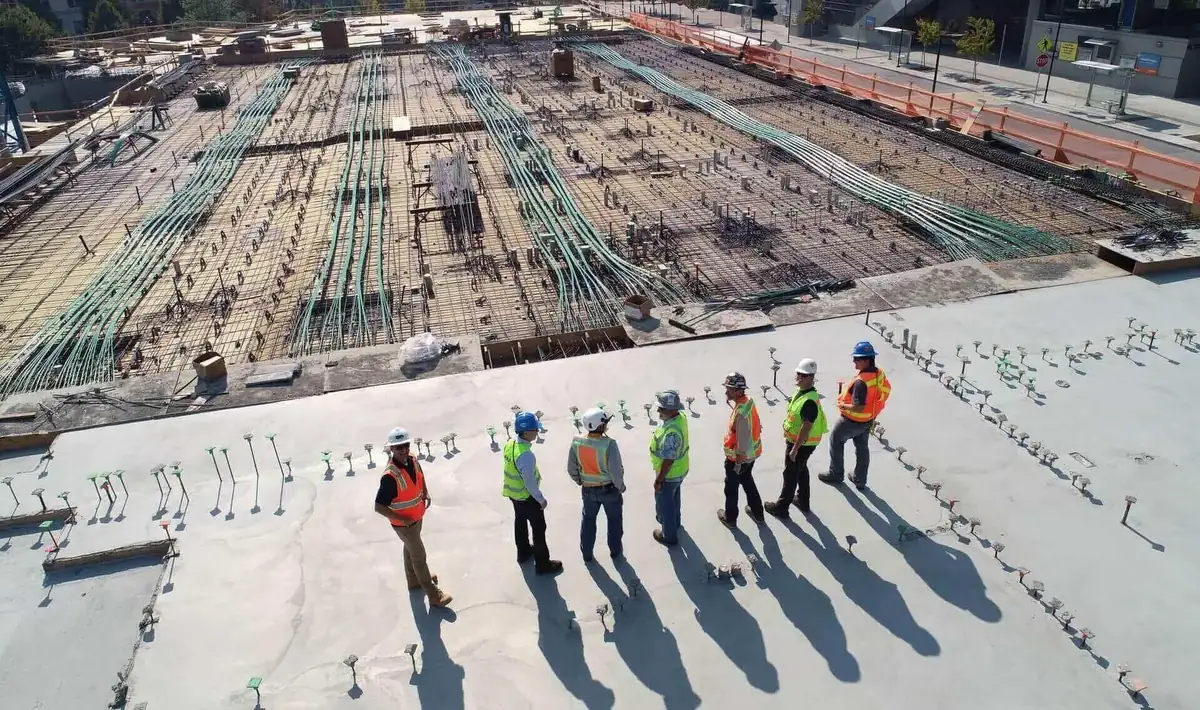
Run the math on total area, not per stall. A 20,000 square foot lot, roughly 60 to 70 standard spaces, lands near $120,000 to $240,000 at the installed ranges Angi published for 2026. Regional pricing can move that by a quarter in either direction.
Concrete costs more up front than asphalt and wins on service life. ACI's guide for concrete parking lots sizes slabs around a 30-year design life, with added thickness for longer service.
On most lots, concrete and reinforcing are less than half the bill. Excavation, stone, drainage structures, and accessible-parking work carry the rest.
Engineering, permits, and traffic control during the pour are real costs. So is the lost revenue from closed spaces, which is why phasing gets planned before pricing.
A 5,000 square foot lot costs more per square foot than a 50,000 square foot lot. Mobilization, equipment, and crew time get spread over less area, so do not benchmark a small lot against big-project pricing.
Papaneri & Sons has poured shopping center slabs, loading dock aprons, and entrance plazas for property managers across South Jersey. Two items catch owners off guard on nearly every lot.
The first is accessible parking. Under the 2010 ADA Standards, a lot of 1 to 25 spaces needs at least one accessible space, 26 to 50 needs two, and one of every six accessible spaces has to be van accessible. Getting that layout wrong means recutting concrete, not repainting lines.
The second is truck traffic. Owners price a lot for cars, then a trash truck and a tractor trailer use the same corner every week. Those lanes need extra thickness, and adding it after the fact costs far more than pouring it right the first time.
We pour a 4500 PSI mix and pull the joint spacing from the slab thickness on every commercial job. That combination is why our aprons and dock slabs hold up under loaded trucks instead of cracking along the wheel path.
Drainage structures are the third surprise. Inlets, trench drains, and piping tie into the paving scope, and moving one after the concrete is down means saw-cutting a lot you just paid to pour.
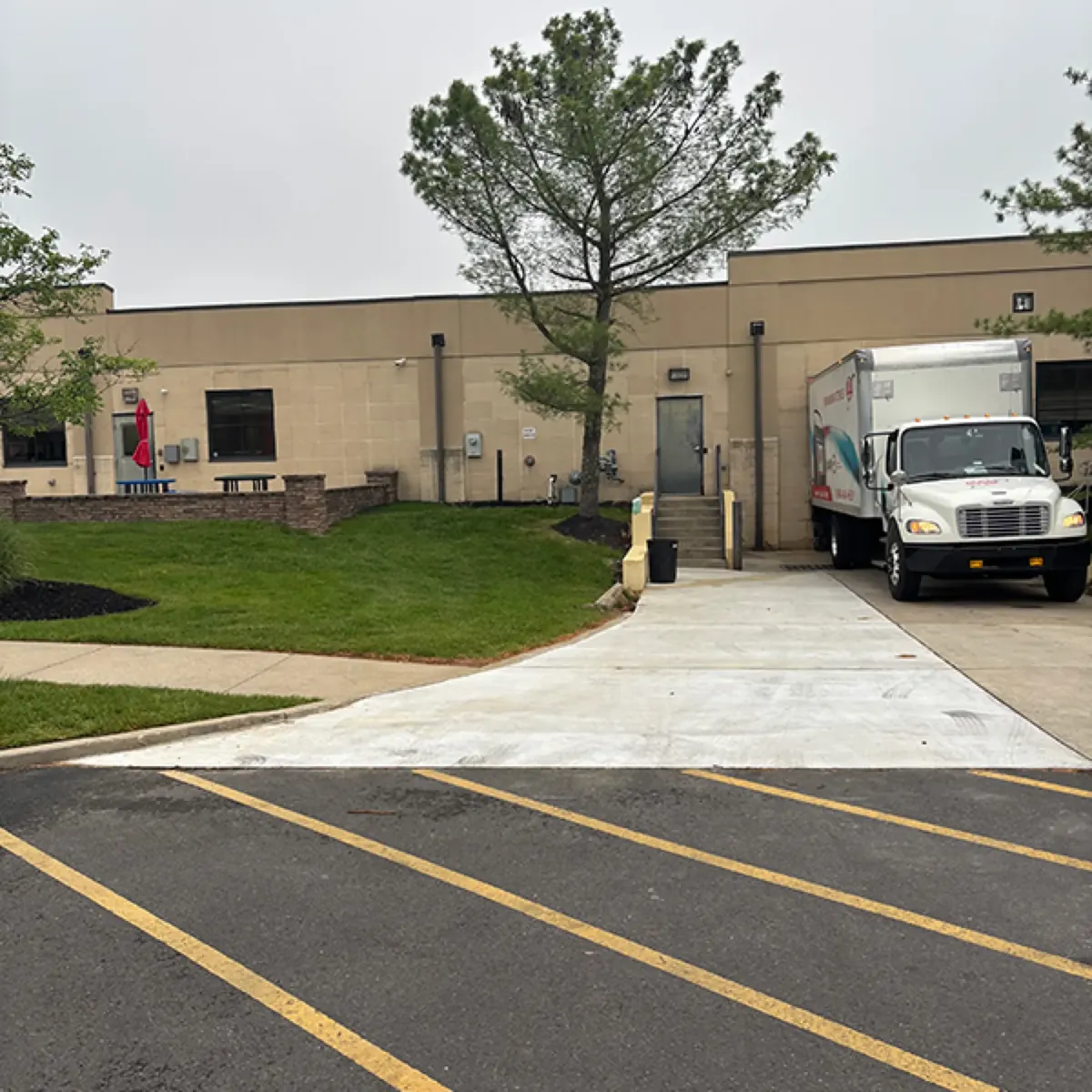
Ask every bidder for slab thickness, mix strength, joint spacing, and base depth in writing. If two quotes are far apart, one of those four numbers is almost always the reason.
Confirm who is paying to remove the old surface. Tear-out and disposal is a real line, and our breakdown of concrete removal cost shows how much thickness, reinforcement, and haul distance change that number.
Ask what happens if only part of the lot is failing. Sometimes the answer is a phased replacement rather than a full repave, and the same judgment call we describe in driveway repair vs. replacement applies at commercial scale.
Plan the maintenance while you are pricing the pour. Concrete lots need joint sealant checked every few years and cracks sealed as they appear. That small budget line is what carries the lot to the end of its design life.
Finally, ask who handles permits, engineering, and inspections. On our commercial concrete services jobs, that coordination is part of the scope, because a lot that fails inspection is a lot you cannot open.
Planning a budget? Read our guide on bollard installation cost per post.
Asphalt costs less to install and needs sealing and resurfacing every few years. Concrete costs more up front and is designed around a 30-year service life with far less maintenance. For lots with heavy trucks, dumpsters, or a long ownership horizon, concrete usually wins on total cost.
Thickness is set by soil support, concrete strength, and how many trucks use the lot each day, not by a single rule of thumb. Car areas are commonly poured thinner than truck lanes and dumpster pads. Any bidder who cannot explain how they arrived at your thickness is guessing.
A small commercial lot can be poured in a few days, while a large phased lot runs several weeks so the business stays open. Concrete needs about 7 days before light traffic and closer to 28 days for full strength. Papaneri & Sons schedules Cherry Hill and South Jersey pours around your business hours, so call (856) 354-9338 to plan the phasing.
Bring us the site plan or just the address. We will measure, look at the soil and the traffic, and give you a written number with the thickness and base spelled out. Papaneri & Sons paves parking lots, aprons, and commercial slabs across Cherry Hill, Marlton, Mount Laurel, and the rest of South Jersey. Family owned since 1987, ACI certified, free on-site estimates.