
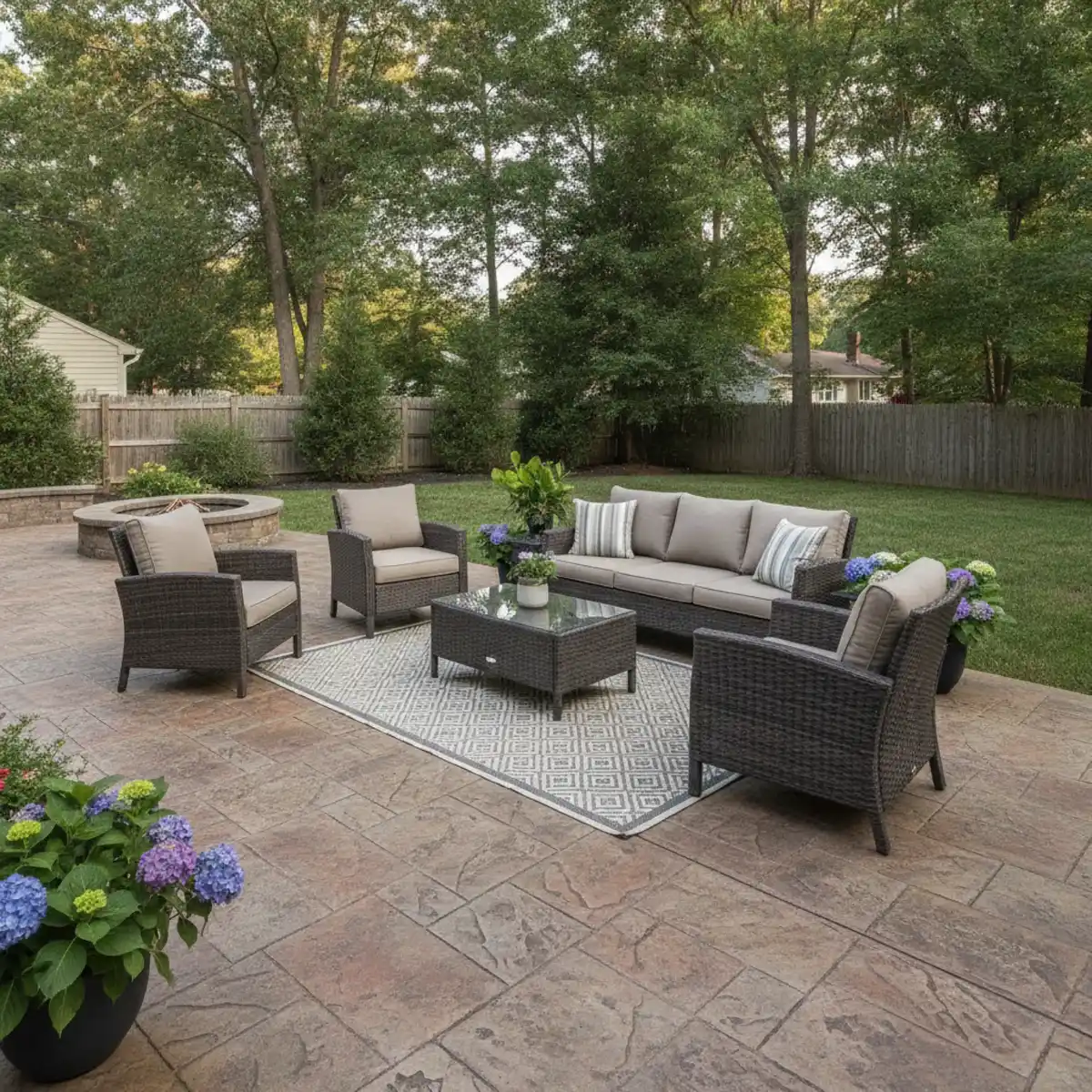
The slab, the base, and the crew are the same. Stamping adds roughly $6 to $10 per square foot on top of that, plus a resealing bill every few years.
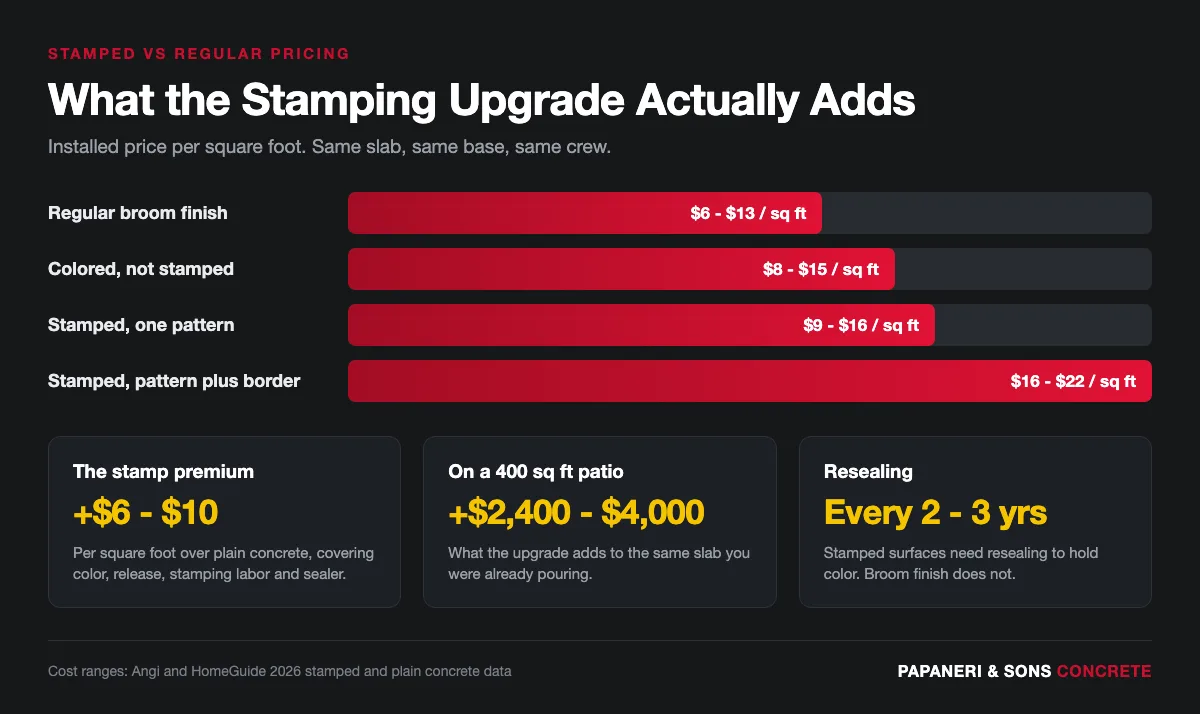
Regular broom-finish concrete runs $6 to $13 per square foot installed. Stamped concrete runs $9 to $22 for the same slab, per Angi's 2026 stamped concrete data. The stamping step itself accounts for most of that spread.
Papaneri & Sons quotes both finishes off the same site plan, so the gap between them is easy to see. Excavation, stone base, forming, and the pour do not change. What changes is everything that happens in the two hours after the concrete goes down.
This post is about price, not looks. For what patterns and colors are available and how the work is done, see our stamped concrete services page.
The stamping premium is not one line item. It is four separate costs stacked on the same pour, and each one shows up on the invoice.
Color is broadcast onto the fresh surface and worked in, then a powdered or liquid release keeps the stamps from sticking. Both are materials the plain version never buys. A second accent color adds another pass and another material.
Stamps have to be set while the concrete is at the right stiffness. That window is short, so the crew size goes up for a few hours to get the whole slab textured before it sets. More hands for a shorter time still costs more.
Stamp seams get touched up by hand, joints get cut into the pattern instead of straight across, and edges get tooled. This is slow work and it is the difference between a patio that looks like stone and one that looks like a rubber mat print.
Stamped concrete gets sealed before it is handed over, and the sealer is what makes the color read the way it did on the sample. Plain broom finish does not require it. That first coat is folded into the stamped price.
One pattern in one color is the cheap end of stamped. A field pattern with a contrasting border, a soldier course, or a second stamp at the steps adds hours. Complexity, not square footage, is what pushes stamped jobs to the top of the range.
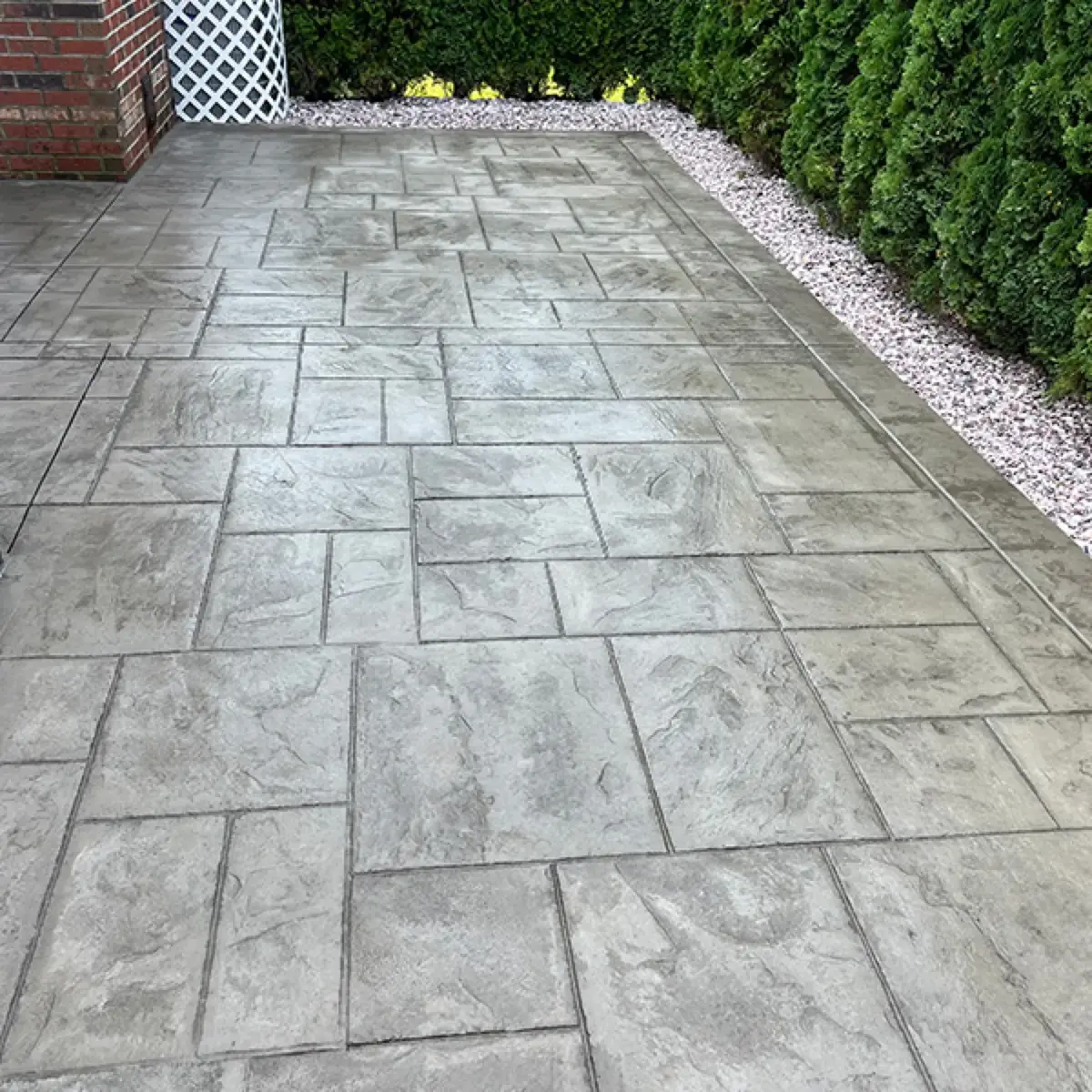
Laid out side by side, the tiers are easy to price. HomeGuide's 2026 stamped concrete figures put a 20 by 20 stamped patio at $3,200 to $7,600, against $1,600 to $4,800 for the same patio in plain concrete.
Regular broom finish is $6 to $13. Color with no stamping is $8 to $15. Stamped in a single pattern is $9 to $16. A stamped field with a contrasting border runs $16 to $22.
On a 400 square foot patio, the stamping step adds roughly $2,400 to $4,000 over the plain version. On a 200 square foot landing it is closer to $1,200 to $2,000. The premium scales with area, not with the size of the house.
Stamped surfaces need resealing every two to three years to keep the color from washing out. Budget that as an ongoing line. Broom-finish concrete has no equivalent recurring bill.
A cracked broom-finish slab can be patched and it disappears into the texture. A cracked stamped slab has to be matched on pattern and color, which is slow hand work. Plan on repairs costing more on stamped concrete, not less.
Stamping carries setup costs that do not shrink with the job. Mats, color, release, and the extra crew all show up whether the area is 150 feet or 600. A small stamped landing can price near the top of the per-foot range for that reason.
Papaneri & Sons has poured both finishes side by side on the same property more than once. The stamped bids that come back cheap are almost always missing the same three things.
The first is the sealer. A stamped patio handed over unsealed looks fine in the driveway light and looks chalky within a season. If a quote is a few dollars per foot under everyone else, check whether sealing is in it.
The second is the mix. The National Ready Mixed Concrete Association calls for 4,000 psi and about 6 percent entrained air on exterior slabs exposed to deicers, because a weak surface scales no matter how good the pattern is.
Our residential pours run a 4,500 psi mix under both finishes. Stamping presses texture into the top quarter inch, so that top layer has to be hard enough to hold the detail for twenty years, not two.
The third is joint placement. Stamped patios still need control joints, and a good crew hides them inside the pattern lines. A crew that saw-cuts straight across a stone pattern afterward has just drawn a line through your patio.
Stamping earns its price on surfaces people look at. A front walk, an entry landing, a pool surround, or a patio you sit on every night all justify it. A side pad for garbage cans does not.
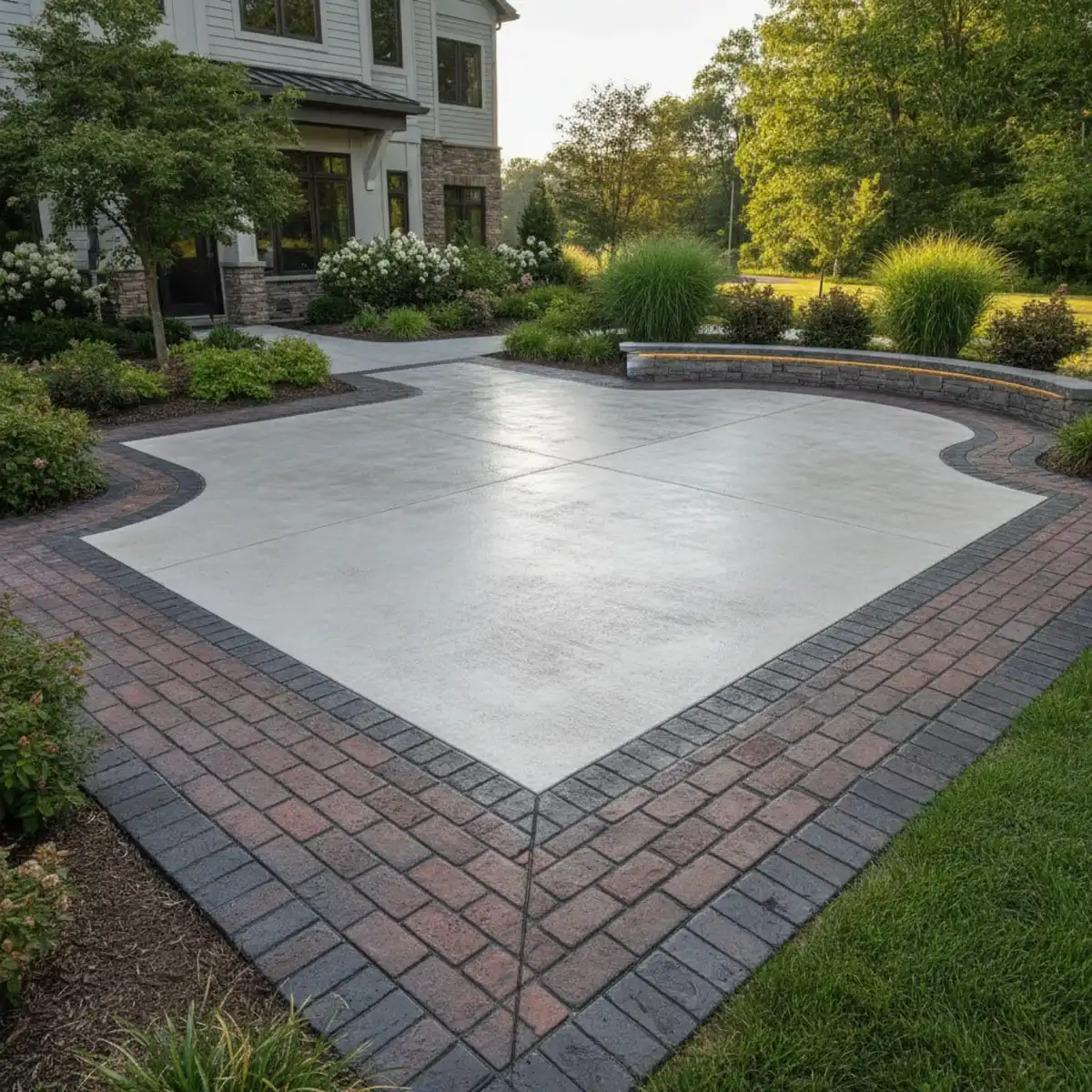
A middle option saves most of the premium. Pour the field in broom finish and stamp only a border, or color the whole slab without stamping it. Both read as finished work at a fraction of the full upgrade.
Before you commit, price the whole patio rather than the finish alone. Our concrete patio cost guide breaks down base, access, and removal so the finish decision sits on top of a real number.
If color is what you are after, the upkeep question matters more than the pattern. Our post on whether colored concrete fades explains which coloring methods hold up and which ones wash out.
Look at the sun and the traffic before you commit. A dark stamped surface in full afternoon sun gets hot underfoot, and a heavily used walkway wears the color at the entry points first. Lighter colors and tighter patterns hide both problems better.
Whatever finish you pick, the slab under it has to be built the same way. Our concrete slab installation page covers the base and forming work that both versions share.
Plan the resealing before you pour, not after. Our concrete sealing page covers what a maintenance coat costs and how often a stamped surface needs one.
In most cases yes. Stamped concrete runs $9 to $22 per square foot installed, while paver patios typically start higher because of material cost and hand-setting labor. Stamped concrete is one continuous slab, so there are no joints for weeds. Pavers win when you need individual pieces you can lift and reset.
Not directly, but you can get the look with a stamped overlay. An overlay bonds a thin layer of material to a sound existing slab and gets stamped like fresh concrete. It only works when the slab underneath is level and structurally solid, so cracked or sunken concrete has to be replaced instead.
Plan on resealing every two to three years to keep the color reading true. Cost depends on square footage and how much prep the surface needs first. Papaneri & Sons prices sealing as its own line on every stamped job, so call (856) 354-9338 if you want your patio quoted both ways.
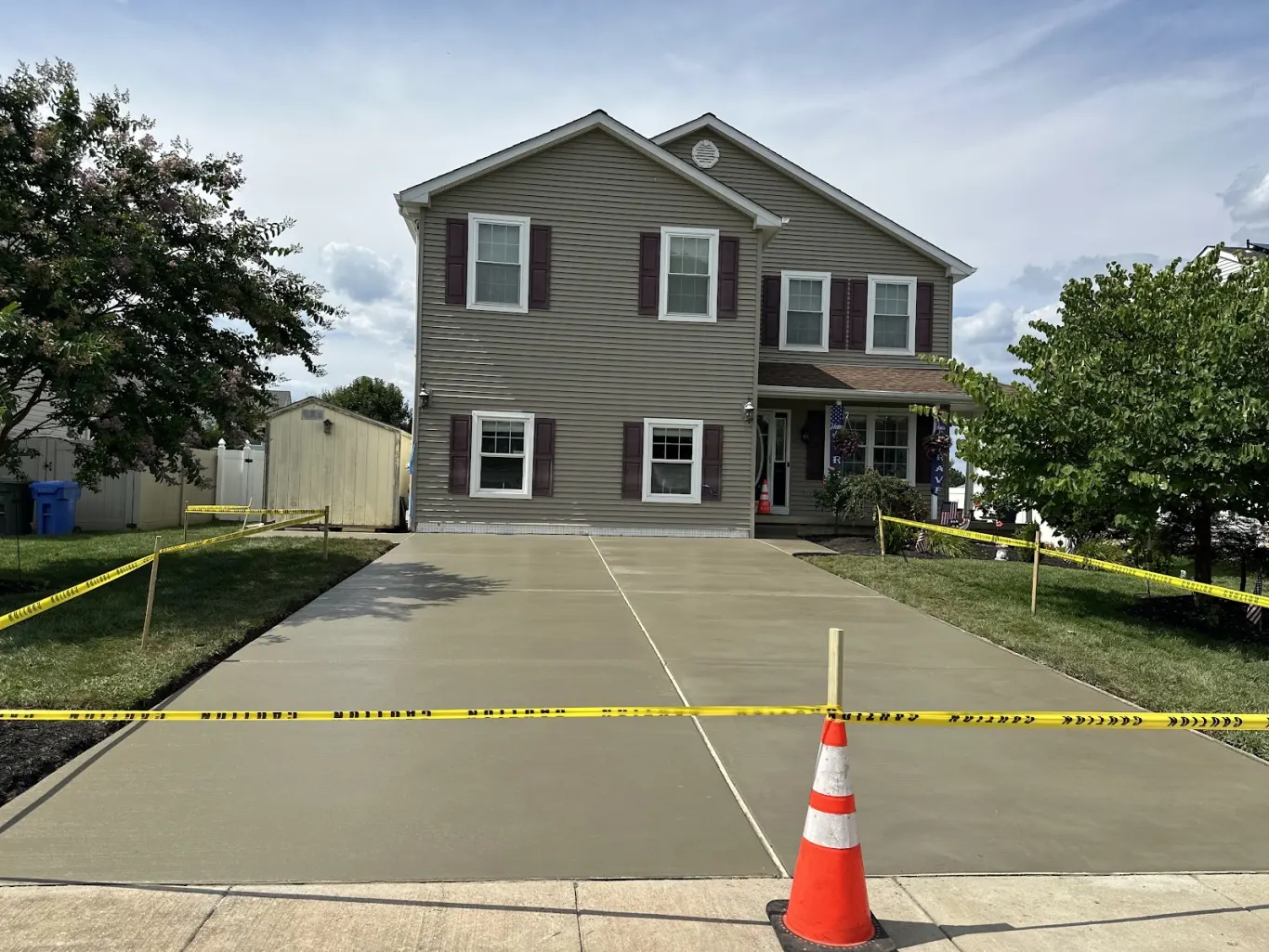
The only honest way to weigh the upgrade is to see the same slab quoted plain and quoted stamped. We will put both numbers on one estimate so the decision is yours, not a sales pitch. Papaneri & Sons pours stamped and standard concrete across Cherry Hill, Voorhees, Marlton, Mount Laurel, and Haddonfield. Family crew since 1987, free on-site estimates, 4,500 psi mix on every residential pour.