New support poured below a settled or shallow foundation, one staged section at a time. Papaneri & Sons has worked under South Jersey structures since 1987. Licensed and insured.
Enter your info below.
We'll call you back shortly to set up your free on-site estimate. For anything urgent, call (856) 354-9338.




Underpinning means building new footing below an existing one. It moves the weight of a structure down to soil that can actually hold it.
Papaneri & Sons Concrete has worked under South Jersey foundations since 1987. We are family owned, ACI certified, licensed, and insured, and we handle this work with our own crews.
Homeowners call us when a wall has settled, a floor has dropped, or cracks keep coming back after patching. Builders call us when a basement is being dug deeper next to an existing footing.
This is not patch work. Underpinning is structural, and it is done in staged sections so the building stays supported the entire time.
Underpinning sits alongside the rest of our structural work. See the full list of concrete services we offer in Cherry Hill, or call (856) 354-9338 and we will come look at the cracks.
Foundations rarely fail because the concrete was weak. They fail because the soil under them changed or was never right for the load.
Soft, filled, or washed out soil compresses under load. One corner of the house drops and the walls above it crack in a stair step pattern.
Older homes around Cherry Hill sometimes sit on footings that never reached solid ground. Every wet spring and hard freeze moves them again.
Lowering a basement floor or excavating on the adjoining lot takes support out from under an existing footing. Underpinning replaces it before anything moves.
Adding a second story or heavy equipment can push an old footing past what it was sized for. Widening and deepening it spreads that weight.
Water is usually part of the story. Bad grading, a failed downspout line, or a leaking service line washes soil out from under the footing over years.
We look for the water problem while we are looking at the cracks. Pouring new support without fixing the drainage just buys time.
Trees play a part as well. Large roots pull moisture out of clay soil through a dry summer, the ground shrinks, and a shallow footing drops with it.
Basement lowering is a planned version of the same work. When a homeowner wants more headroom, the footing has to be extended down before any floor can be dug out.
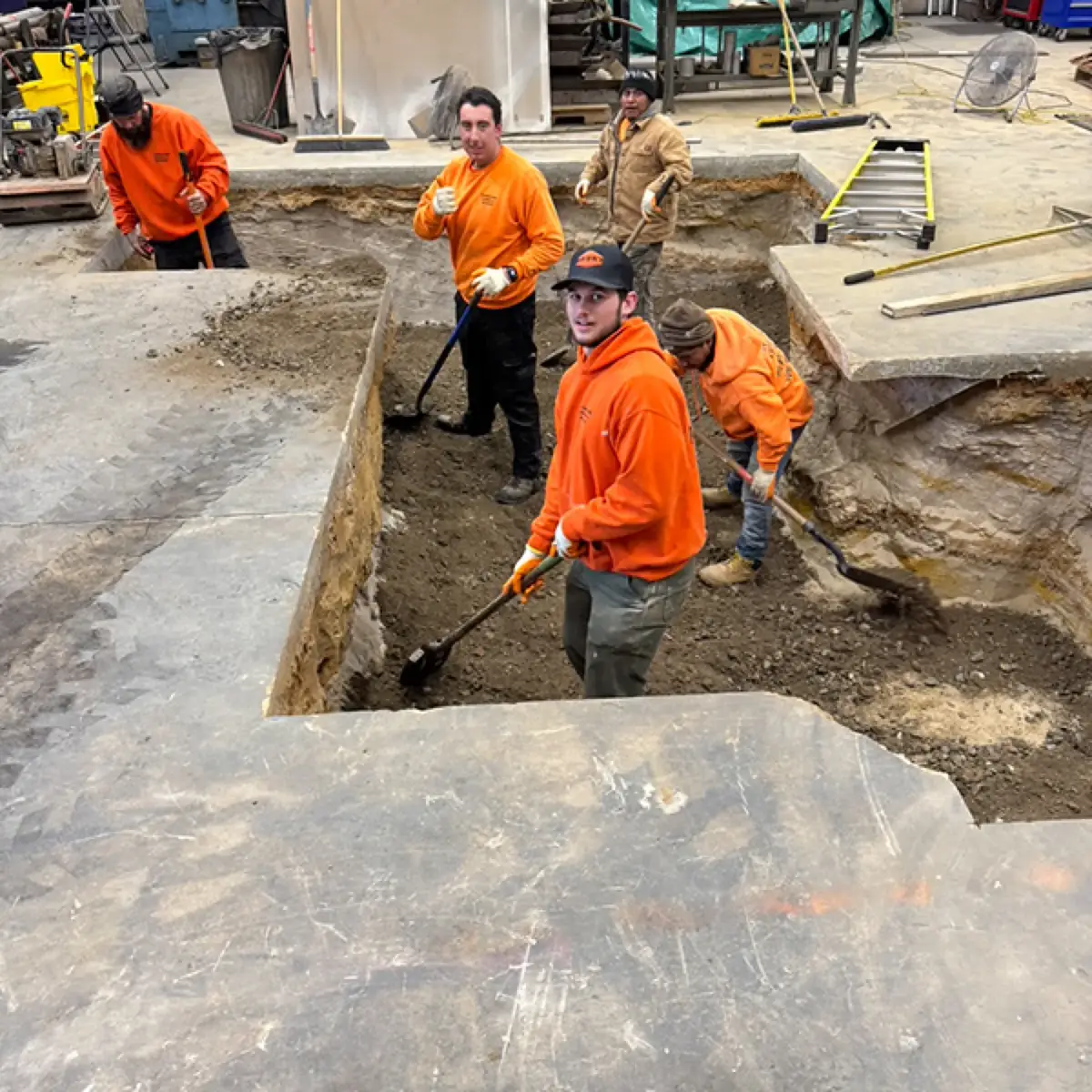
The classic method is called mass concrete underpinning, and it is still the right answer for most homes here. It works in small, planned sections.
We start with a plan that numbers each section and sets the order they get dug. No two sections next to each other are ever open at the same time.
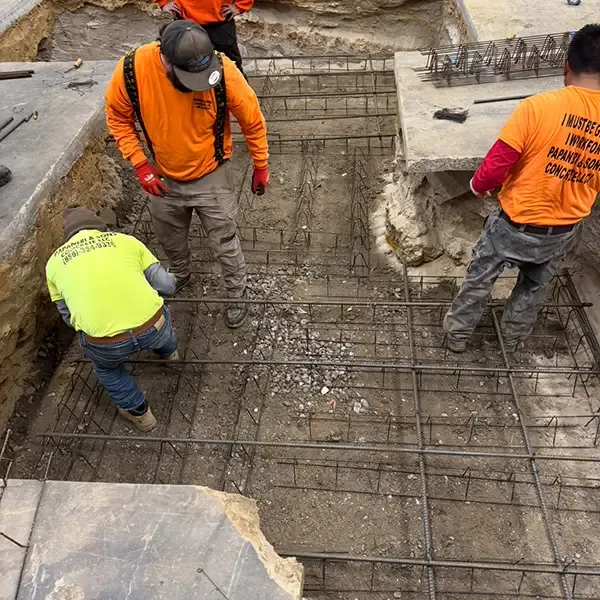
Then we hand dig a pit under one section of the footing, down to soil that can carry the load. That soil gets checked before anything gets poured.
We set steel where the plan calls for it and pour the pit solid with our 4500 PSI mix. The new concrete becomes an extension of the old footing.
The top few inches are dry packed once the pour has set. That packing wedges the new support tight against the underside of the existing footing.
Then the next section in the sequence gets opened. Working in this order means the structure is carried on undisturbed soil the whole time.
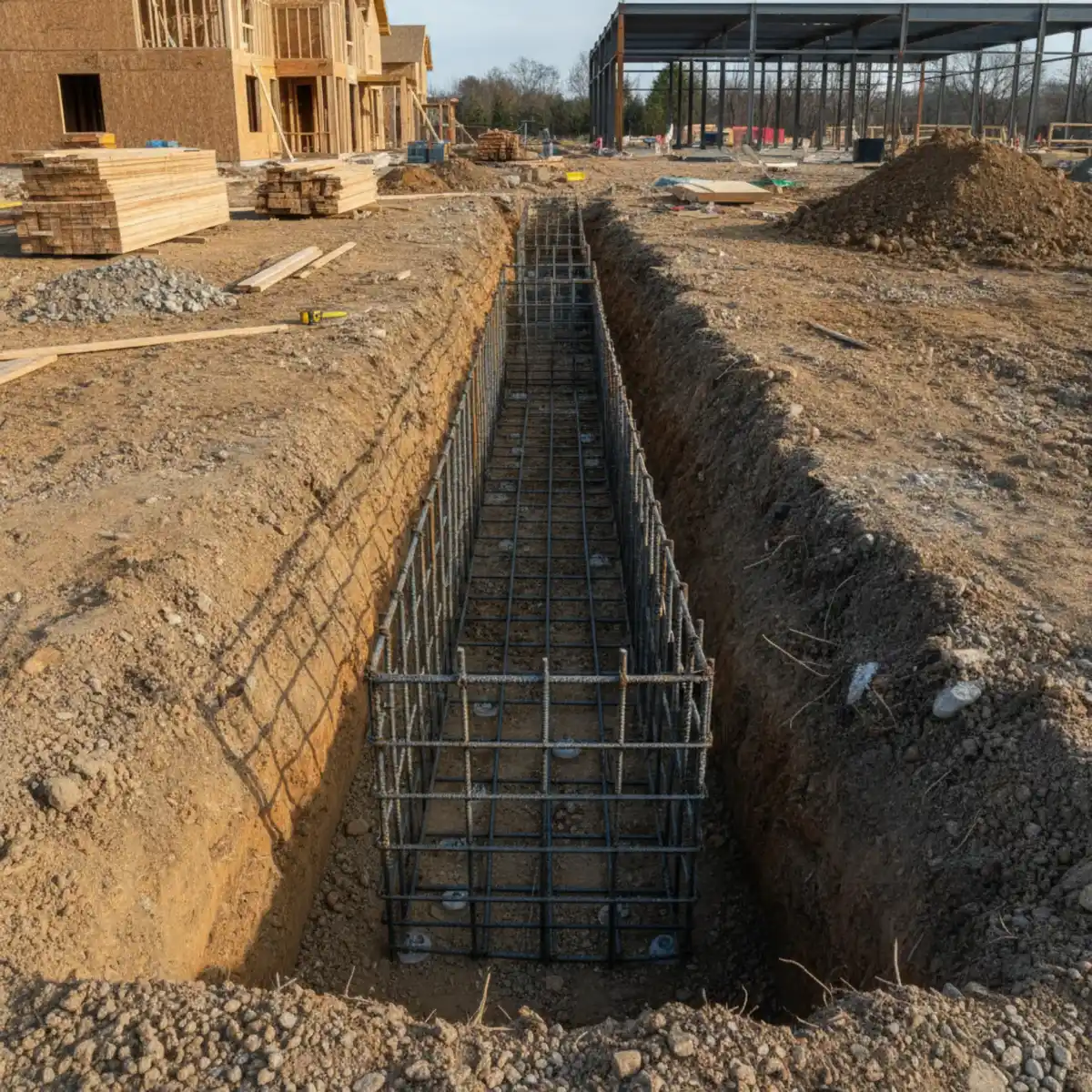
Each pit is shored as it is dug. Timber or steel shoring holds the sides of the excavation while the crew is working directly under the footing.
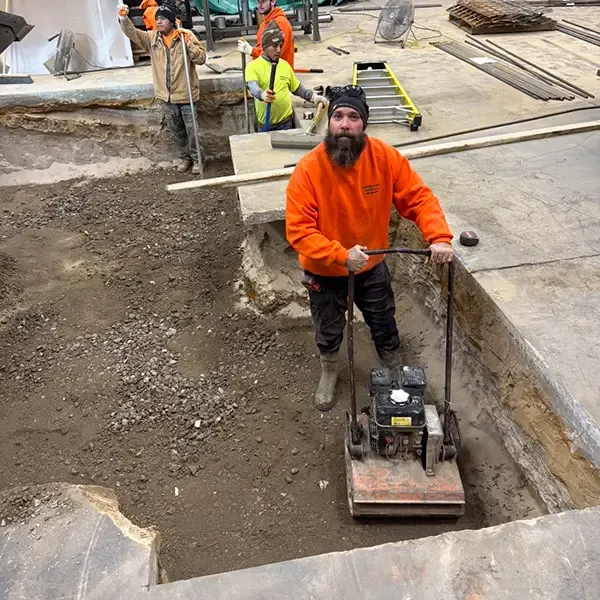
This work happens below grade, so most of what you see is an open trench and a lot of careful digging. Here is the honest picture.
We dig along the affected wall, inside or outside depending on the plan. Landscaping, decks, or slabs in the way may need to come out first.
A few sections under one corner can run one to two weeks. A full perimeter takes longer because each section has to cure before the next opens.
Structural work is permitted work. We coordinate with your township, and on engineered jobs we pour to the engineer's detail and call for inspection.
In most cases you can stay. We keep entries clear and secure the excavation at the end of every workday.
Concrete reaches full strength around 28 days, so the schedule is built around cure time between sections. Rushing that step defeats the entire purpose.
Once the support is in, we backfill in lifts, compact as we go, and fix the grade so water runs away from the wall instead of back toward it.
We monitor the structure through the job. Crack gauges and level readings tell us whether anything is still moving while the sections are being poured.
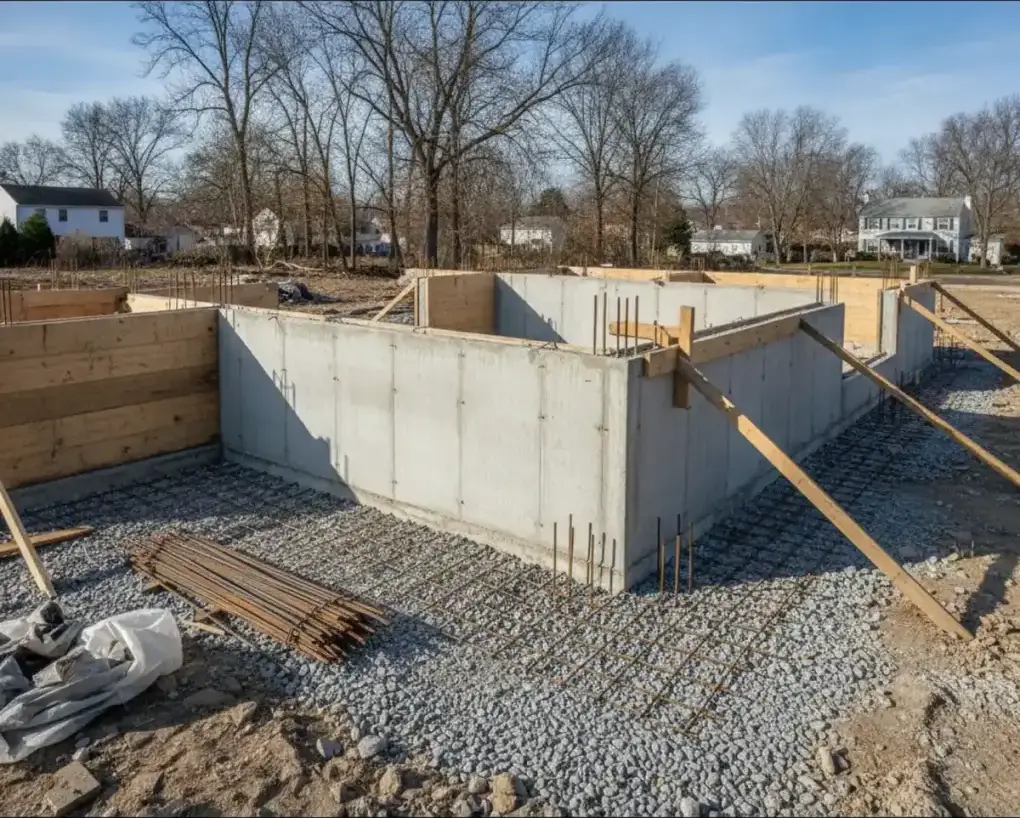
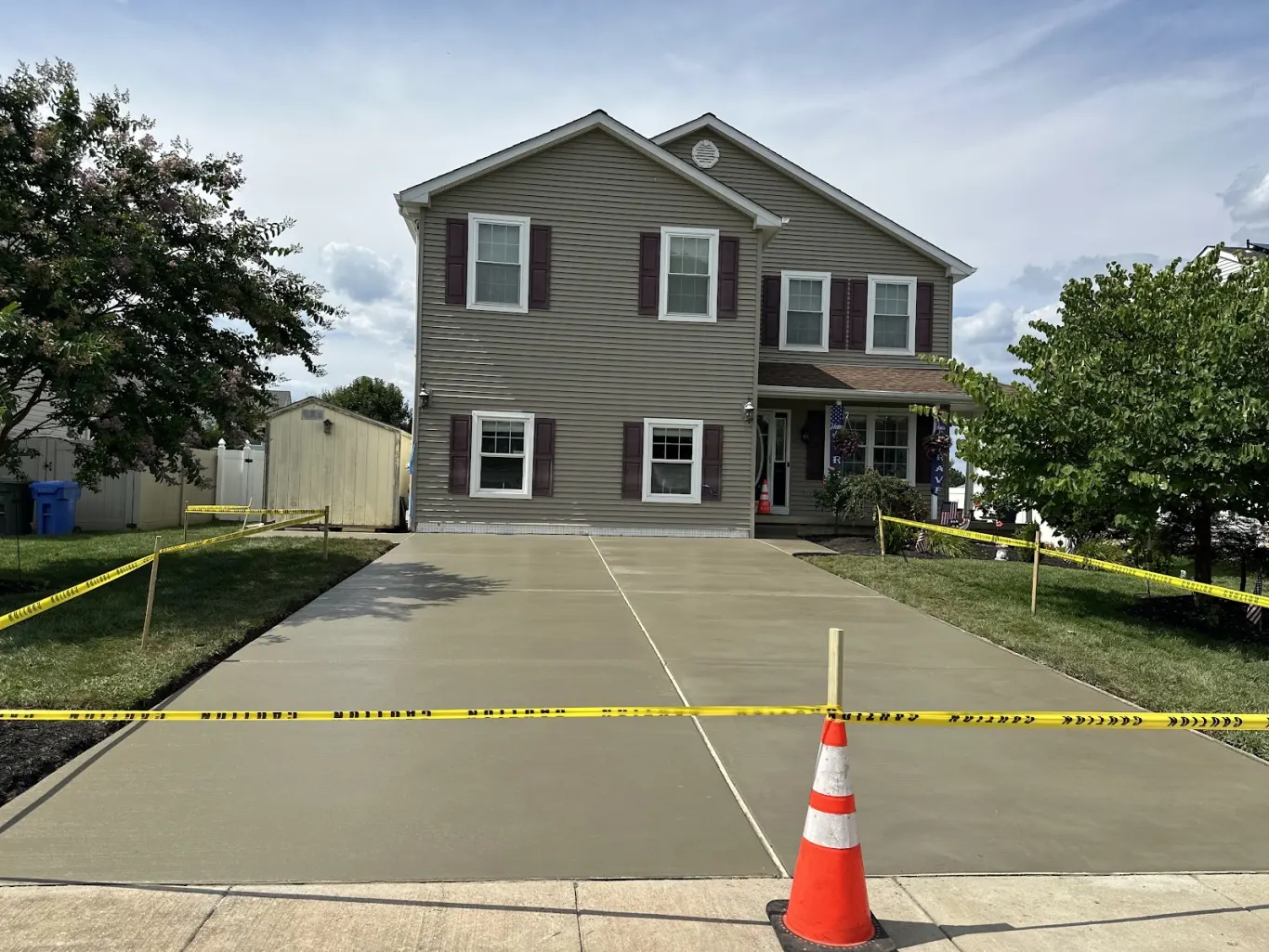
Papaneri & Sons has supported and rebuilt South Jersey foundations since 1987. ACI certified crews, staged sections, engineered details when needed, and our 4500 PSI mix. Get your free estimate today.
Not every crack means trouble. Hairline shrinkage cracks are normal in poured walls. These signs point at movement instead.
Cracks that climb the mortar joints in a diagonal pattern usually mean one part of the wall has dropped.
If a crack you patched last year is open again and wider, the foundation is still moving. The patch was never the problem.
Frames rack out of square when a footing settles. You feel it upstairs before you ever see it in the basement.
A floor that pitches toward one wall, or a baseboard pulling away from it, points to settlement under that side of the house.
We look at the crack pattern, the width, the grading outside, and where the water goes. That tells us whether the movement is active or long finished.
If your foundation does not need underpinning, we will tell you. Sometimes the fix is drainage and a proper crack repair, not a structural job.
A crack that is wider at the top than the bottom tells a specific story. That pattern usually means the wall is rotating outward, which is different from a footing dropping straight down.
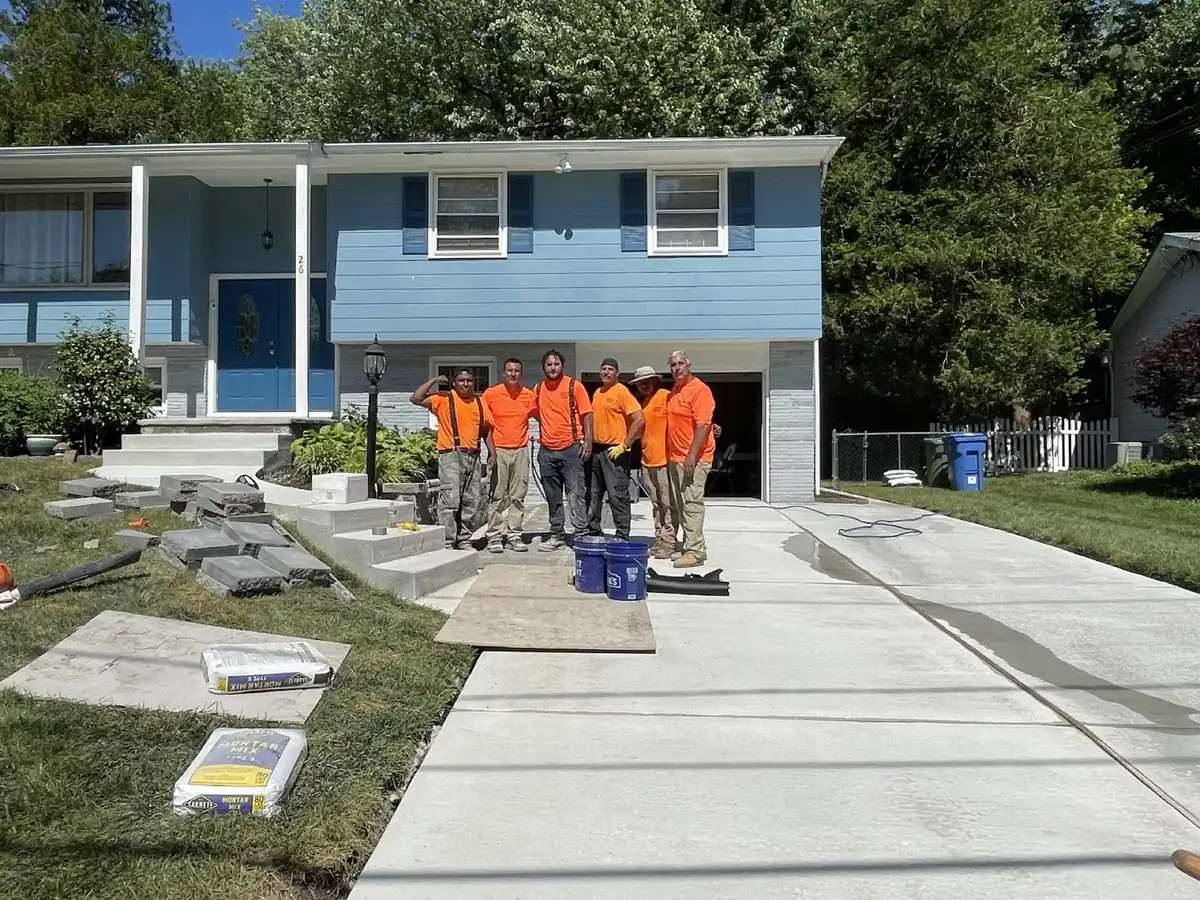
Underpinning is the least forgiving work in concrete. The sequence, the depth, and the packing all have to be right while a building sits overhead.
Three generations of the Papaneri family run every job. We have been fixing South Jersey foundations for almost forty years.
Our crews are trained to industry standards and fully insured. On structural work that protection is not optional.
When a job calls for a structural engineer, we build to the stamped detail and coordinate inspections at each stage.
We tell you whether the movement is active, what caused it, and what the smallest correct fix looks like.
It is new concrete poured below an existing footing to make it deeper, wider, or both. The work is done in staged sections so the structure stays supported while the soil under one small area is replaced with concrete.
A few sections under one corner usually run one to two weeks. Larger jobs take longer because each section has to set before the next one is opened, and concrete needs 28 days to reach full strength. For real numbers, here is what foundation underpinning costs and how long it takes.
Often yes. Structural repairs in Cherry Hill are permitted work, and many require a stamped plan. Call Papaneri & Sons at (856) 354-9338 and we will tell you what your job needs before you spend anything.
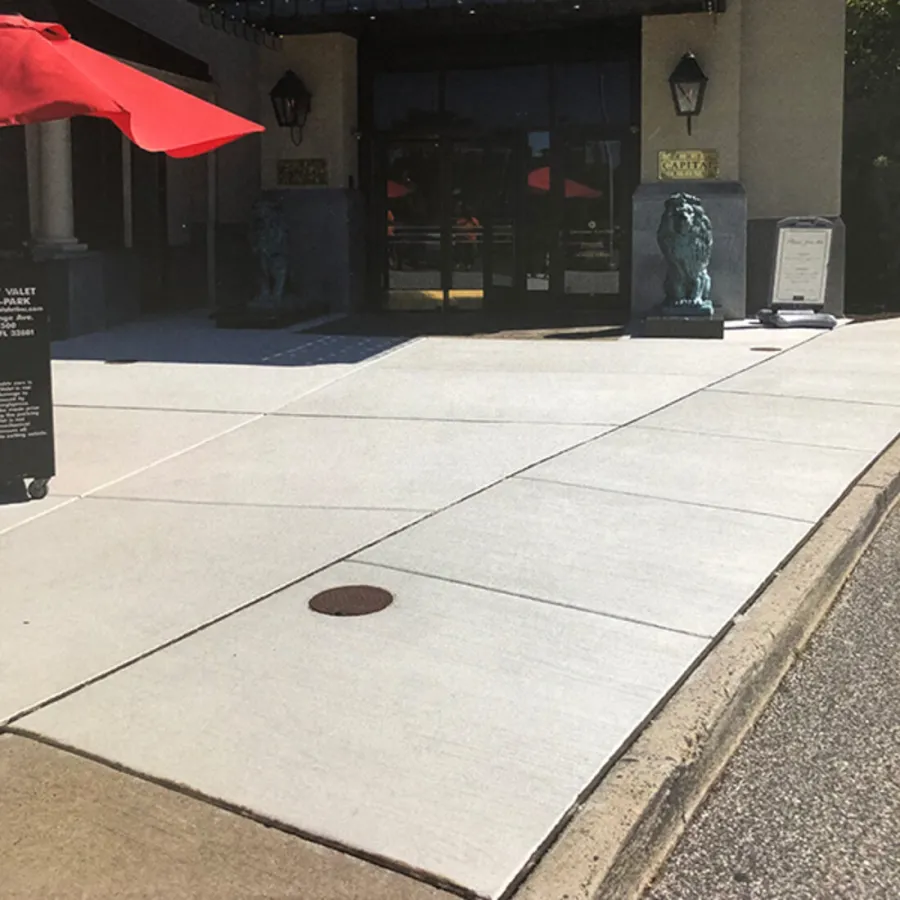
Footings and foundation walls poured to plan for new homes, additions, and commercial builds.
Learn more →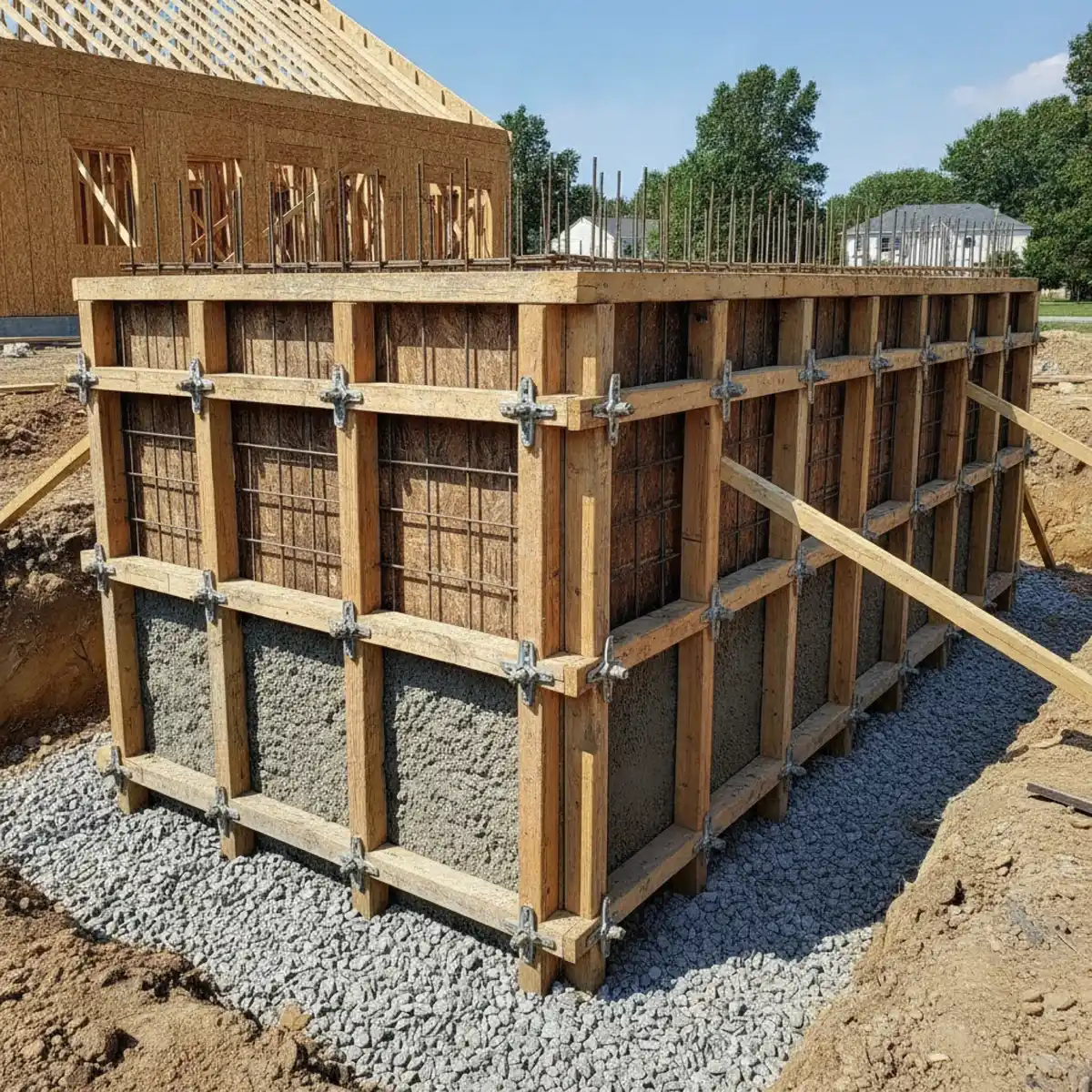
Piers and columns poured on deep footings to carry decks, porches, and structural loads.
Learn more →
Steel reinforced walls, slabs, and structures built for heavy and long term loads.
Learn more →