Poured in place planter boxes and raised beds with real drainage and clean lines. Papaneri & Sons has shaped South Jersey landscapes in concrete since 1987. Licensed and insured.
Enter your info below.
We'll call you back shortly to set up your free on-site estimate. For anything urgent, call (856) 354-9338.





A poured concrete planter is part of the landscape instead of a pot sitting on it. It holds soil, shapes a grade change, and lasts as long as the house.
Papaneri & Sons Concrete has built poured planters, raised beds, and planter walls across Cherry Hill and South Jersey since 1987. We are family owned, ACI certified, licensed, and insured.
We form and pour planter boxes along walkways and patios, tiered beds on sloped yards, seat height planters around seating areas, and planter walls at commercial entrances.
Every one gets steel inside, drainage designed in, and a finish that matches the rest of your concrete. That is the difference between a planter and a bathtub full of wet soil.
Planters are one of the decorative and structural pieces we pour. See our full list of concrete services in Cherry Hill, or call (856) 354-9338 to talk through your yard.
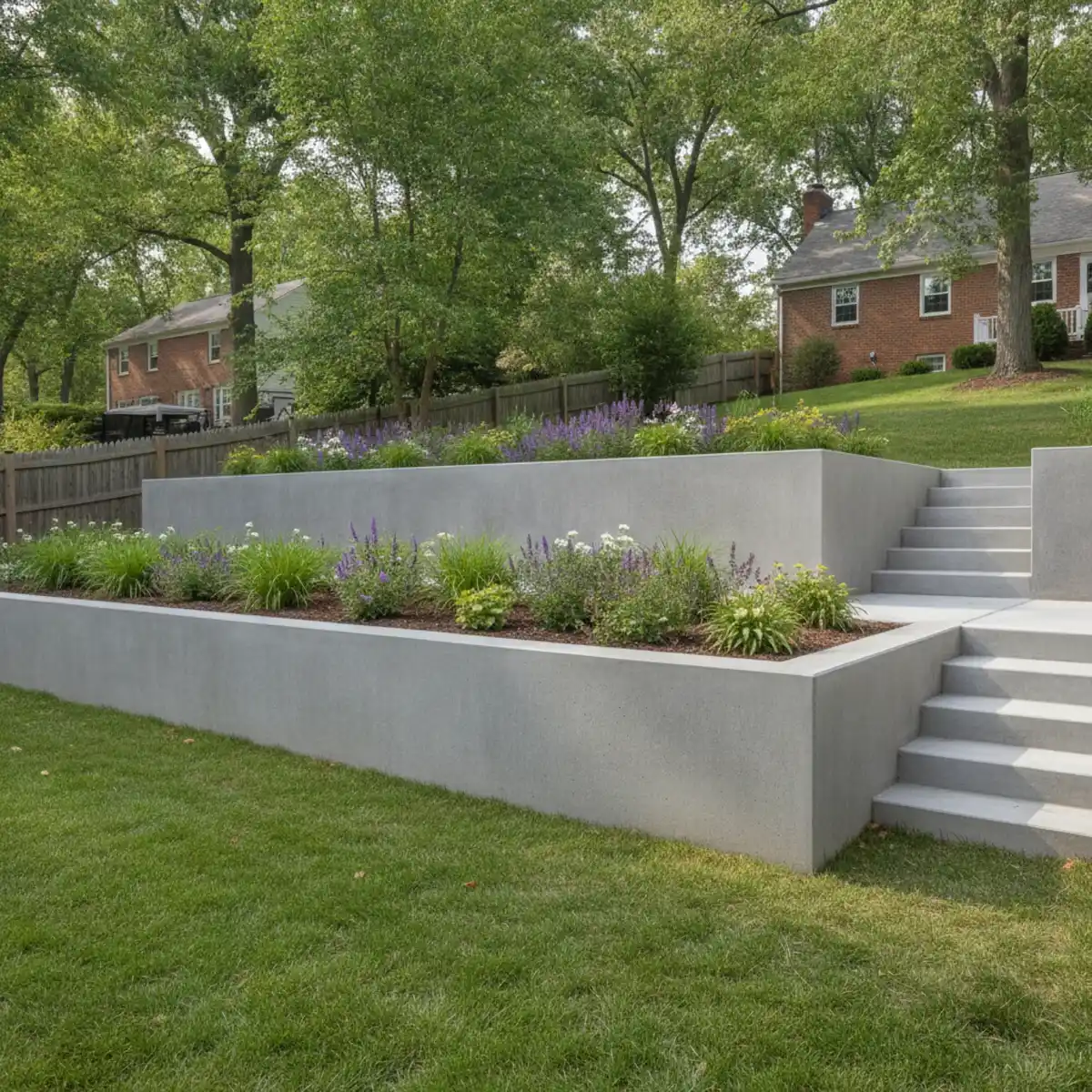
Planters do different work depending on where they sit. Some hold a grade, some define a space, and some just put the garden at a height you can reach.
Free standing boxes along a patio, walkway, or driveway edge. Poured in place so the walls, corners, and base act as one piece.
Stepped planter walls turn an unusable hill into level planting beds. They hold soil back and create planting space at the same time.
Built around a patio or fire pit area at roughly bench height, these give you extra seating and greenery without adding furniture.
Entrances, plazas, and storefronts use planter walls to guide foot traffic and protect glass and doors from vehicles.
We match the finish to the rest of the property. Smooth form finish, broom texture, exposed aggregate, or an integral color all work on planter faces.
We can also cap a planter with a formed top so the edge is comfortable to sit on and sheds water away from the face.
Curved planters are one advantage of pouring in place. We bend forms to follow a patio edge, a driveway radius, or a walkway curve, which is something modular blocks never do cleanly.
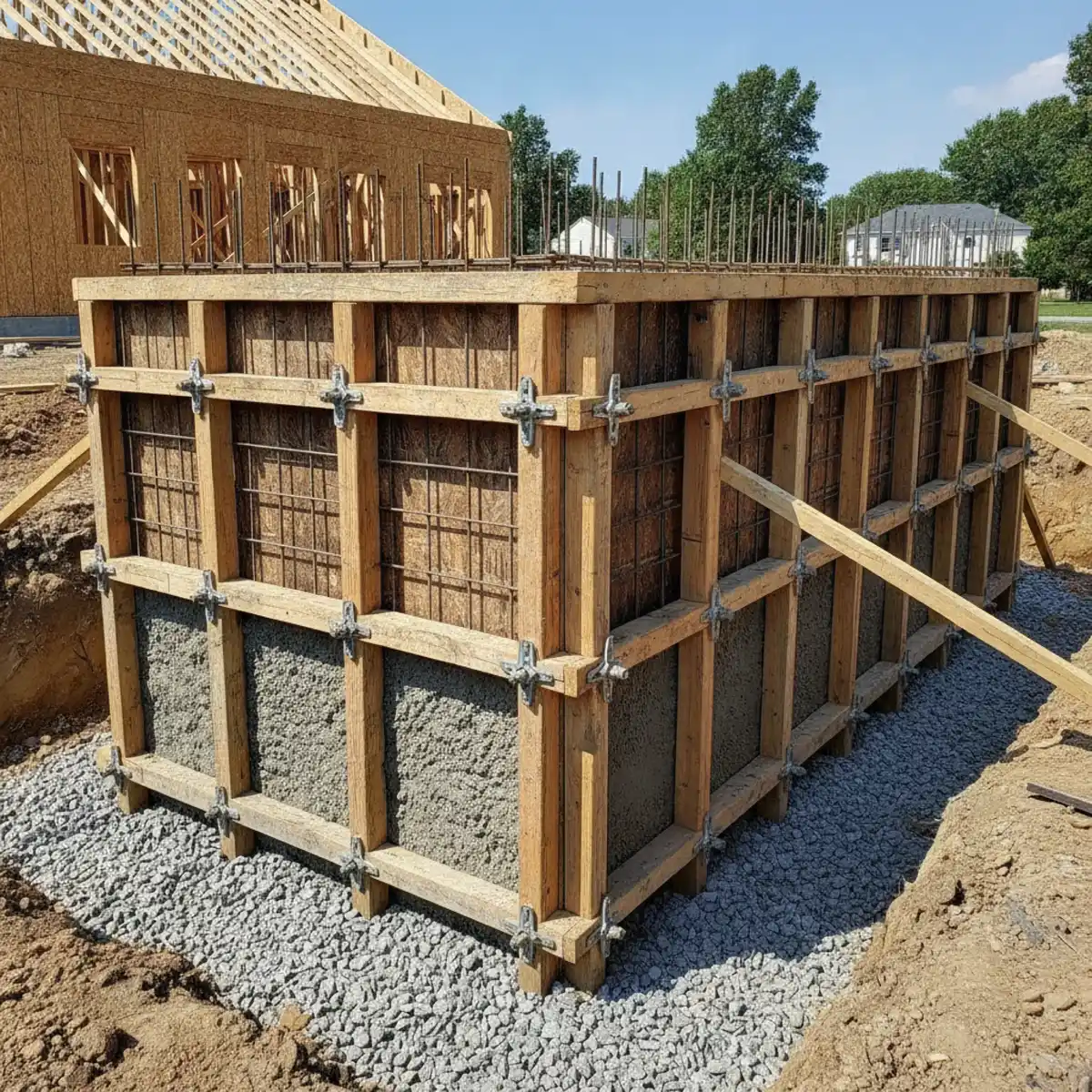
A planter is a small structure holding back wet soil, so it gets built like one. The steps are the same whether it is a four foot box or a run of tiered walls.
We start with a footing below the planter walls. Wet soil is heavy, and a planter set straight on the dirt will settle and crack at the corners.
Steel comes next. Vertical and horizontal bars run through the walls and tie into the footing, so the box holds its shape when the soil pushes out.
Then we set forms to the shape you want, straight or curved, and brace them hard. Wet concrete pushes on forms harder than most people expect.
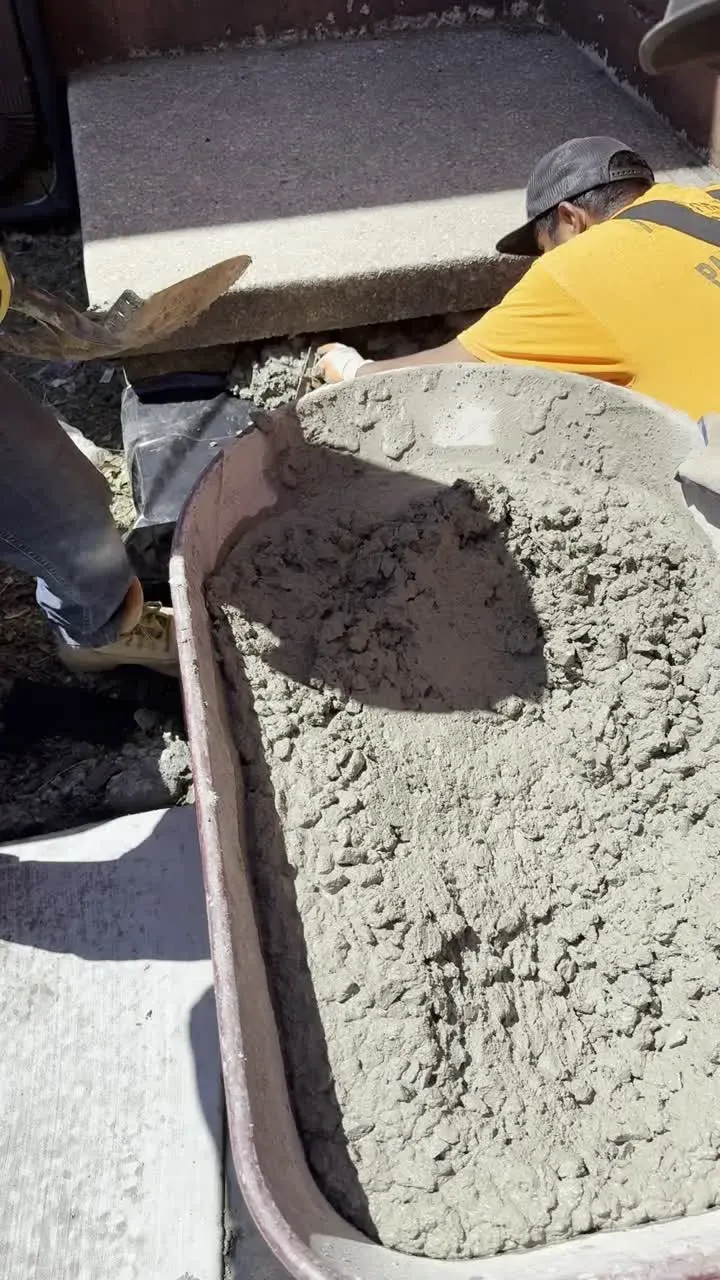
We place our 4500 PSI mix, vibrate it so the faces come out clean and free of voids, and set any drainage sleeves before the concrete stiffens.
After the forms come off, we patch tie holes, finish the faces, and seal the concrete if the design calls for it. Then the beds get backfilled and planted.
Soil goes back in after the concrete has cured. Backfilling too early puts full soil pressure on green concrete, and that is when corners crack on planters built in a hurry.
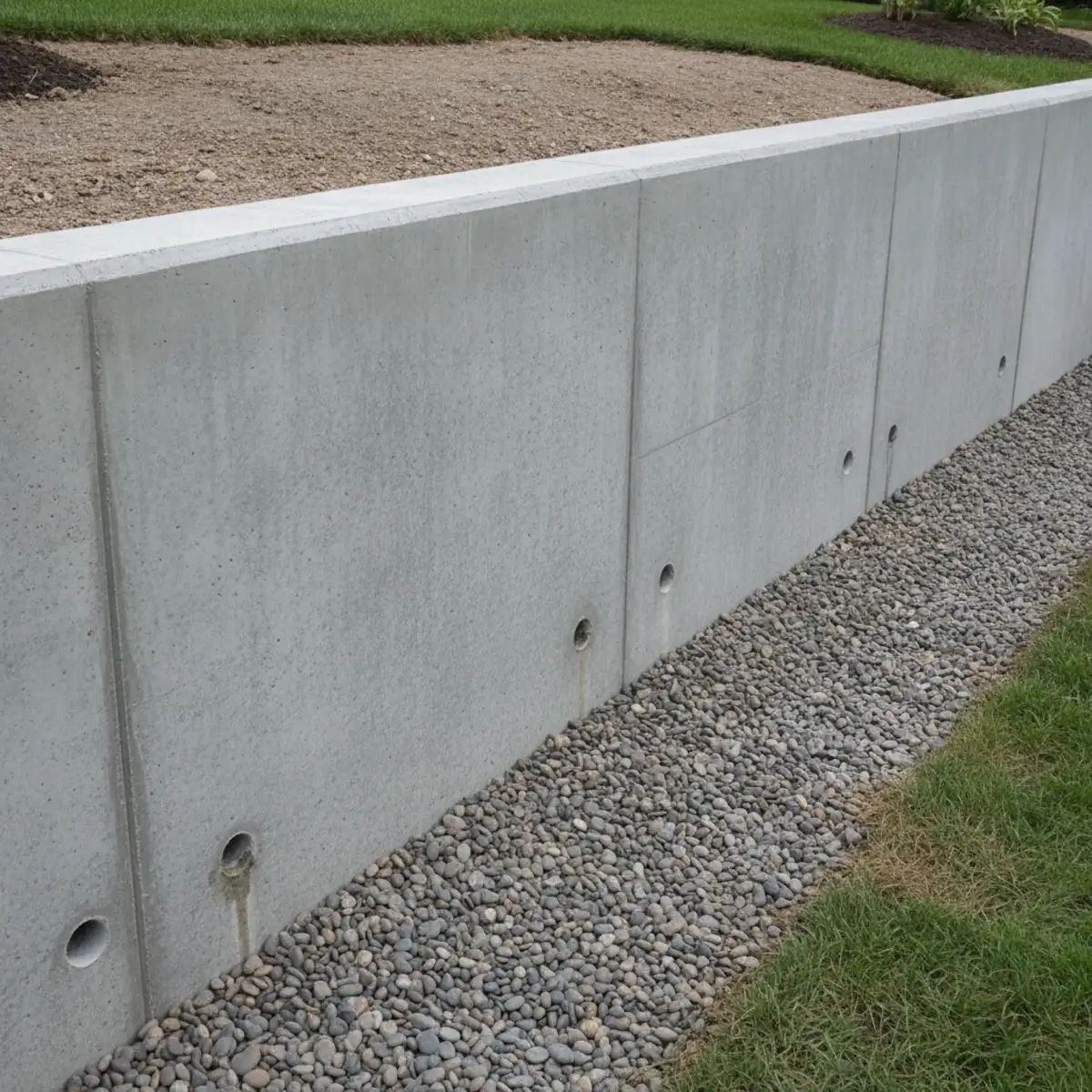
Almost every failed planter we get called to look at has the same problem. Water had nowhere to go, so it sat against the concrete and against the roots.
We cast openings through the wall at the base so water can leave. They get placed where the runoff will not stain a patio or ice over a walk.
A layer of clean stone with filter fabric keeps soil out of the drainage path so the weep holes stay open for years.
Where a planter sits on soil, we leave the base open so water keeps moving down. On a patio or slab, we pipe the water out to a safe spot.
Sealing the inner walls slows moisture from wicking through and showing as white staining on the outside face.
Cherry Hill winters make drainage a structural issue, not a gardening one. Trapped water freezes, expands, and cracks a planter from the inside out.
Good drainage protects the plants too. Roots sitting in standing water rot, no matter how nice the box around them looks.
Planters against a house get extra attention. We keep the back face and the drainage path away from the foundation, so watering the garden never turns into a wet basement.
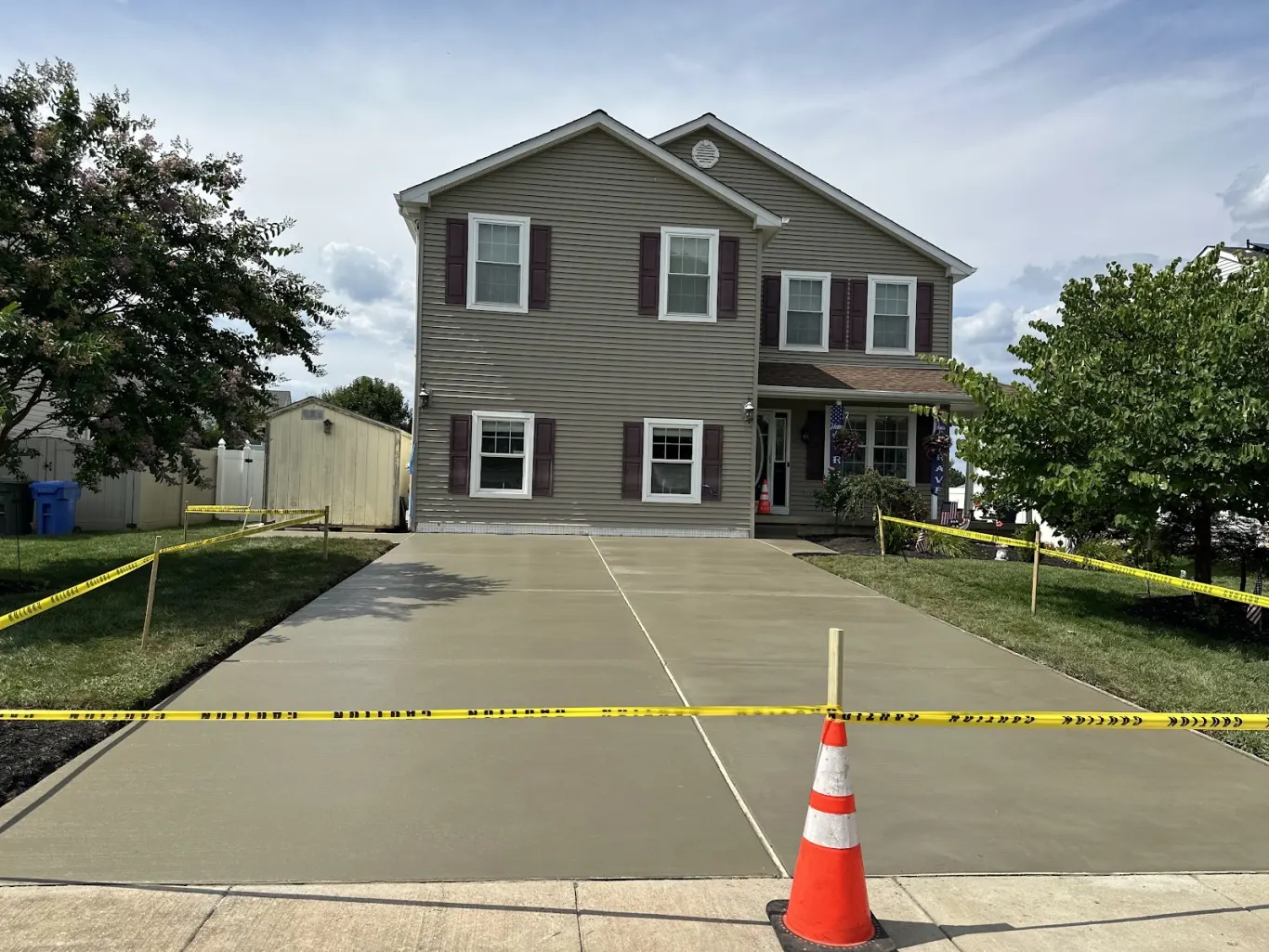
Papaneri & Sons has poured planters, walls, and hardscape across South Jersey since 1987. ACI certified crews, real footings, drainage built in, and our 4500 PSI mix. Get your free estimate today.
The design decisions happen before we dig. Getting them right is what makes a planter look built in rather than added on.
Knee height suits a border, seat height suits a patio edge, and waist height suits a working garden. Depth of soil follows what you plan to grow.
Taller walls and longer runs need thicker sections and more steel. Long straight runs also get joints so they can move without cracking.
We look at where drainage will exit and make sure it lands somewhere useful, not across a walkway that ices up in January.
The planter should match your patio, walkway, or building. We can match texture and color, or use a contrast on purpose.
We also work around utilities, irrigation lines, and mature tree roots. Cutting a major root to fit a planter usually costs you the tree.
You get a layout, heights, and a price before we start. Nothing gets poured until the shape is marked out and you are happy with it on the ground.
Irrigation and lighting are easier to handle during the pour. We cast sleeves through the walls so drip lines and low voltage wire pass through later without drilling finished concrete.
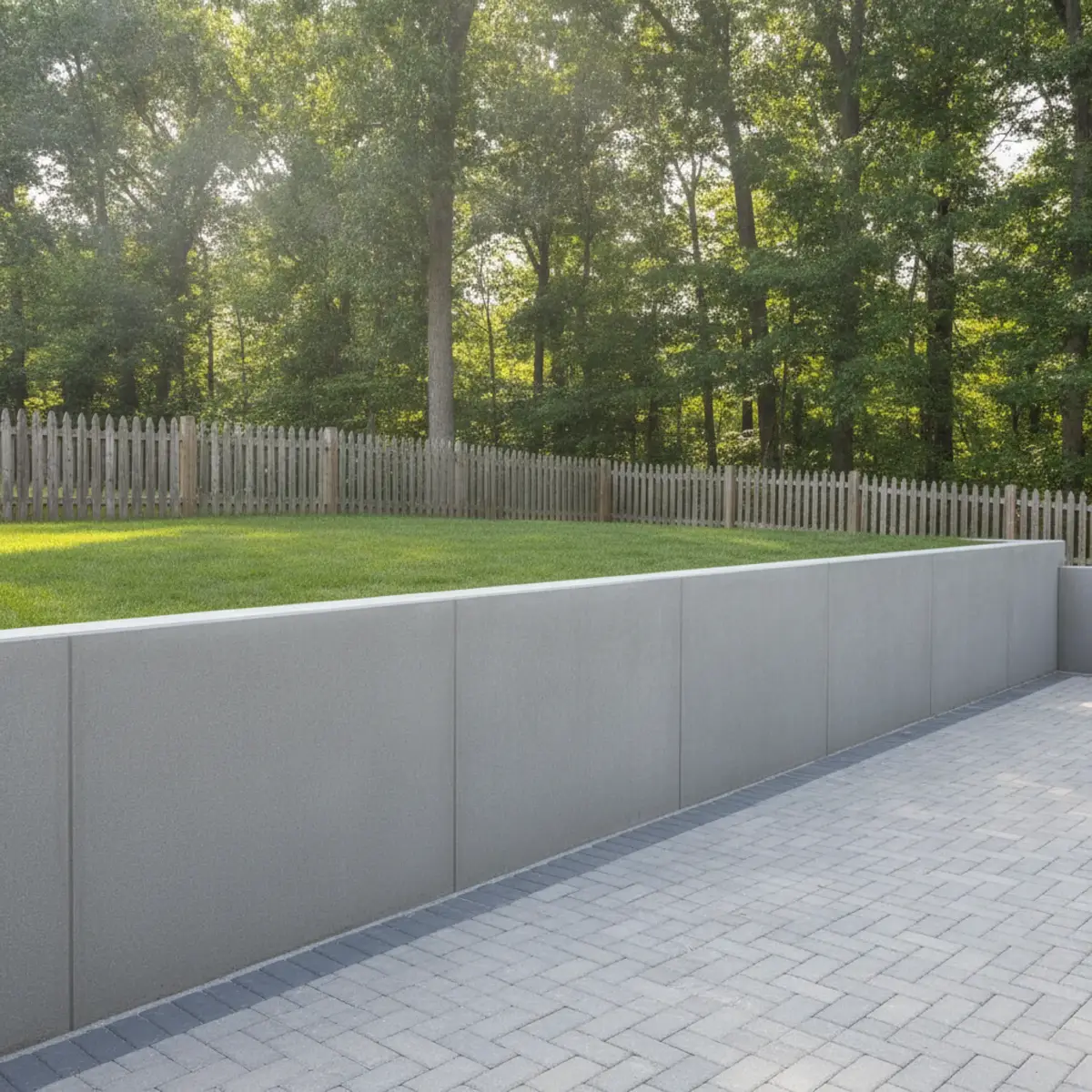
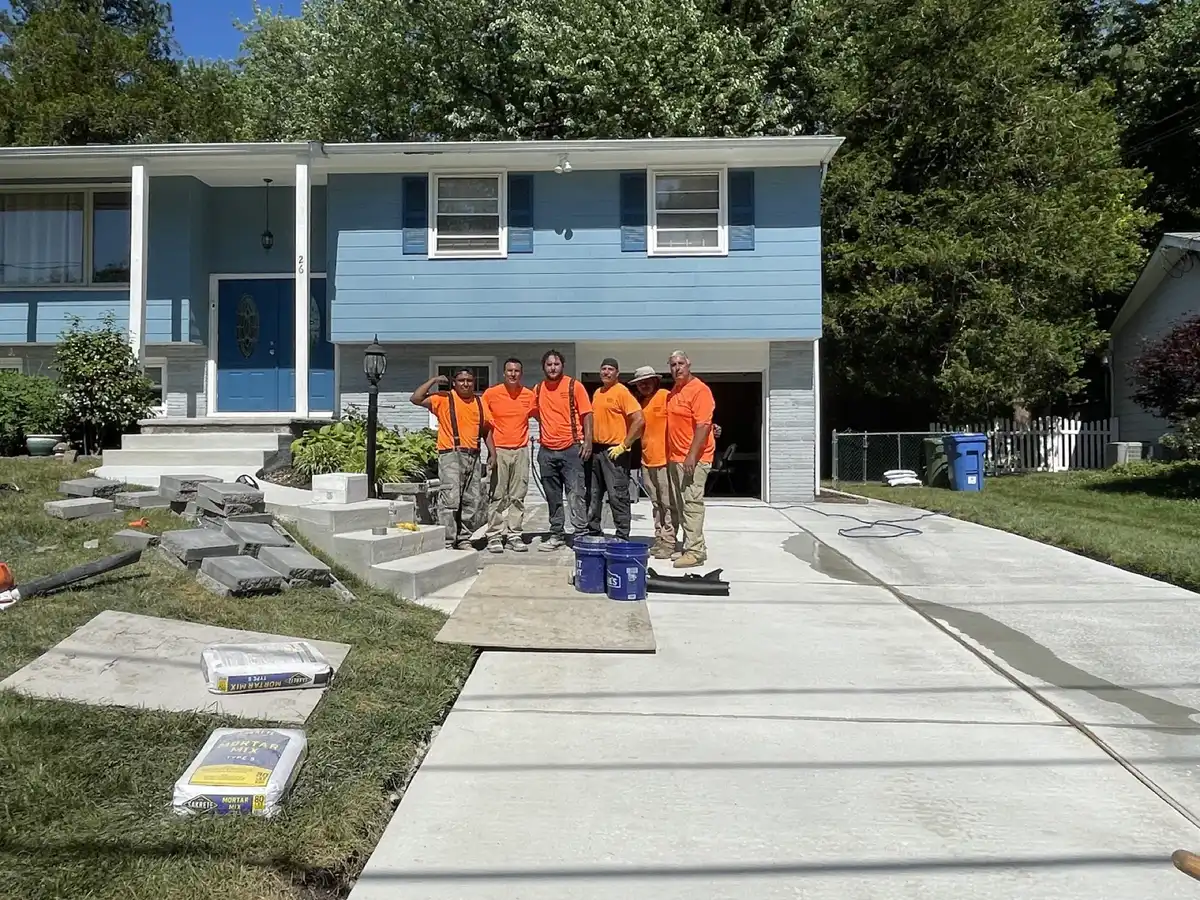
Planters sit at eye level in the part of the yard people use most. Sloppy corners, blown out forms, and stained faces show every day.
Three generations of the Papaneri family run every job. The same crews that pour driveways and walls build our planters.
Our crews are trained to industry standards and fully insured, on decorative work as much as structural work.
Clean, tight, well braced forms are what give you sharp corners and flat faces after stripping. That is the whole game on a planter.
Weep holes, stone, and fabric go in during the build, not after the first winter shows a problem.
Not when they are built with drainage and steel. Cracking happens when water is trapped inside and freezes. We cast weep holes, add stone and filter fabric, and reinforce the walls so freeze and thaw cycles have nowhere to do damage.
Yes. We match texture and color with broom, smooth, exposed aggregate, or integral color finishes. We can also form a cap on top so the edge is comfortable to sit on.
Most residential planters take two to four days across footing, forming, pour, and stripping, plus cure time before backfilling. Call Papaneri & Sons at (856) 354-9338 for a free estimate and a layout.
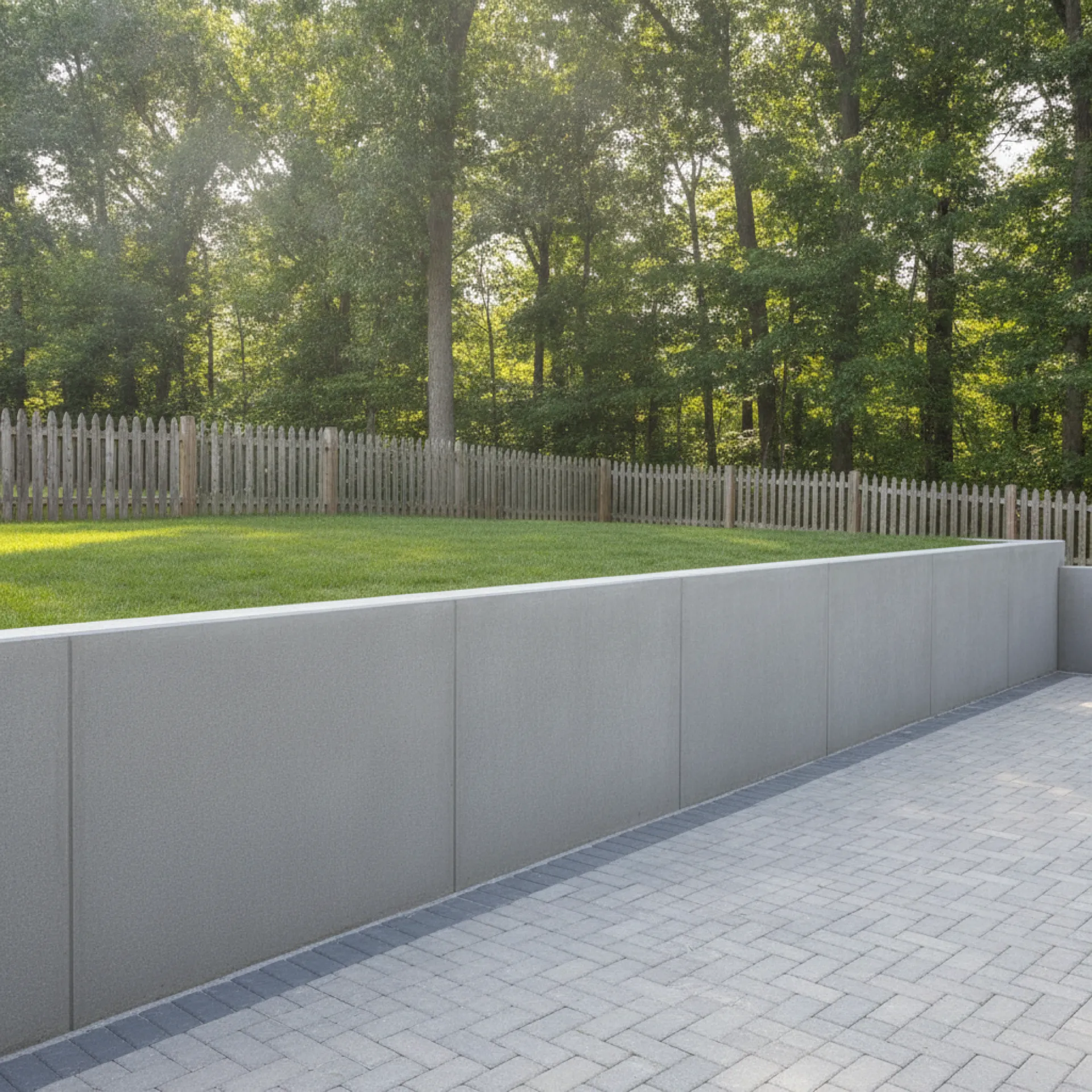
Engineered walls that hold back slopes and create level, usable yard space.
Learn more →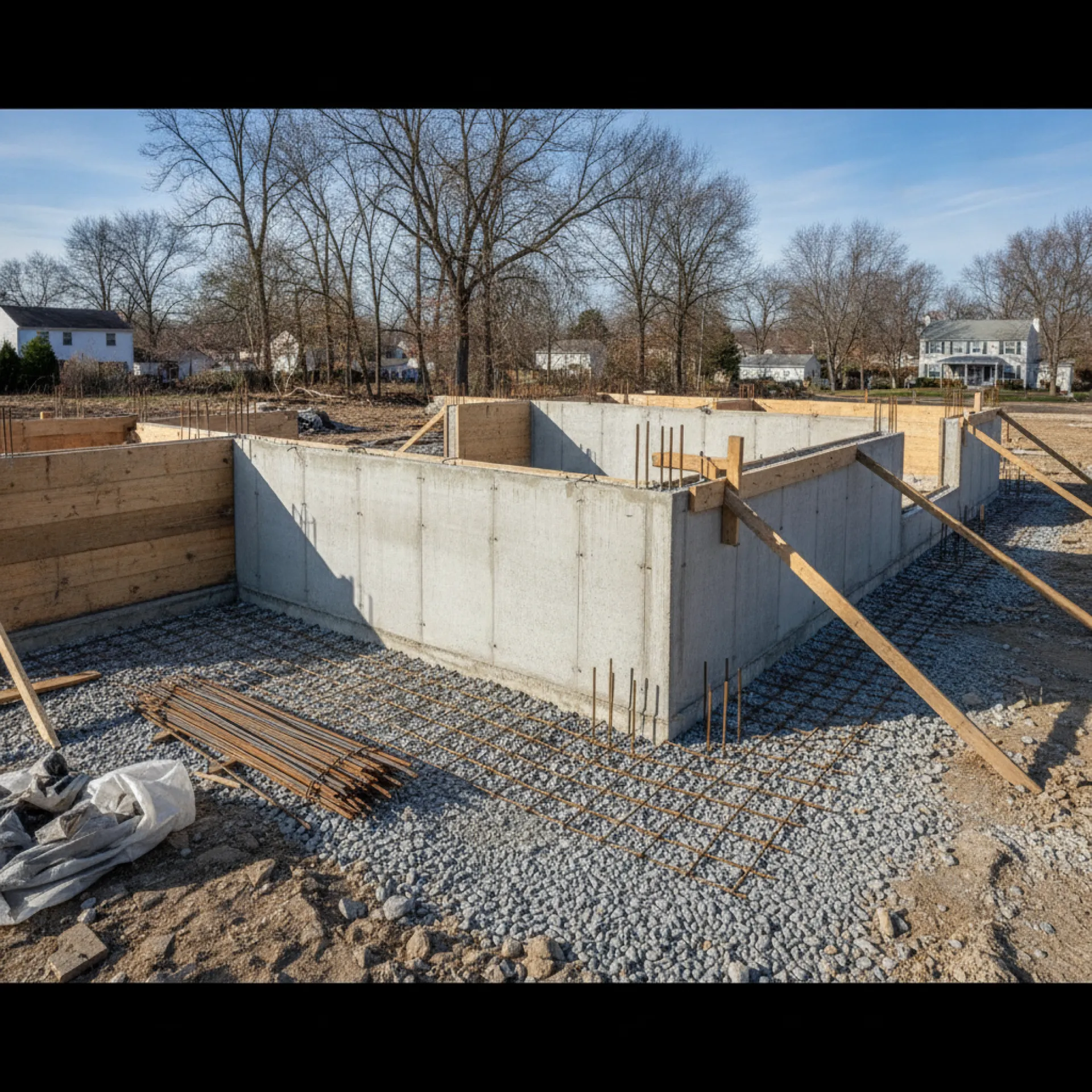
Poured walls formed, reinforced, and finished for structural and site uses.
Learn more →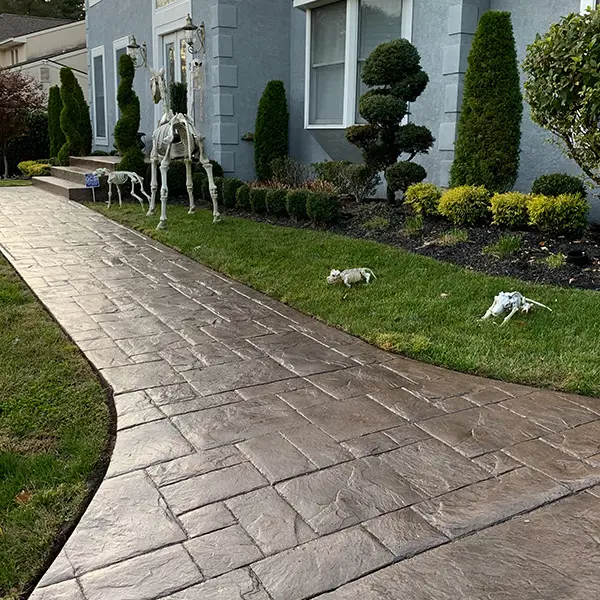
Colors, textures, and finishes that tie hardscape features into the rest of your property.
Learn more →