
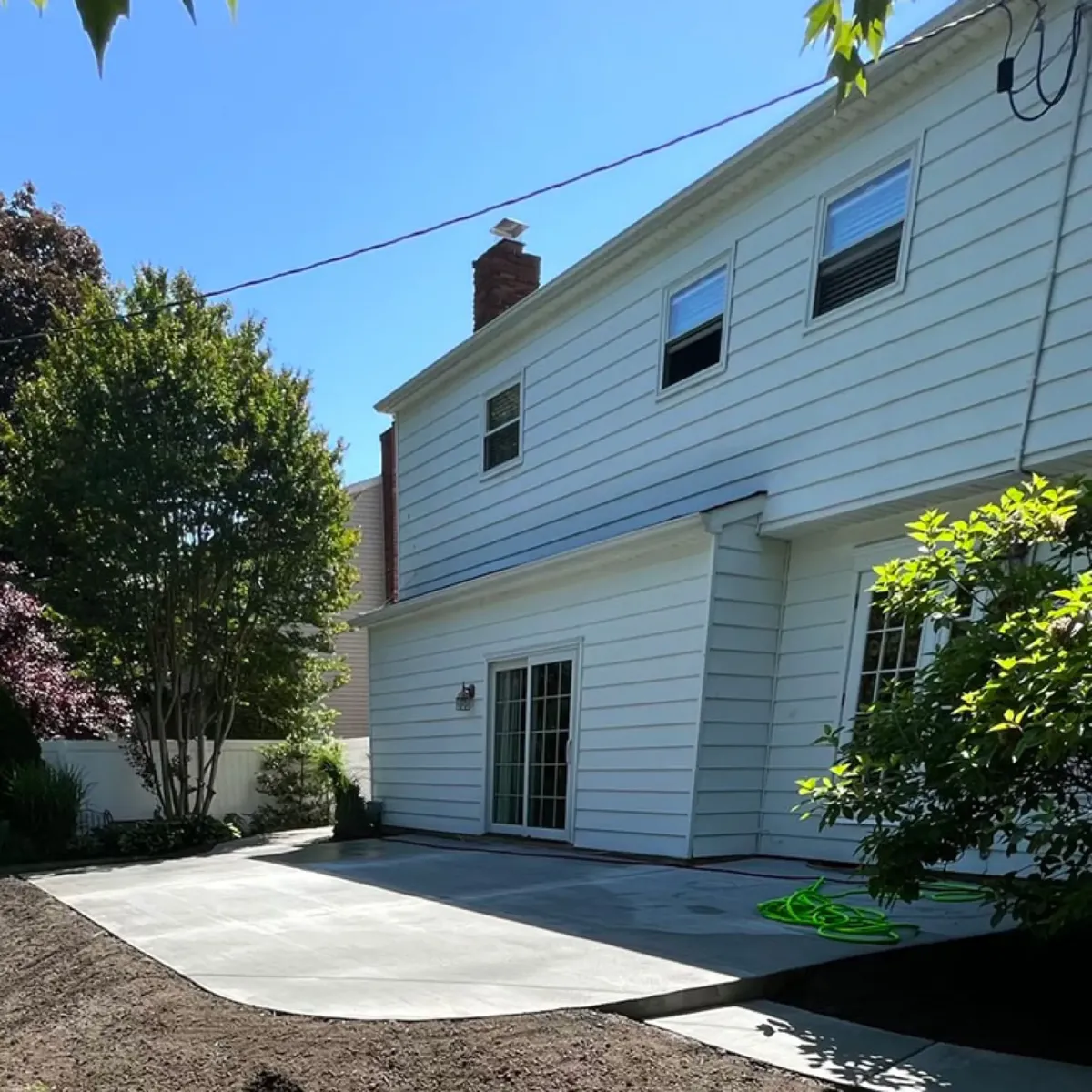
Most patios land between $6 and $22 per square foot installed. The finish you pick moves that number more than the size does.
A plain broom-finish concrete patio costs $6 to $13 per square foot installed. Decorative finishes carry that as high as $22. HomeGuide's 2026 patio cost data puts a basic 20 by 20 patio at $1,600 to $4,800 before any upgrades.
Papaneri & Sons has been pouring patios since 1987. The part of the quote that surprises people is almost never the concrete. It is the grading, the stone base, and the forming work that disappears the moment the patio is finished.
This post splits the price into the pieces an estimator actually prices out. For what a full build includes from layout to final broom pass, see our concrete patio construction page.
Two patios of the same square footage can sit $3,000 apart on paper. Five things account for almost all of that gap, and only one of them is the concrete.
A patio a mixer chute can reach is the cheapest patio you will ever buy. When the only path is a side gate, the crew moves every yard by buggy or wheelbarrow. That single detail can add several dollars per square foot.
A patio needs compacted stone under it, usually four to six inches of it. Digging out soft soil, hauling it away, and bringing in clean stone is real money. Skipping it is the cheapest quote you will get and the one that cracks first.
Broom finish is the baseline. Color, exposed aggregate, and stamping each add labor, materials, and a sealer step. A finish upgrade is the fastest way to move a patio from the low end of the range to the high end.
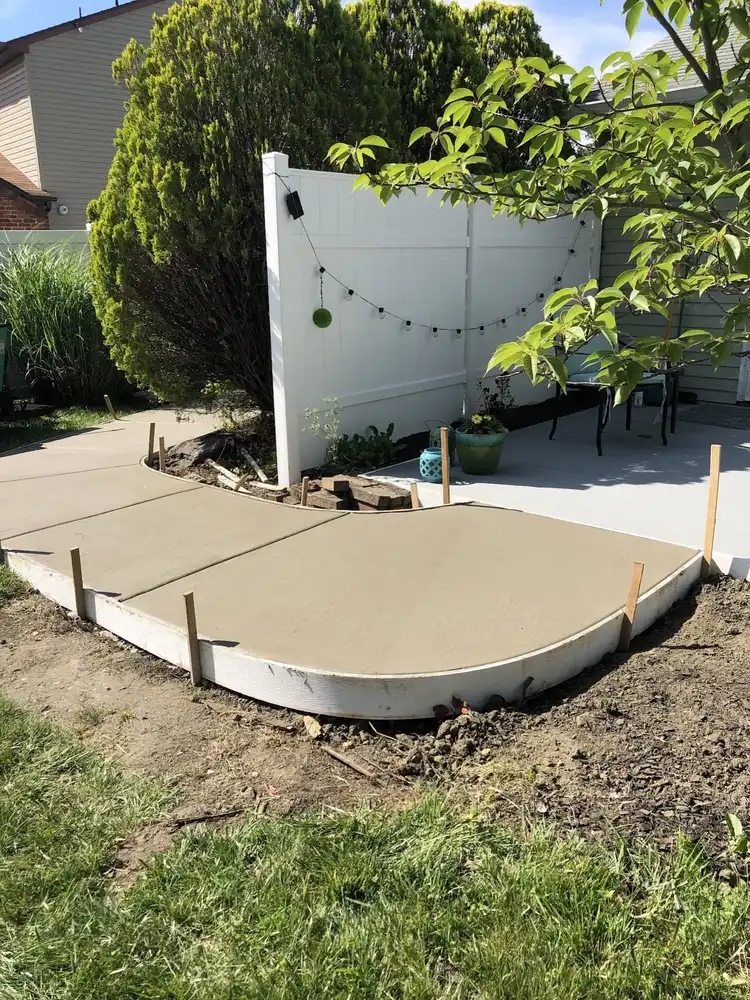
Straight rectangles form fast. Curves, radius corners, a step down to the lawn, or a landing off a back door all add forming time. Every foot of extra edge is a foot someone has to build, level, and strip.
An old patio has to come out before a new one goes in. Breaking, loading, and hauling that slab is priced on its own, and our concrete removal page covers what that step runs.
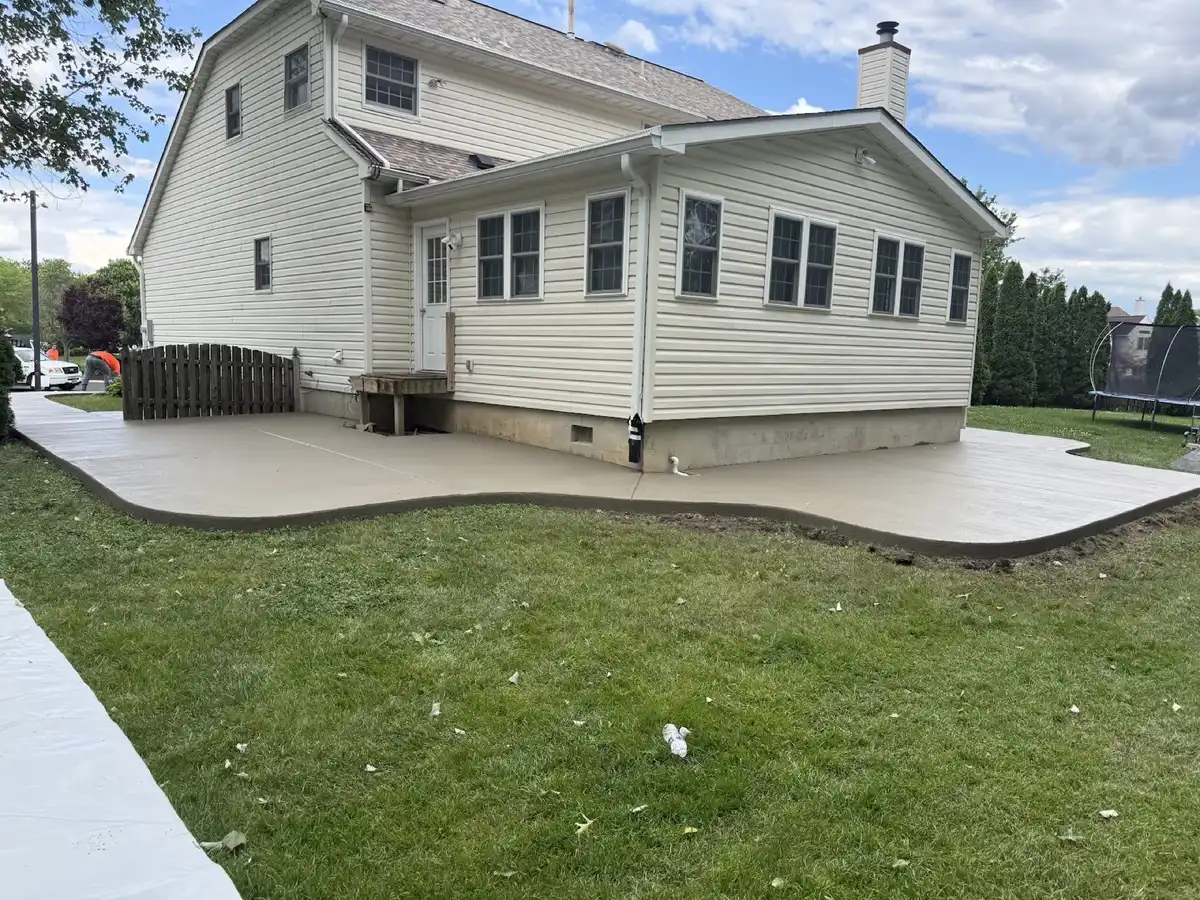
The national average for a concrete patio is about $3,554, with most projects falling between $800 and $10,000, according to Angi's 2026 concrete patio cost guide. The full installed range across all finishes runs $4 to $30 per square foot.
Plain broom finish runs $6 to $13 per square foot. Stained or colored concrete runs $8 to $15. Exposed aggregate runs $7 to $18, and stamped patterns run $9 to $22.
A 10 by 10 sitting area at broom-finish rates is roughly $600 to $1,300. A 16 by 20 patio is $1,920 to $4,160. A 20 by 20 patio is $2,400 to $5,200 before you add a finish upgrade.
Labor and site prep usually eat more of the budget than the concrete does. Excavation, base stone, and forming account for roughly 20 to 30 percent of a typical patio quote.
Rates like these cover the slab itself. Hauling away an old patio, running a step down to the yard, adding a footing for a future roof, or fixing drainage that already pools are separate lines. Ask which of those apply to your yard before you compare bids.
A 100 square foot pad still needs a truck, a crew, forms, and a minimum concrete order. Those fixed costs spread across fewer feet, so tiny patios almost always price higher per square foot than large ones. Combining a patio and a walkway into one pour often lowers both.
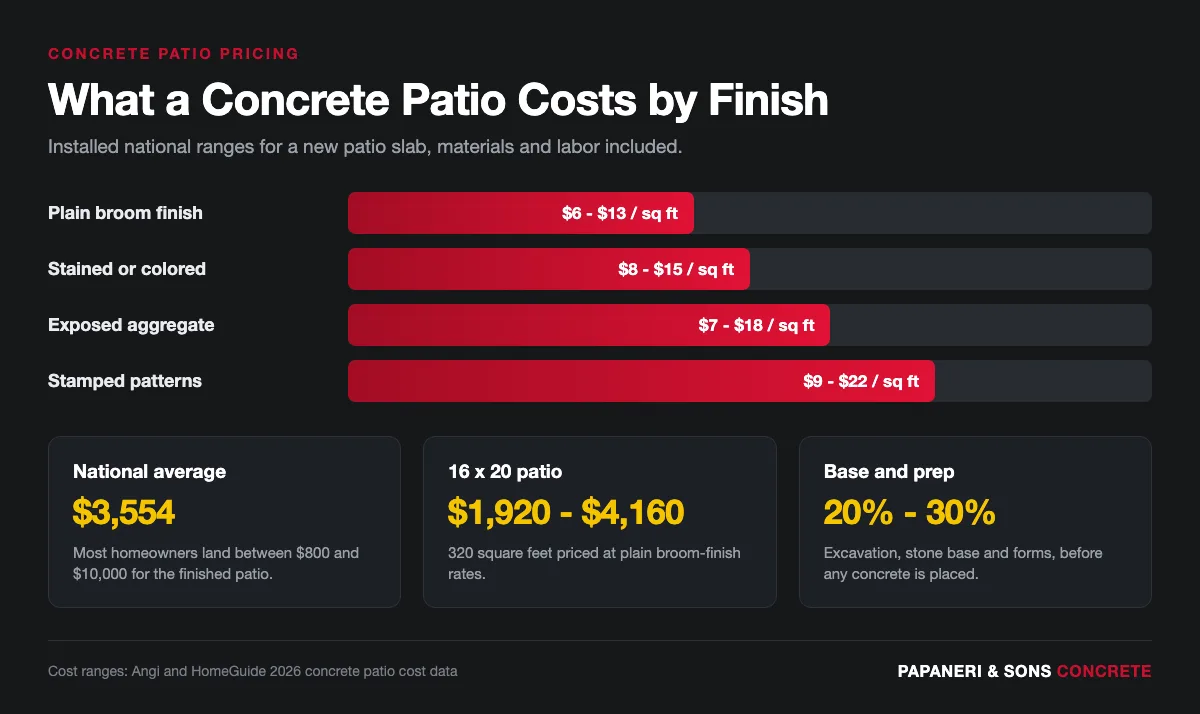
Papaneri & Sons has placed more than 5.7 million square feet of concrete across South Jersey. The patios we get called back to fix are rarely the ones that cost too much. They are the ones that were priced without a base.
Mix strength matters as much as thickness on an outdoor slab. The National Ready Mixed Concrete Association calls for a specified strength of 4,000 psi on exterior slabs exposed to deicing chemicals, with about 6 percent entrained air.
Our residential pours use a 4,500 psi mix, which sits above that floor. On a patio it buys surface hardness, which is what keeps a slab from pitting after a few winters of snow shovels and salt tracked off boots.
The other lesson is about timing. Patios poured in mild weather cure the way they are supposed to. A rushed pour in a July heat wave or a cold snap needs extra protection, and that protection is either in your quote or it is not.
When a bid comes in far under everyone else, ask what thickness and what base it includes. A four-inch patio on six inches of compacted stone and a four-inch patio on graded dirt look identical on day one.
Measure the space yourself first. Length times width gives you square footage, and square footage times a per-foot rate gives you a range you can hold every bid against. If a quote sits far outside that range, something in it is different.
Then decide the finish before you collect prices, because the finish sets the tier. Our breakdown of stamped versus regular concrete pricing shows exactly what the stamping step adds on the same slab.
If you like texture more than pattern, compare the other direction too. Our guide to exposed aggregate versus regular concrete covers cost, traction, and upkeep side by side.
Ask every bidder whether sealing is included or extra. A sealed patio holds color and resists staining longer, and our concrete sealing page explains when it is worth doing and when it can wait.
Check whether your town requires a permit and whether an HOA has to approve the layout. Neither one costs much, but discovering them after the forms are set turns a three-day job into a three-week one.
Look at where the water goes, too. A patio that slopes back toward the house moves rain into your foundation, and fixing that after the pour means breaking out concrete. Grading and pitch should be spelled out in the quote, not assumed.
Book early if you can. Crews fill up fastest from late spring through early fall, and a patio scheduled in advance usually prices better than a job squeezed into a full calendar.
Usually yes. A poured concrete patio costs less per square foot than a paver patio of the same size, because pavers carry more material cost and far more hand labor. Pavers can be lifted and reset individually, which is their advantage. Poured concrete gives you one continuous surface with fewer joints for weeds.
Four inches is the standard for a patio that carries foot traffic and furniture. Go to five inches if a hot tub, an outdoor kitchen, or anything heavy will sit on it. Thickness only performs if the stone base under it is compacted properly first.
Most residential patios are a two to three day job once the crew starts, with demolition and base prep taking the first day. You can walk on the slab after about 24 hours and put furniture on it after a week. Papaneri & Sons gives every customer a written schedule before the pour, so call (856) 354-9338 if you need the work planned around an event.
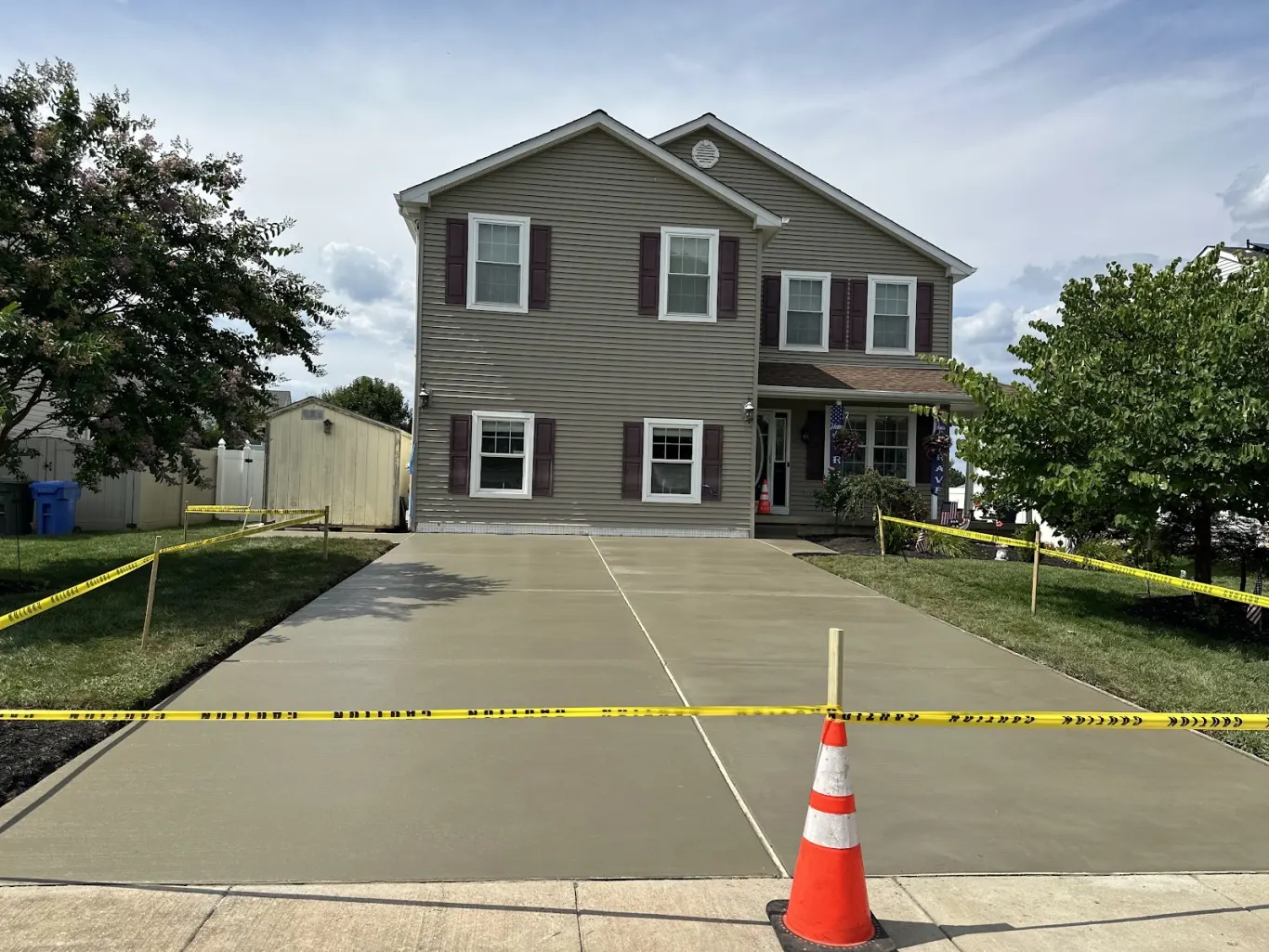
A per-square-foot range gets you close. A walkthrough gets you the actual price, including access, base depth, and whatever has to come out first. Papaneri & Sons pours patios across Cherry Hill, Voorhees, Marlton, Mount Laurel, and Haddonfield. Family crew since 1987, free on-site estimates, and a 4,500 psi mix on every residential pour.