
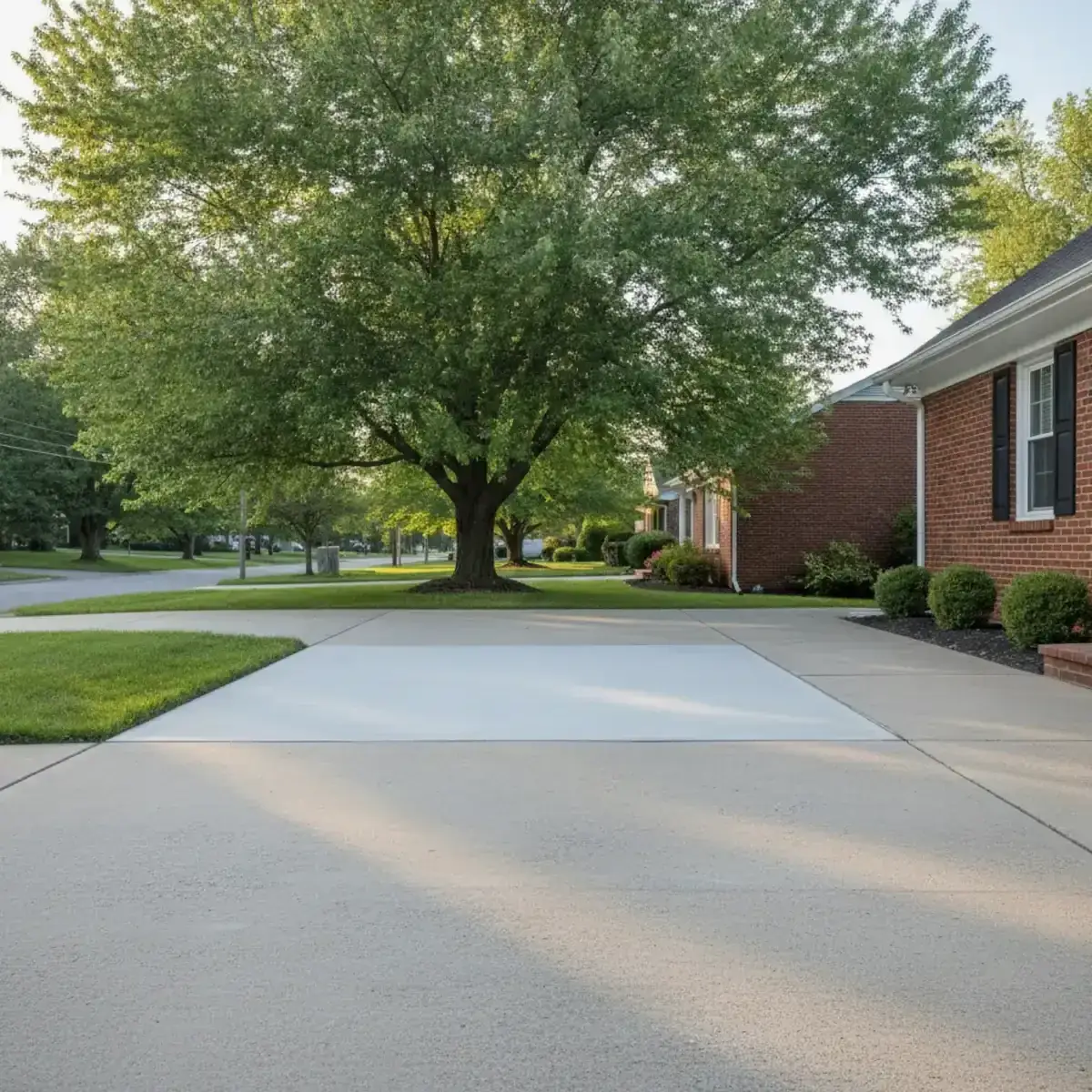
The strip between your driveway and the street belongs to the township. Here is the permit that work needs and who issues it.
Cherry Hill Township's Engineering Department measures its right-of-way as 10 feet back from where the curb meets the street. On most blocks that line takes in the apron, the curb and the sidewalk strip. The concrete you walk over to reach your car may not be yours to break.
That matters because a zoning permit does not cover it. Zoning looks at where concrete sits on your lot. Work out at the curb is a second approval from a second department, and it comes first.
This page covers where the right-of-way starts, when the township wants a right-of-way permit, what it expects the concrete to be, and who to call. Papaneri & Sons has been the concrete contractor in Cherry Hill families call since 1987, and we pull these permits as part of the job.
A right-of-way is the strip of land the township controls along every street. It is wider than the pavement, and it runs past the curb onto what looks like your front yard.
Cherry Hill Engineering sets the line at 10 feet back from where the curb meets the street. On a standard block that takes in the apron, the curb and the sidewalk. Your concrete driveway crosses that line on its way to the road.
A deed or survey may show your lot line out near the pavement. The township still controls work inside the right-of-way. That control is the whole reason the permit exists.
The apron is the flared section between the sidewalk and the street. Every car that enters your driveway rides over it. It is almost always inside the right-of-way, even when the rest of the driveway is not.
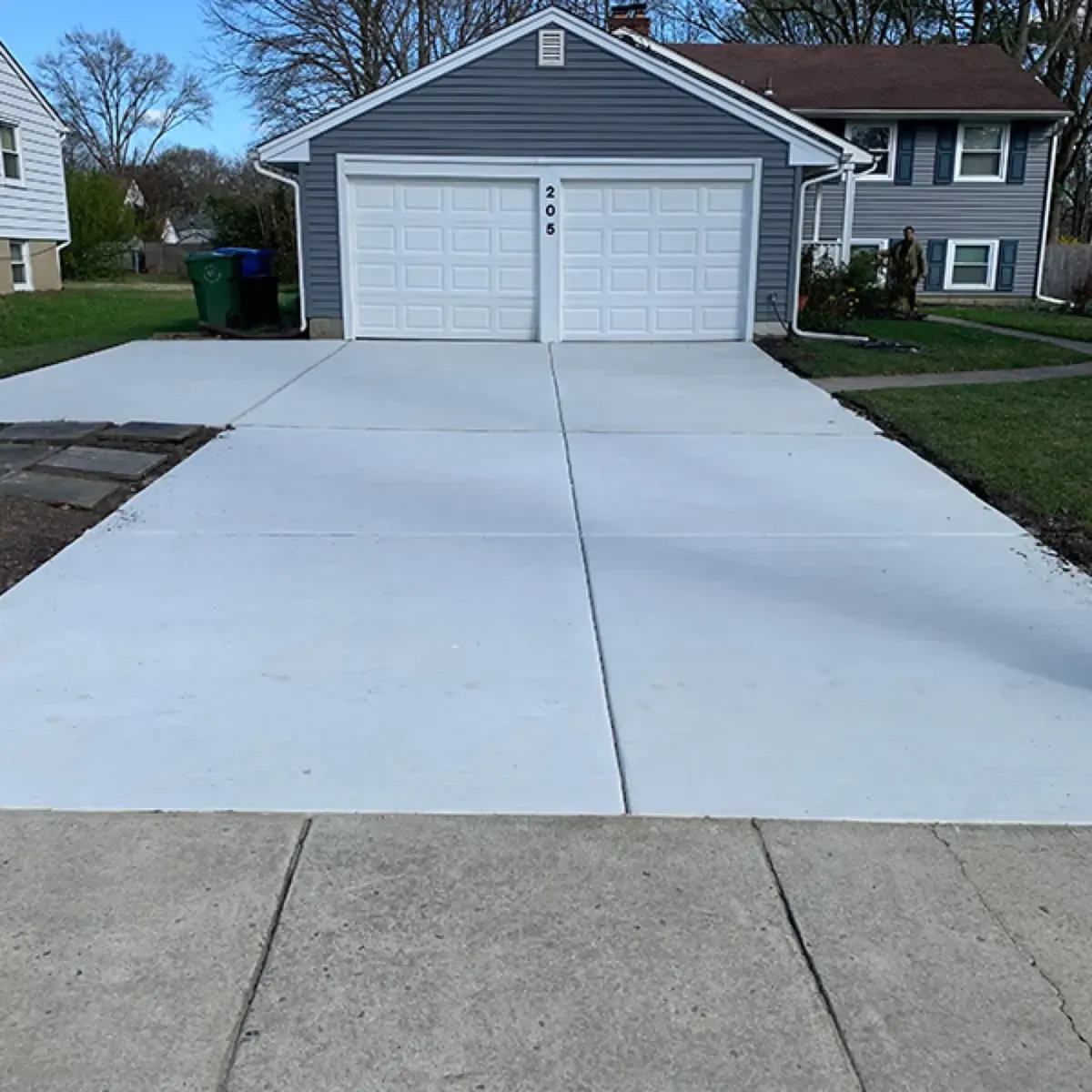
The township's permits page is plain about what belongs to Engineering and what does not.
Cherry Hill lists repairing damaged driveway aprons, sidewalks and curbs as right-of-way work. A cracked apron or a lifted sidewalk panel needs the permit before anyone touches it.
A right-of-way permit covers plans to cut, break into, excavate, grade, damage or open any township road. Saw cutting at the curb line falls under that, and so does trenching for a new drain.
Replacing or widening a driveway also needs a zoning permit from Community Development. The two run side by side, not instead of each other. Our guide to Cherry Hill zoning permits for driveways and patios covers that half of the job.
The township answers this directly: ordinance makes residents responsible for fixing and replacing damaged sidewalks and curbs. It adds that the right-of-way permit must be obtained from Engineering before repairs start.
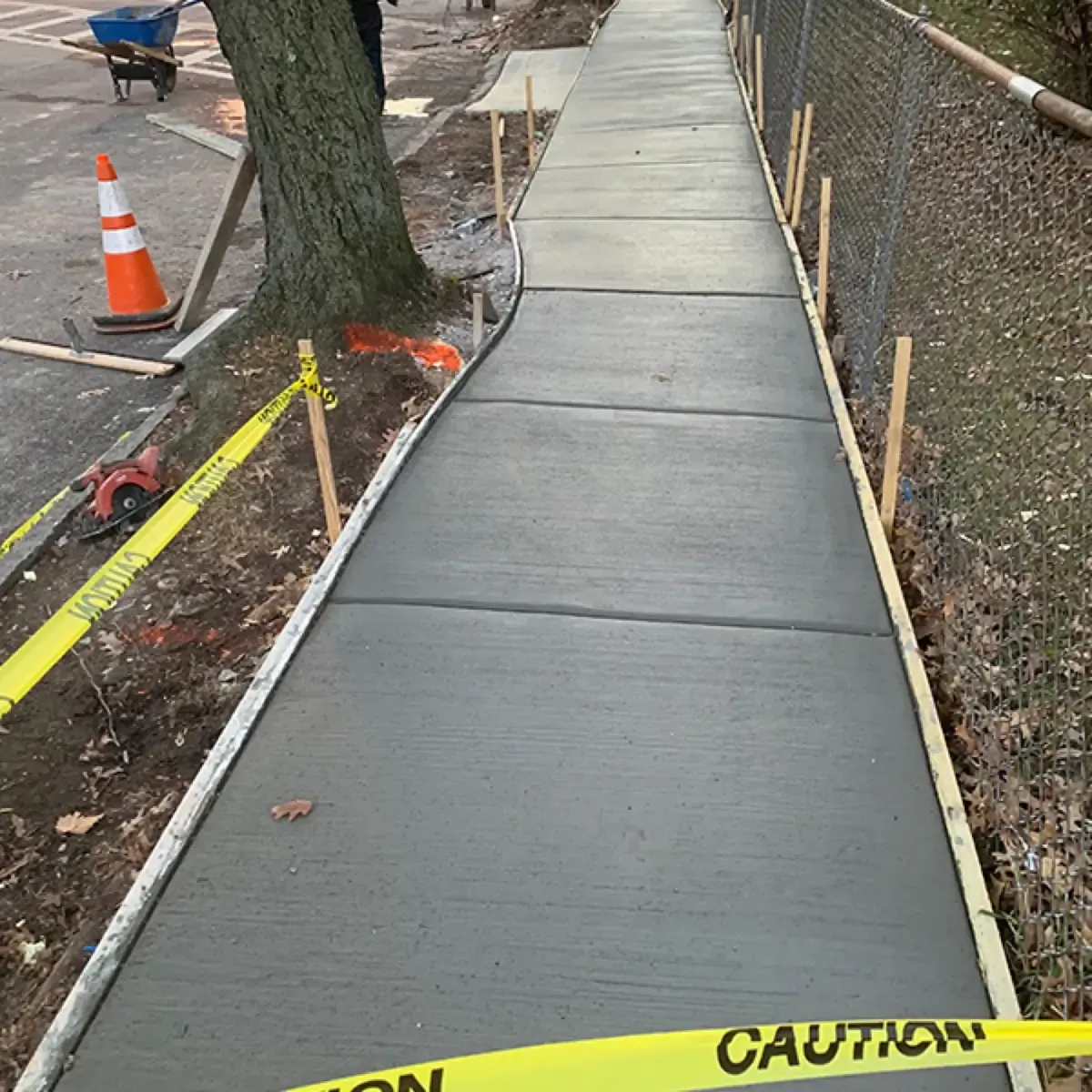
The design standards in Article V of the township ordinance set the material and the sizes. These are the numbers an inspector checks.
Section 505 says all driveway aprons and adjacent sidewalk areas shall be poured concrete. Pavers, stone and asphalt are allowed further up the driveway. Out at the sidewalk and apron, they are not.
Sidewalks are at least four feet wide and four inches thick. Where a sidewalk crosses a driveway it goes to six inches, because cars ride over that panel every day. The ordinance also wants the walk set as far back from the roadway as practical.
A single-family home gets one driveway. It has to sit at least three feet from any side or rear property line, and it cannot run through an easement. Shared driveways between two lots are allowed with cross easements.
On a corner lot the driveway goes on the street with the lower classification, no closer than thirty feet to the intersection of the right-of-way lines. A driveway cannot take up more than forty percent of the front yard. New curb work has to match the line and grade of the street it meets.
A grading permit is required for residential earthwork that disturbs five hundred square feet or more. A full driveway, apron and sidewalk replacement can reach that on a wide lot.
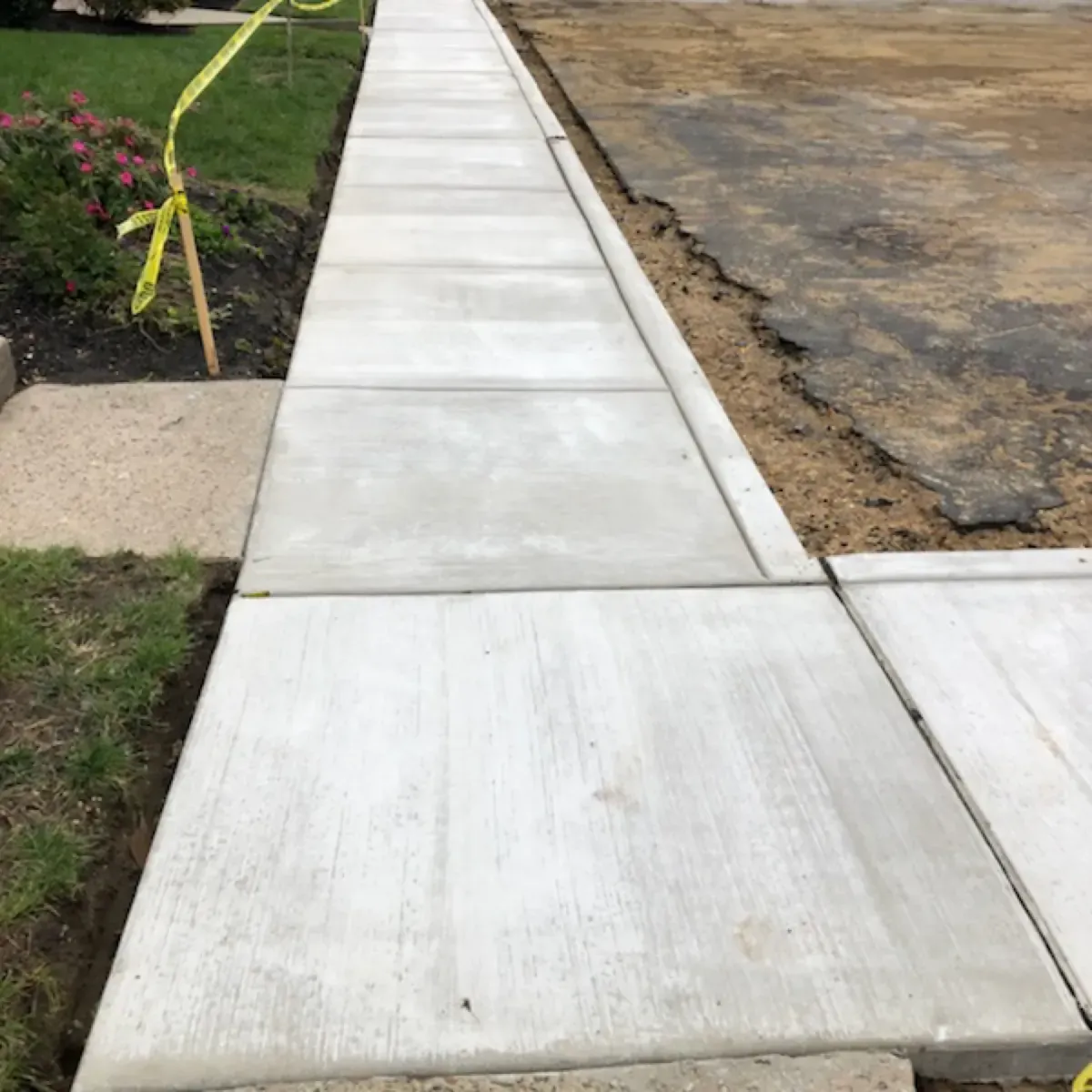
Two departments touch this work. Knowing which one to call saves a week of being passed around.
Right-of-way permits come from the Engineering Department at 1 Perina Boulevard in Cherry Hill. The office runs Monday through Friday, 7:30am to 4:30pm Eastern, and the number is (856) 424-3203.
The township takes the right-of-way permit application through its online portal or on paper in person. Fees are based on the scope of the work, so there is no flat price to quote before the plan is drawn.
The department that issues the permit inspects the job. Line and grade have to match the street, so the new apron meets the road the way the old one did and water keeps running to the gutter.
We measure the apron, the curb and the sidewalk, file the right-of-way permit, and book the pour around the inspection. Checking any contractor's paperwork first is fair. Here is how to check a Cherry Hill concrete contractor's NJ HIC registration, and what a New Jersey concrete contract must include.
Yes. The apron sits in the township right-of-way, and Cherry Hill lists apron repair as right-of-way work. The permit comes from the Engineering Department before any concrete is broken.
You do. Township ordinance makes the resident responsible for fixing or replacing damaged sidewalks and curbs. The right-of-way permit still has to be pulled from Engineering before the repair starts.
The township sets the fee on the scope of the work, so it changes job to job. Engineering gives the number when the application goes in. Call us at (856) 354-9338 and we will file it for you.
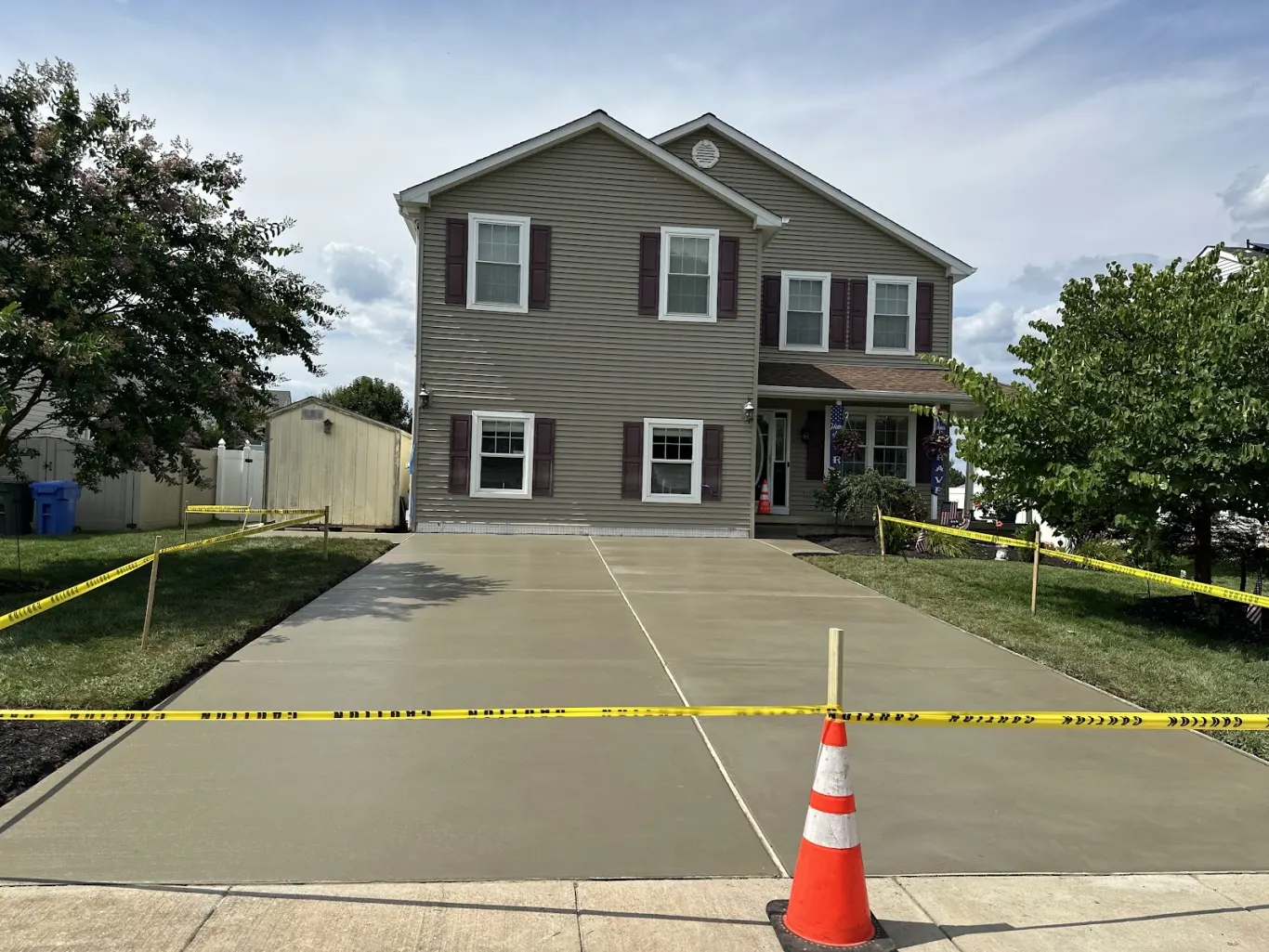
We measure the apron, the curb and the sidewalk, file the right-of-way permit with Cherry Hill Engineering, and pour once the township signs off. Papaneri & Sons has handled aprons, curbs and sidewalk work in Cherry Hill's right-of-way, and jobs across the rest of South Jersey, since 1987, ACI certified, licensed and insured.